Complete one of Sweden’s many classic treks, ranging from coastal trails past old fishing villages to adventurous explorations of the lake-strewn north.
Highlights
- Beginner-friendly destination with classic coastal trails like The Österlenleden Trail
- The Kungsleden Trail for experienced adventurers in the Abisko National Park
- Less wild and more tourist-friendly than Norway
- Comfortable accommodations in boutique hotels and local guesthouses
Sweden Hiking Tours
Complete one of Sweden’s many classic treks, ranging from coastal trails past old fishing villages to adventurous explorations of the lake-strewn north.
Highlights
- Beginner-friendly destination with classic coastal trails like The Österlenleden Trail
- The Kungsleden Trail for experienced adventurers in the Abisko National Park
- Less wild and more tourist-friendly than Norway
- Comfortable accommodations in boutique hotels and local guesthouses



Plan with a hiking expert
Free advice from a team that knows these routes inside out - real people, not a bot

Why Visit Sweden on a Hiking Tour?
Though it presents one of Europe's most diverse and stunning landscapes, Sweden as a hiking destination often gets unjustifiably overlooked in favor of its western neighbor, Norway.
Scenic coastal trails in the south and untamed lake-strewn wilderness in the north hide countless jewels, from quaint fishing villages around Göteborg to lush valleys and glacial rivers in the Abisko National Park.
Additionally, the abundant choice of classic treks and thru-hiking options will convince their fans to give a minute of thought to Sweden. Their pleasant coastal terrain makes them a suitable choice for beginners or seniors, especially those who prefer boutique hotels and guesthouses to crude huts.
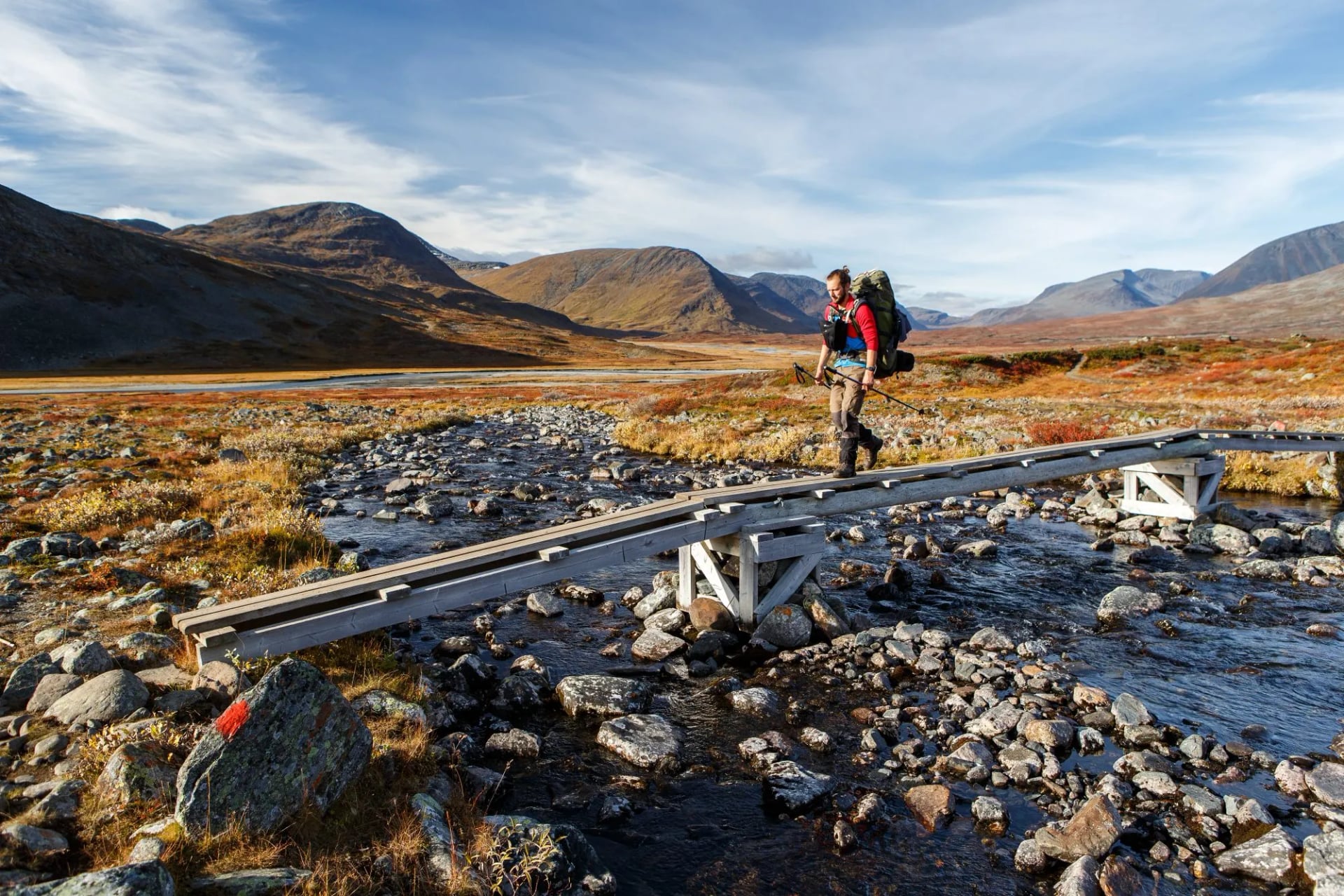
On the other hand, Sweden’s north will impress even those attracted by Norway’s vast outback. Huts without running water or electricity lay the basis for a true Scandinavian adventure.
Another great thing about Sweden is its hiking season. It’s possible to hike any of its southern coastal treks from April to October. Even during summer, the temperatures remain bearable. Despite the sometimes fickle weather, Sweden is a preferable destination for people badly affected by heat.
Furthermore, public transport in Sweden is well organized even in its most remote places, be it through train, bus, or plane connections.
Sweden’s own Avicii might as well have been thinking about hiking in his country when he wrote the verse: “These are the days we won’t regret.”

HANDPICKED ADVENTURES
Only the best adventures across the world, cherry-picked by our team with an in-depth knowledge of the regions.

VALUE YOUR TIME
With everything on your plate, let us handle the vacation planning, so your valuable time stays exactly where you need it.

SELF-GUIDED TRAVEL
Explore independently and with confidence while we keep everything running from behind the scenes.

TRUSTED BY MANY
Since 2014, we have taken care of thousands of happy customers, making it our mission to put your satisfaction first.

OUTDOOR SPECIALISTS
We are a team of outdoor specialists equipped with the knowledge and insight to bring you the best hiking experiences.
About Hiking in Sweden
Sweden’s most famous trail starts 200 km inside the Arctic Circle, and its gentlest one starts in a suburb of Gothenburg. Almost nothing connects the two except the country they are in.
Up north is the fjäll, open ground above the tree line where the huts are a day apart and there is no shop for a week. Down south are orchards, beech woods and the sea, walked inn to inn with your bag moved for you.
Four trails, all of them ours.
The Kungsleden, nine days Abisko to Kiruna.
Österlenleden, eight days Ystad to Brösarp.
Götaleden, six days Göteborg to Alingsås.
Kullaleden, six days Helsingborg to Ängelholm.
Two seasons, and they barely overlap. The fjäll opens mid-June to mid-September, which is exactly when the huts are staffed. The southern trails run April to October.
June brings the midnight sun, with snow still lying on the passes;
July is warmest, busiest and the peak of the mosquitoes;
August is the most reliable walking of the year;
September brings autumn colour, almost no insects and the first auroras.
The King’s Trail runs 440 km from Abisko to Hemavan and takes about a month end to end. What almost everyone means by it is the northern week, 107 km from Abisko to Nikkaluokta.
That week sleeps in five mountain cabins with no electricity and no running water, crosses the Tjäktja pass, and passes under Kebnekaise, the highest mountain in Sweden.
Three of our four Swedish trails are in the far south, and they are a different sport entirely. Österlenleden runs the coast past fishing villages and apple orchards, Götaleden crosses lake country out of Gothenburg, and Kullaleden follows the shore of a peninsula.
All three are technical level 1 and walked between hotels, which makes them the ones to take if the Arctic sounds like too much.
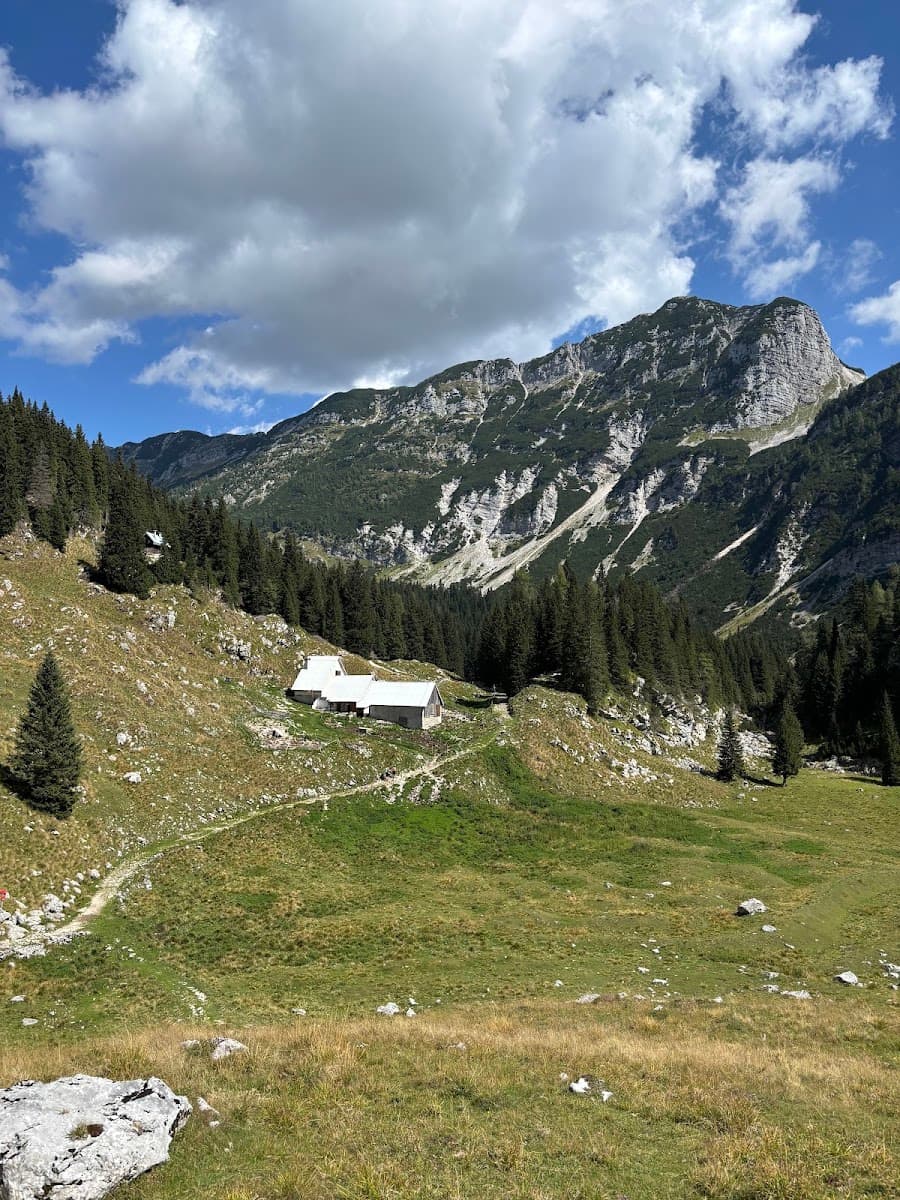
Swedish fjäll huts are stocked and wardened but deliberately basic: bunks, a wood stove, a drying room and a shop that is sometimes a shelf. You carry your own food between them and there is no resupply at every stop.
Kebnekaise is the exception. It is a staffed mountain station rather than a hut, with real beds and a proper kitchen, and it is where most people spend the last night before walking out.