Extreme Weather on the Trail? A Hiker's Survival Guide
Stay safe while facing extreme weather on your hike. Here's how to handle fog, rain, and lightning, and make smart decisions when mountain weather turns on you.

Anja
Published February 17, 2026
Edited March 17, 2026
9 min read
Don't want to read all this?
We've planned 2,000+ hiking trips. Send your dates, fitness and group size — we'll map the route and book every night.



You checked the forecast. It said partly cloudy. And now you're standing on a ridge in sideways rain, wondering where the trail went.
Mountains create their own weather systems — warm air gets pushed upward, cools rapidly, and forms clouds and storms that can develop in under an hour. What was sunshine at noon can be a full thunderstorm by two o'clock.
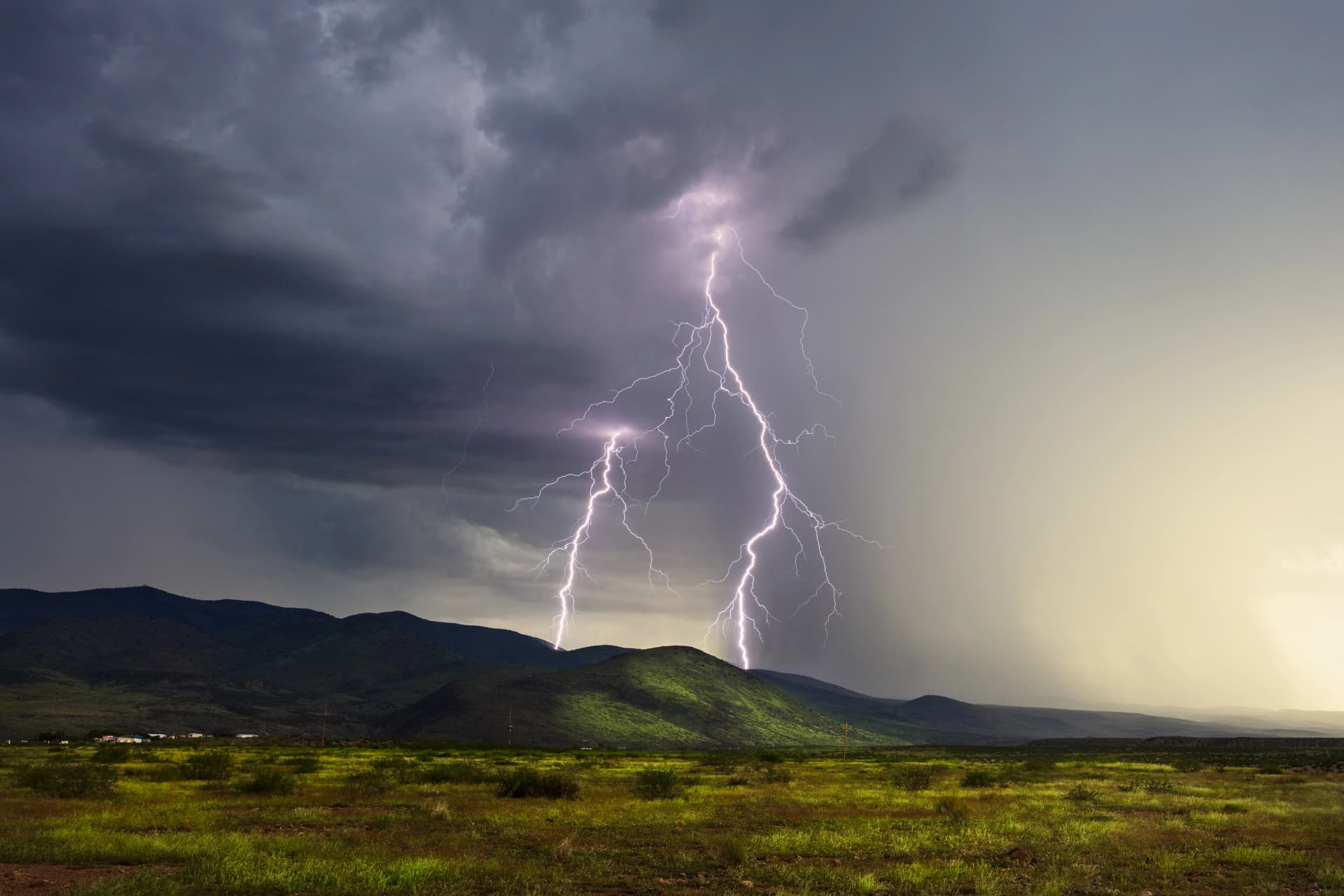
The three most common weather problems hikers face in the mountains are:
low clouds and fog,
rain, and
thunderstorms.
Each one brings different risks, and each one requires a different response. This guide covers all three — what makes them dangerous, how to recognise them, and exactly what to do when they hit.
1. Low Clouds and Fog
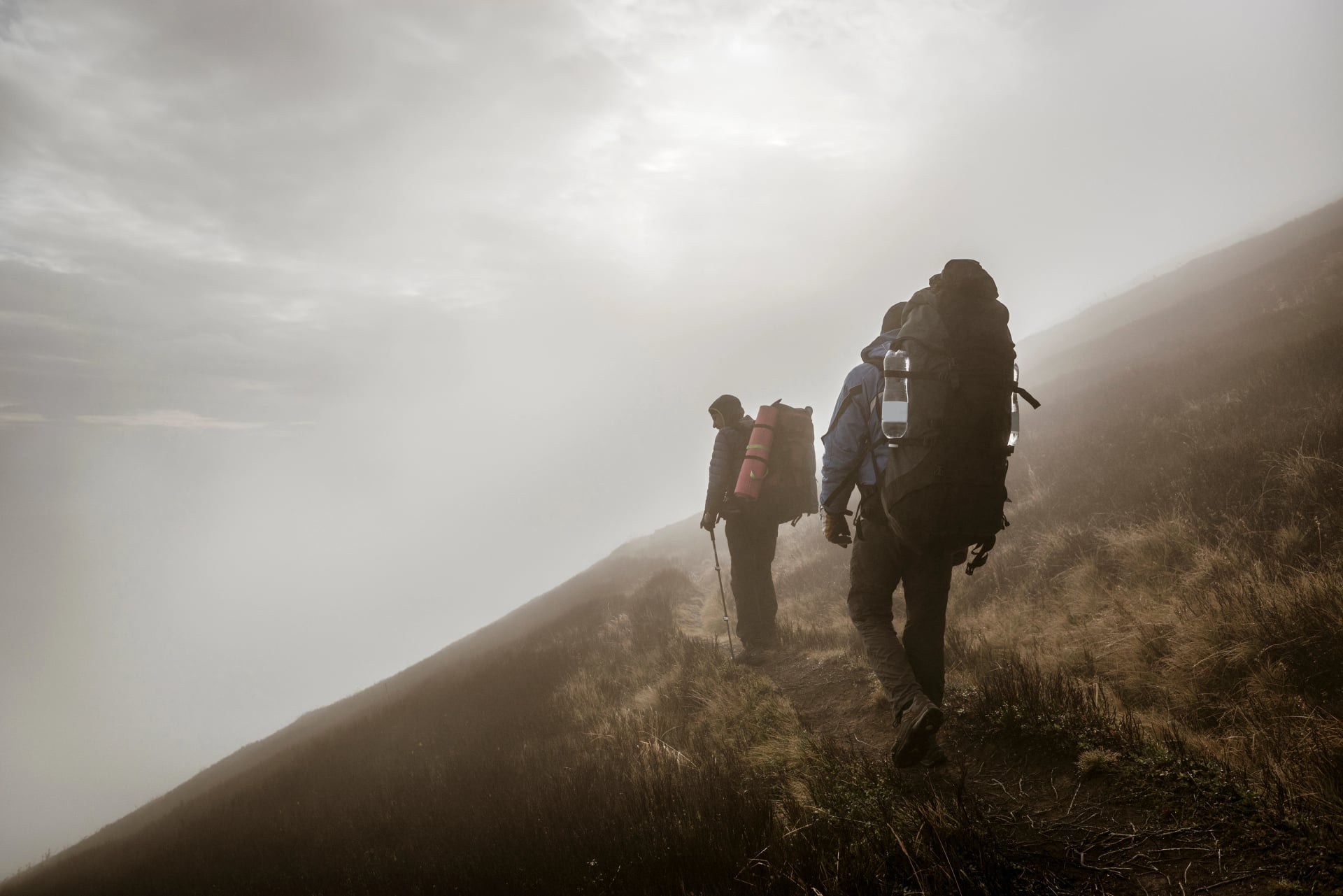
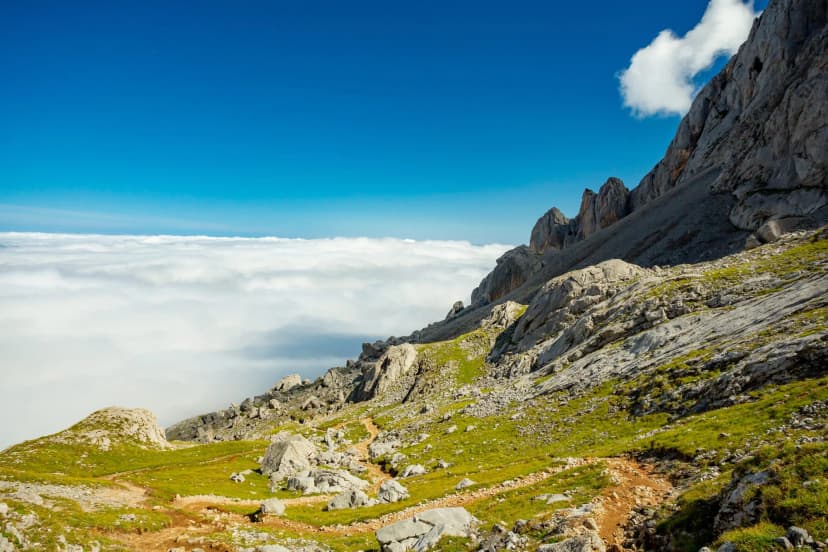
Fog in the mountains isn't just an inconvenience — it's a navigation hazard. Fog can move in suddenly as a result of changing weather patterns and may be more common in the morning after a night of rain.
It can also settle on the tops of mountains, known as summit fog, even when it's sunny at the trailhead.
When visibility drops to a few metres, you lose your ability to see trail markers, landmarks, and the terrain ahead. This is how hikers get lost, walk off trails, or stumble over drop-offs they didn't see coming.
What to Do
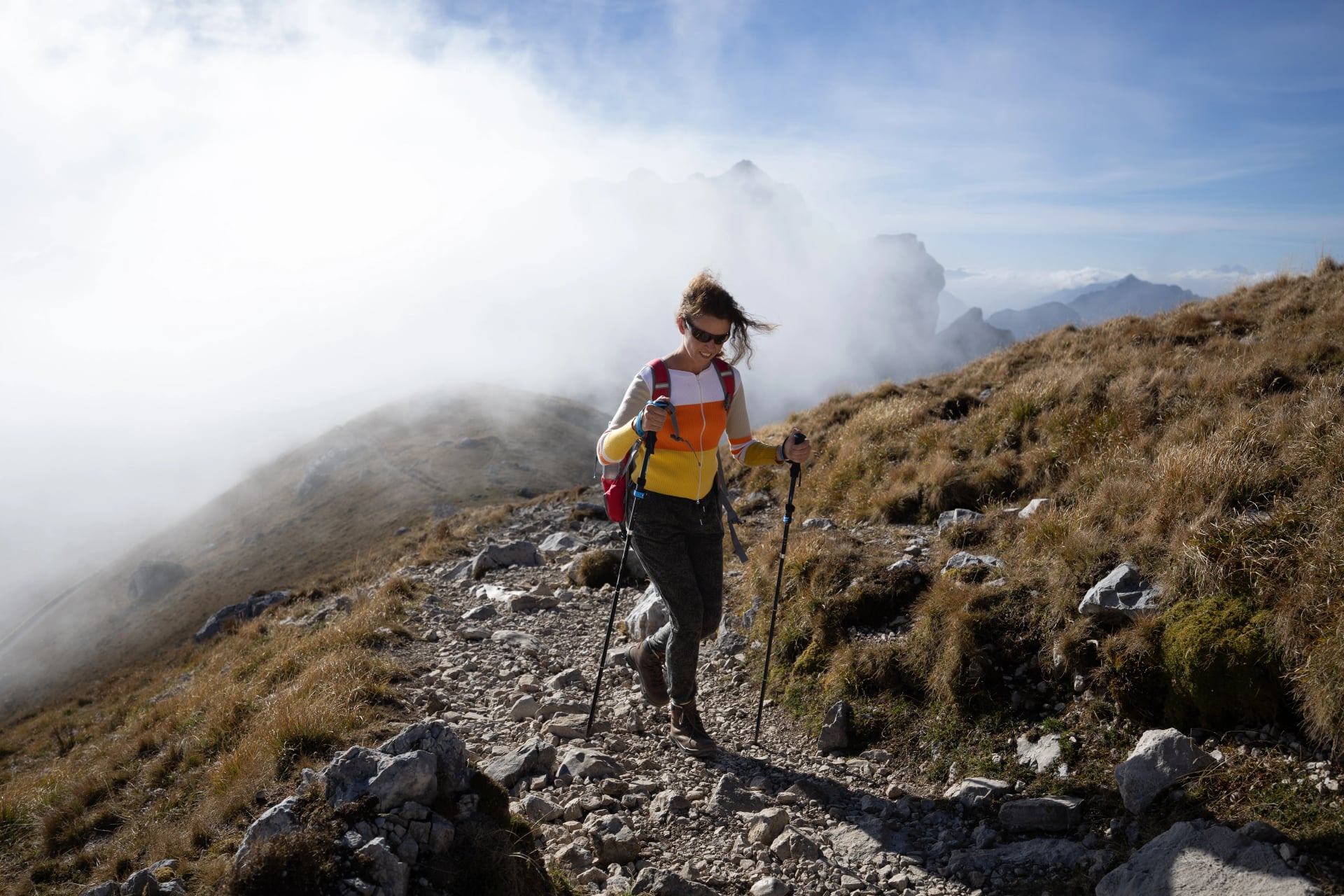
Stop and assess before pushing forward. If the fog is thick enough that you can't see the trail clearly ahead, don't keep walking and hope it clears. In poor visibility, the trail is your lifeline — don't leave it.
If you're unsure of the route, it's better to stop and wait for conditions to improve than to wander off-trail in zero visibility.
Use your navigation tools. This is where a GPS device, offline map on your phone, compass, or altimeter earns its place in your pack.
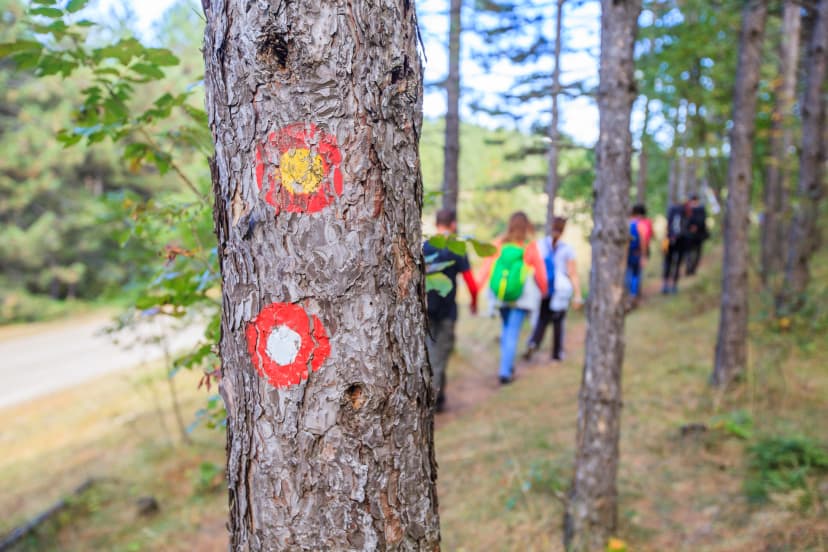
Pay attention to trail markers. Get in the habit of looking up and down the trail when visibility is good and cross-referencing with a map. If you get to a fork in fog, leave a stone or twig showing the way you came before exploring each option.
Carry a whistle. If things go wrong and you need mountain rescue, a whistle can help communicate your location, especially if your phone has died. The international distress signal is six blasts per minute.
2. Rain
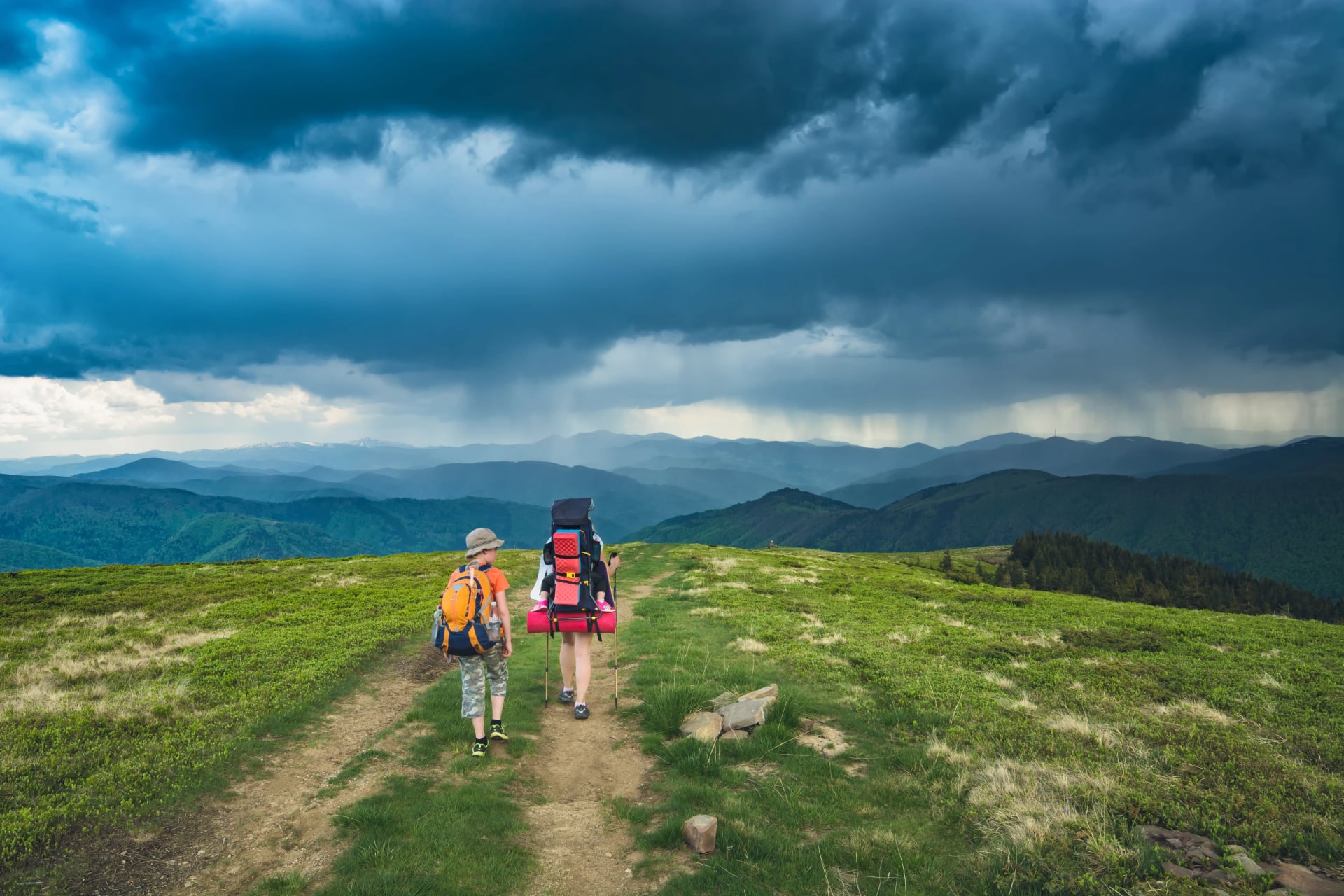
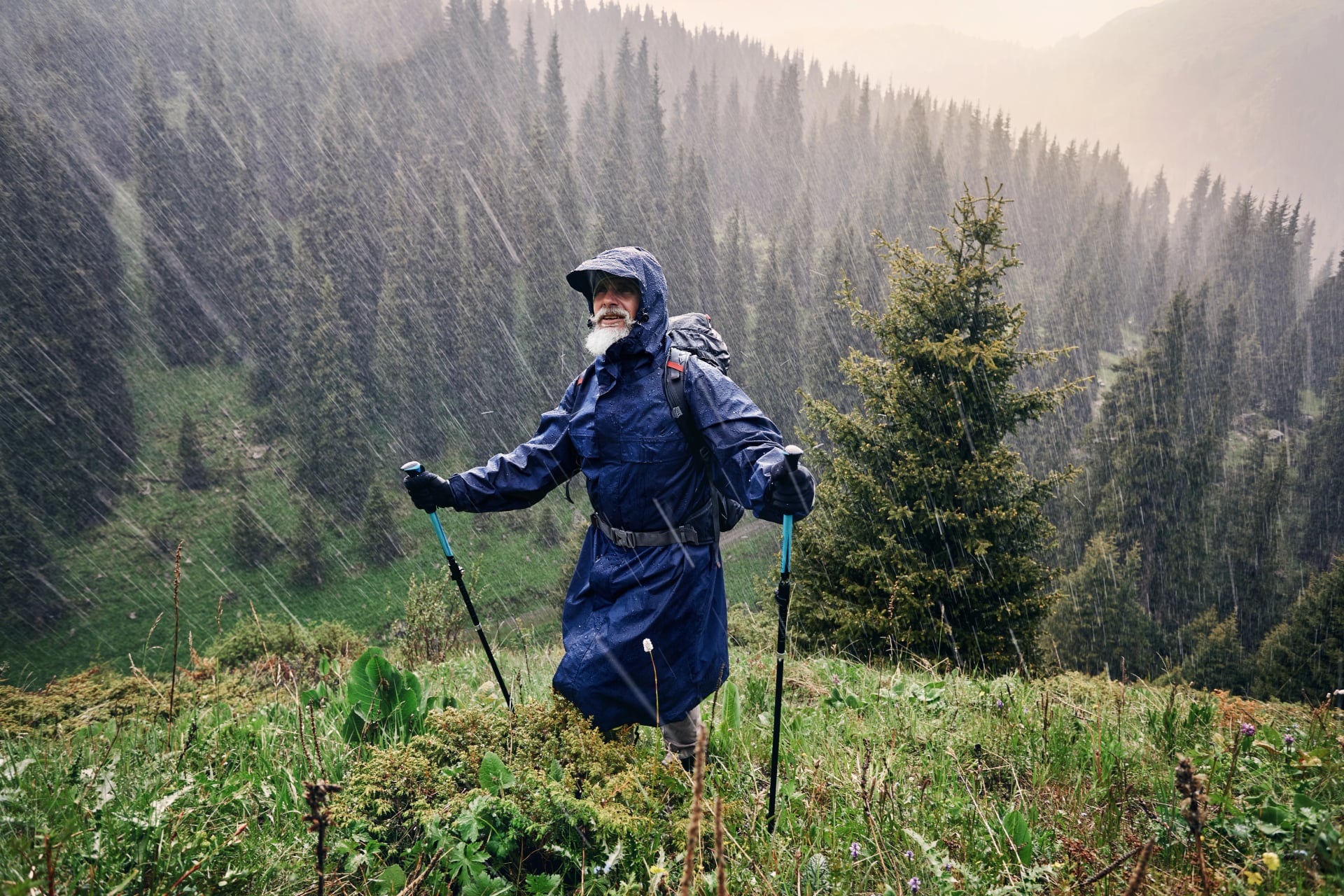
Light rain on a hike is manageable. Heavy, sustained rain in the mountains is a different story.
It brings three main risks:
hypothermia,
slippery terrain, and s
wollen waterways.
Hypothermia is the biggest threat. A cold rain can be the most dangerous weather for hikers, because it can cause hypothermia even when conditions are well above freezing. When the wind blows, its chill effect can make you much colder than the temperature would suggest, especially if you're sweaty or wet. This is not just a winter risk — hypothermia happens in summer too, especially at higher elevations where temperatures drop fast.
Trails become hazardous. Wet rock is slippery. Wet wood is worse. Mud creates unstable footing. Steep descents that were straightforward in dry conditions become genuinely dangerous when wet.
Water crossings change fast. Streams that were ankle-deep in the morning can become knee-deep or impassable after heavy rain. Flash floods can develop in narrow valleys and canyons with very little warning. Water levels rise fast — if you find yourself in rapidly rising water or heavy rain, take action immediately and seek higher ground.
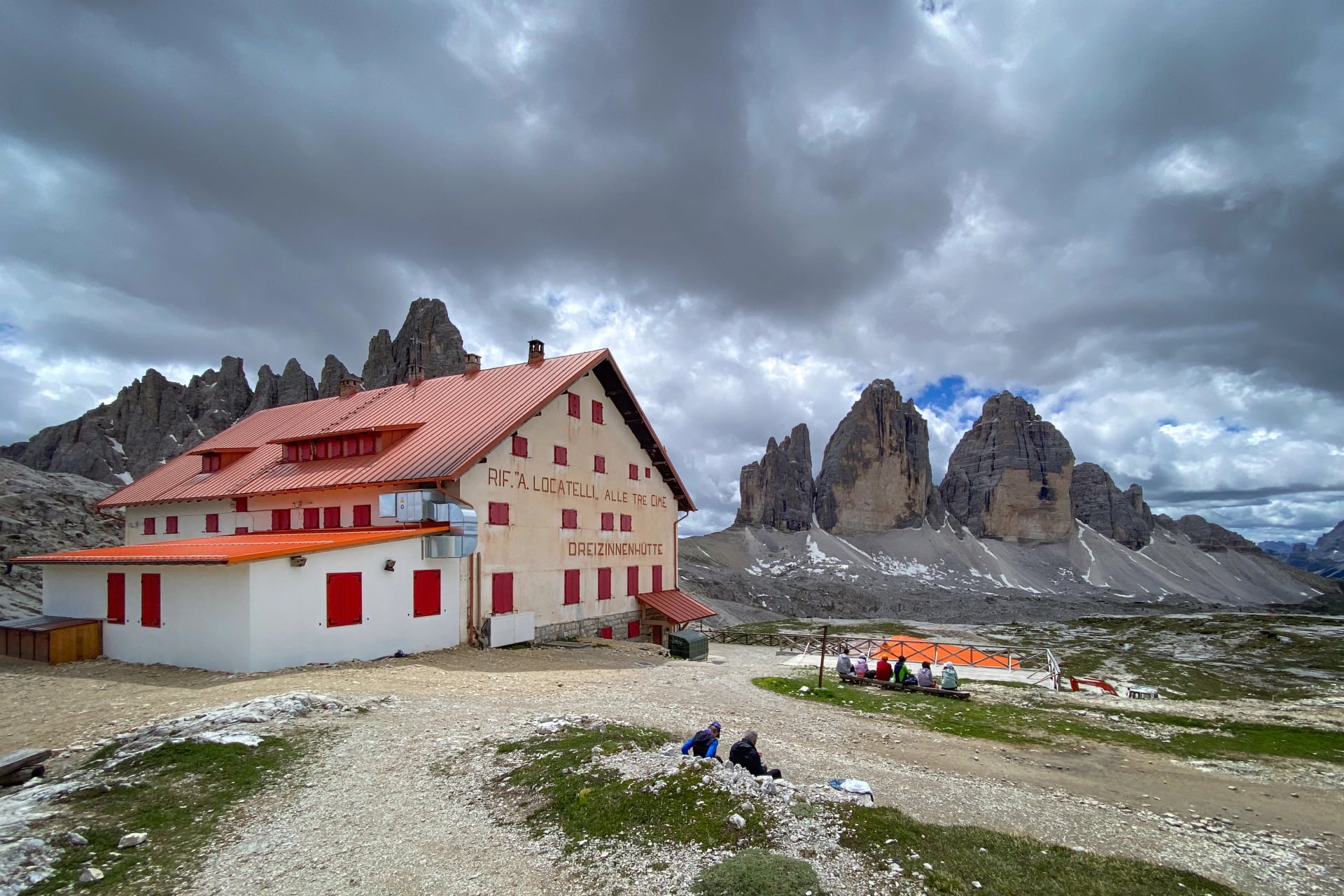
What to Do
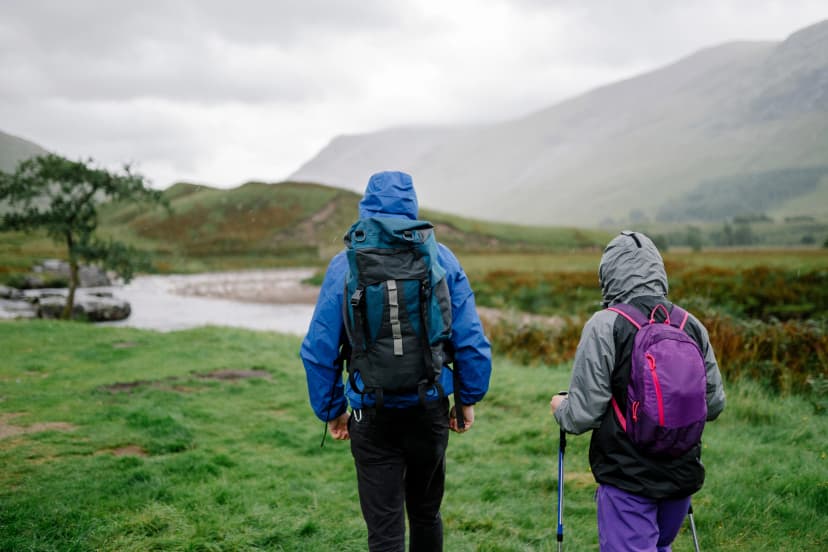
Put on your waterproof layer before you get wet. Don't wait until you're soaked — staying dry is much easier than warming up once you're already cold. A fully waterproof jacket with sealed seams and a hood is the single most important piece of gear for mountain hiking.
Avoid cotton clothing. Cotton tends to chill you when it gets wet from rain or sweat, increasing your risk of hypothermia. Wool and synthetic fibres like nylon, polyester, and polypropylene do a much better job of insulating in cold, wet weather. This applies to every layer — base layer, mid layer, socks, everything.
Slow down on wet terrain. Shorten your stride, place your feet deliberately, and use trekking poles for balance. Be especially careful on wet rock, exposed roots, and wooden bridges. Avoid scrambling sections if conditions are slick.
Reassess water crossings. If a stream looks higher or faster than expected, do not cross it. Water is more powerful than many people think, and hikers are drowned every year fording what may look like relatively placid streams. Wait for levels to drop, find an alternative route, or turn back.
Find a safe place to take shelter if the rain becomes too heavy, but avoid standing under trees or near cliffs where there may be a risk of falling branches or landslides.
3. Thunderstorms and Lightning
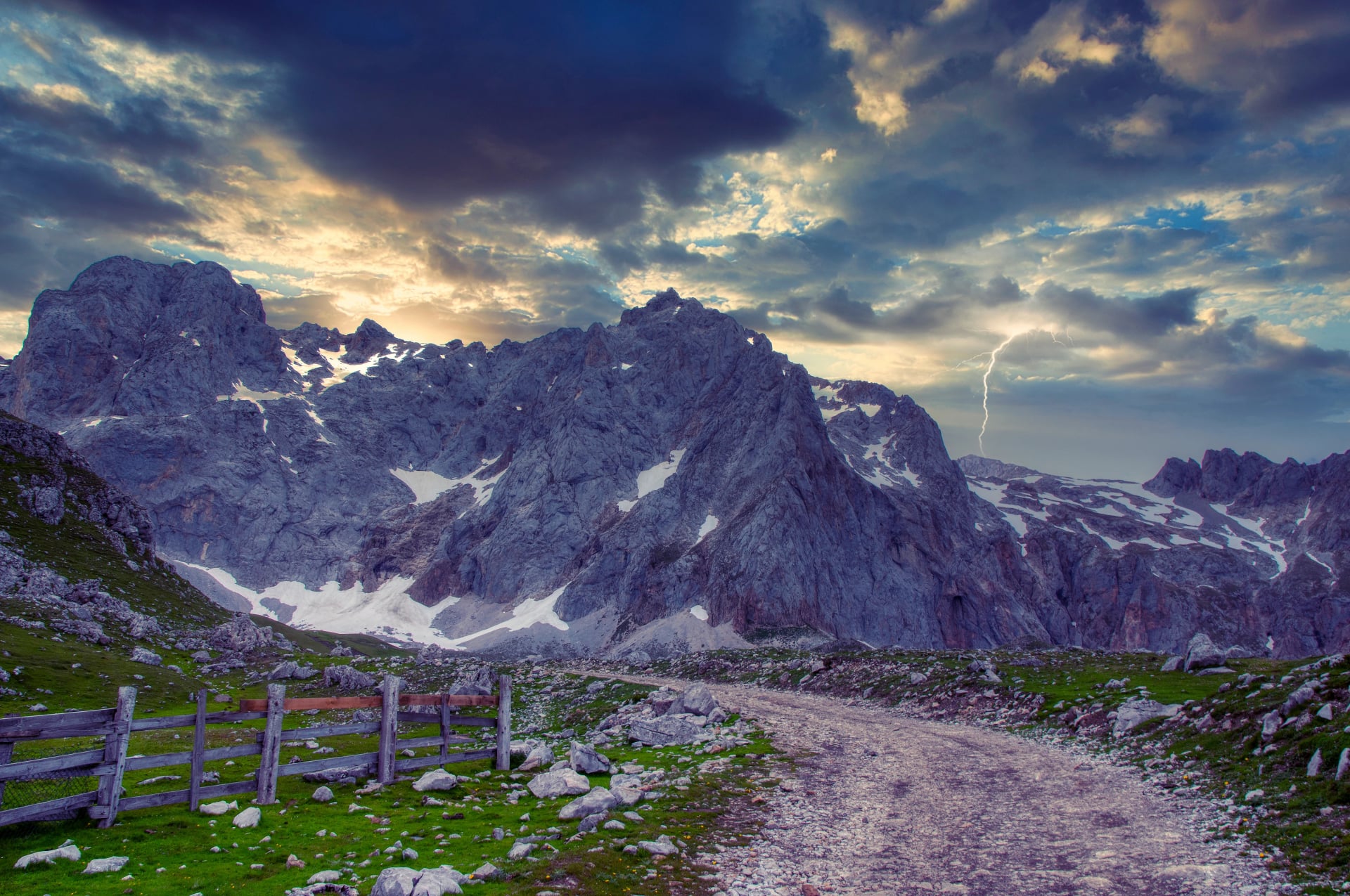
Lightning is the most immediately life-threatening weather hazard for mountain hikers. While odds of being struck randomly by lightning are very low, bald summits and open ridgelines can be extremely dangerous in a lightning storm. At higher elevations, you may be the tallest object around — which makes you a target.
Lightning can strike more than 10 miles away from the centre of a thunderstorm — well beyond the audible range of thunder. This means a storm doesn't need to be directly overhead to be dangerous.
Mountain thunderstorms also bring additional hazards: storms can cause falling trees and flash flooding. High winds, hail, and sudden temperature drops often accompany them.
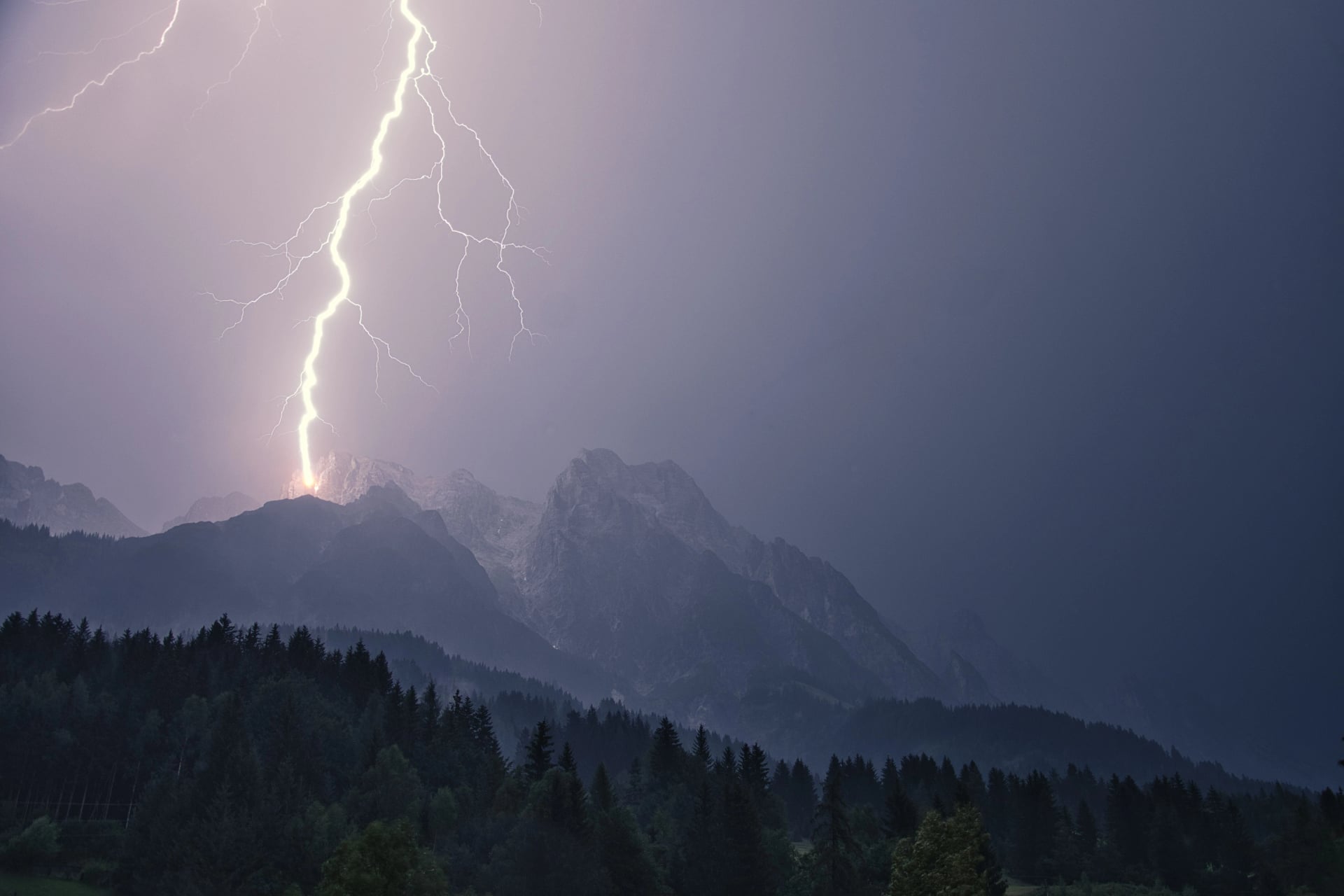
How to Tell a Storm Is Coming
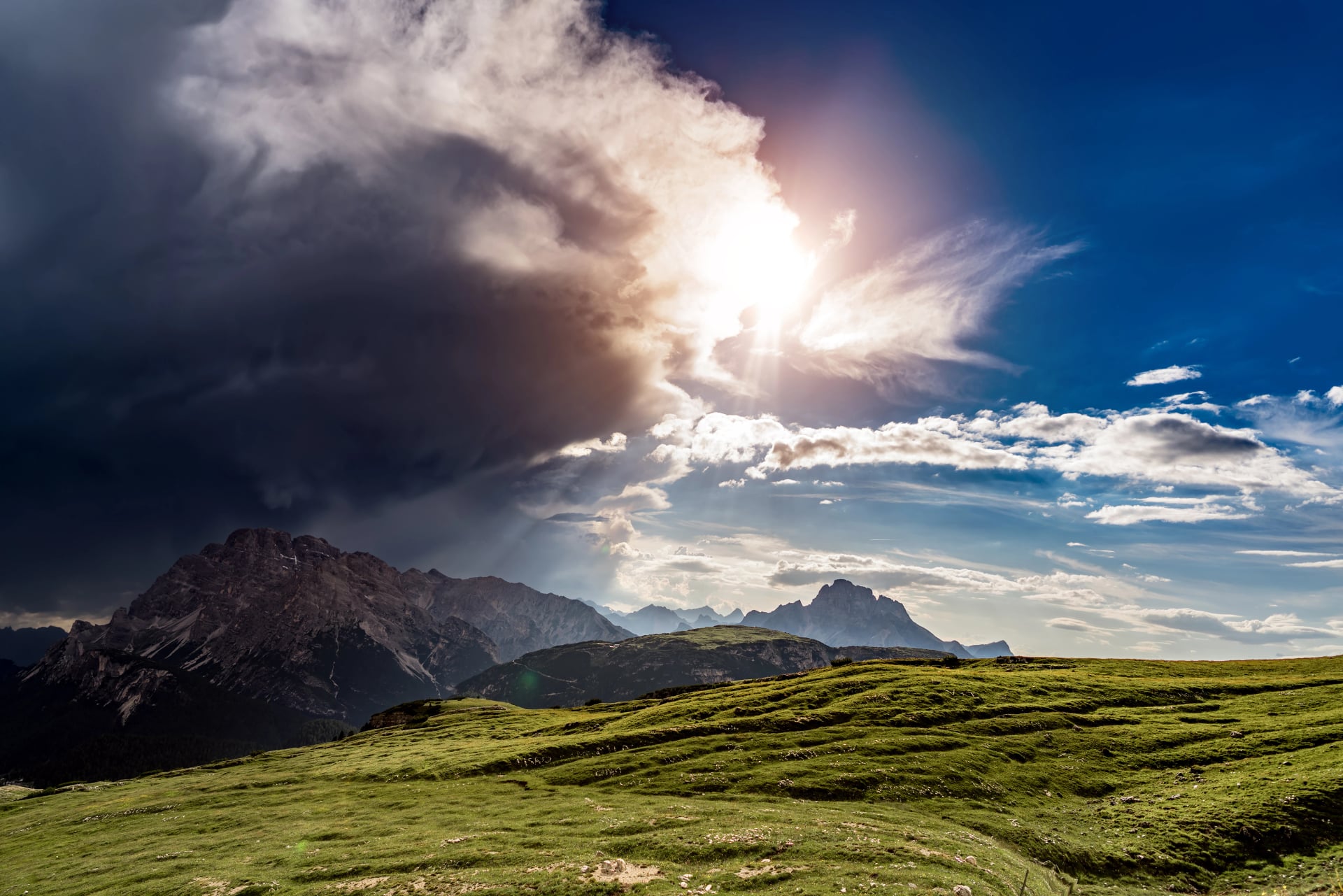
Watch the clouds. Cumulonimbus clouds are large cumulus clouds that have grown and can tower above 20,000 feet.
If you see puffy white clouds stacking upward and darkening at the base, a thunderstorm is likely developing.
Lenticular clouds — the smooth, lens-shaped ones near peaks — indicate strong winds and unstable conditions.
Listen for thunder. If you can hear thunder, you are in danger — even if the sky near you is blue.
Count the seconds between a lightning flash and the thunder — divide by three for approximate distance in kilometres. If the gap is shrinking, the storm is approaching.
Feel for changes. A sudden temperature drop, a shift in wind direction, or a rapid increase in wind strength all signal incoming weather. If your hair starts standing on end or you feel a tingling sensation on your skin, that's static charge building — and it means a strike could be imminent.
Know the pattern. In mountainous areas, thunderstorms typically develop in the early afternoon, so plan to hike early in the day and be off exposed ground by noon.
What to Do
Get off high ground immediately. Immediately move away from open areas, summits, and ridgelines. Lightning is attracted to high points. Descend to lower elevation as quickly as you safely can. Don't run — a fall on wet terrain makes things worse — but move with purpose.
Avoid dangerous shelter. Do not seek shelter under a picnic shelter, lone tree, or other isolated object — it will attract lightning. Trail shelters will not protect you from lightning. Shallow caves and rocky overhangs can conduct ground current. The safest natural shelter is a dense, uniform forest at lower elevation where no single tree towers above the others.
Drop metal gear. Drop metal objects such as backpacks with metal frames and trekking poles. Set them down at least 30 metres away from where you shelter. Metal doesn't attract lightning, but it conducts electricity efficiently if a strike hits nearby.
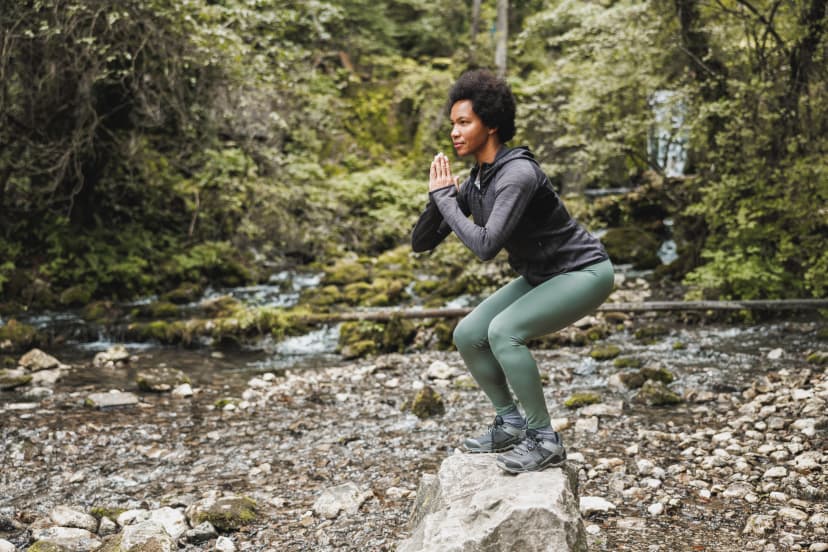
Assume the lightning crouch if you're caught in the open. Crouch on the ground with your weight on the balls of your feet, your feet together, your head lowered, and ears covered. Do not lie flat on the ground! Lying flat increases your contact with the ground and your exposure to ground current.
Spread out your group. If you're with a group, space yourselves at least 5–10 metres apart. This reduces the chance of multiple people being affected by a single strike. If someone is hit, the others can provide first aid.
Stay away from water. Lakes, streams, and wet rock surfaces conduct electricity. Move away from shorelines and waterways during a lightning storm.
Wait before moving again. You should wait 30 minutes after the last thunderclap before starting to move again on the trail.
Always Check the Weather
The night before and before you head out!
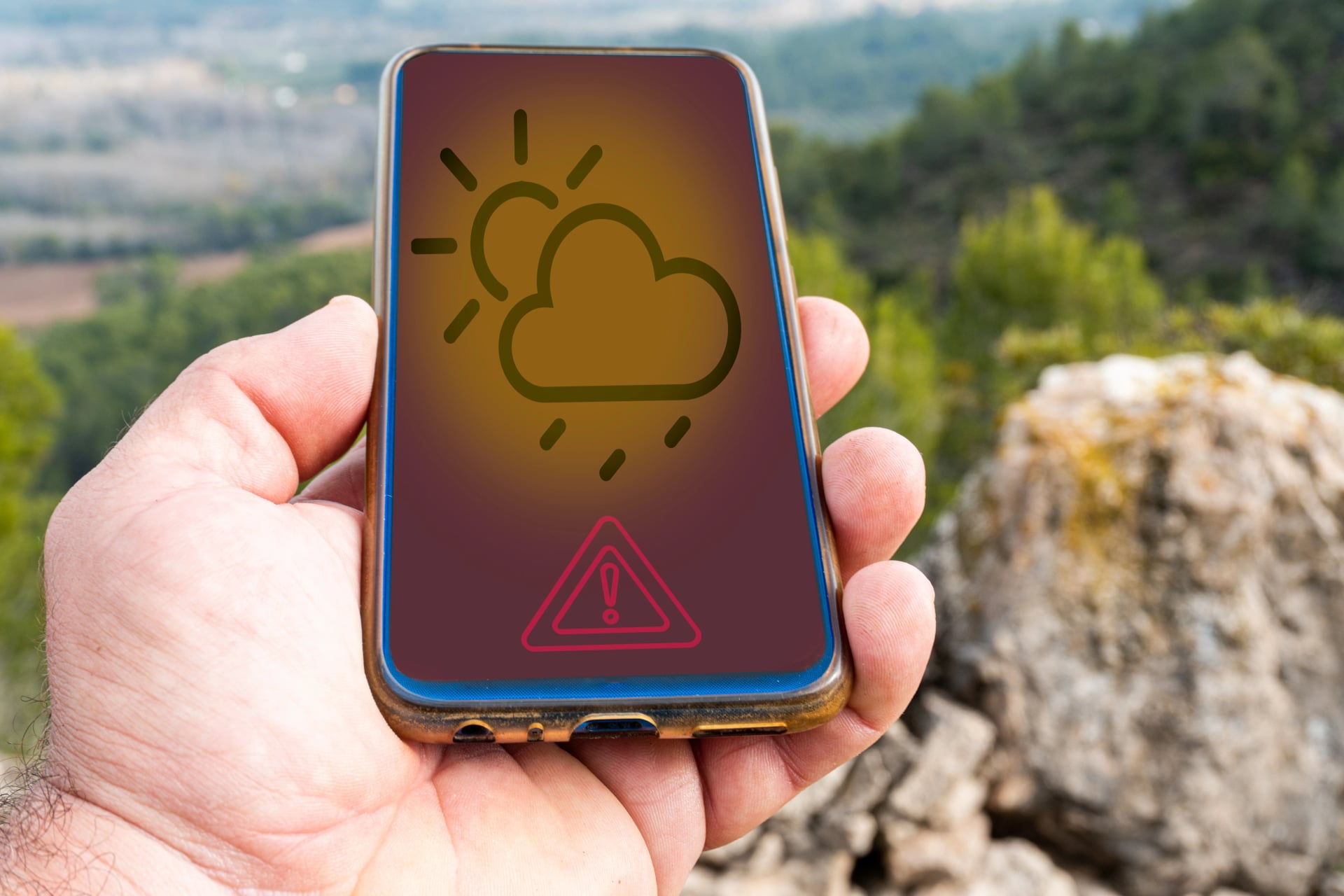
Even if the sky is clear when you start your hike, mountain weather can change dramatically in just a few hours.
That’s why it’s essential to check the latest weather forecast before leaving and stay aware of current conditions while on the trail. Observing clouds, wind, and temperature changes can help you make informed decisions as the day progresses.
Plan your self-guided adventure safely!
When you hike with us, your safety is our top priority:
Reliable weather sources: Your digital guidebook includes links to the most reliable weather forecast sites specific to your hike, so you can plan and adjust accordingly.
Alternate routes: In case of bad weather, we may redirect you to a lower, safer trail to avoid dangerous conditions.
GPS with huts and shelters: Our GPS maps show all mountain huts along the trail, so you’ll always know the distance and location of the nearest safe stop from wherever you are.
Explore our hiking tours, book your tour, and receive your digital guidebook packed with everything you need—trail maps, GPS with huts and shelters, and the most reliable weather forecasts.
Then, hit the trail with confidence, knowing our team is available 24/7 for support.
Stay safe, enjoy the mountains, and make every hike an unforgettable experience!

About this author
Anja is our lead travel advisor and a lifelong hiker who has planned countless adventures across Europe. She prefers sunsets to sunrises — unless coffee is involved — and, ever since her first rock-climbing course, joins friends on climbing trips whenever she can.



.jpg&w=828&q=75)














.jpg&w=828&q=75)