Stretching for Hikers: Before & After Your Hike
The best stretches for hikers to prevent injuries, reduce soreness, and keep your legs fresh on multi-day treks. Here's what to do before and after every hike.

Uroš
Published February 6, 2026
Edited March 30, 2026
7 min read
Quick links
Don't want to read all this?
We've planned 2,000+ hiking trips. Send your dates, fitness and group size — we'll map the route and book every night.



You just finished your hike for the day. Your legs are tired but happy. You peel off your boots, collapse on the bed, and think: I'll stretch later.
You won't. Nobody ever does.
If you ship the stretches on a day hike, the pain tomorrow will just be annoying.
On a multi-day trek, it's a compounding disaster. Day one's stiffness becomes day two's pain, which becomes day three's "I can't enjoy this anymore."
The fix? Five to ten minutes of the right stretches, at the right time.
Stretch Before or After the Hike?
This is where most people get it wrong. Not all stretching is the same, and doing the wrong type at the wrong time can actually work against you.
Before your hike: Dynamic stretching
These are movement-based stretches — leg swings, lunges, hip circles. You're gently waking up your muscles, increasing blood flow, and preparing your joints for what's ahead. Think of it as telling your body: "Heads up, we're about to do something."
After your hike: Static stretching
These are the classic hold-and-breathe stretches. You hold a position for 30 seconds, letting the muscle lengthen and release tension. This is what reduces soreness, improves flexibility, and helps your body recover before the next day's walk.
Before Your Hike
Do these before you start walking each day - wake up your muscles & joints!
All you need is 5 minutes. No need for a yoga mat or special gear — the trailhead, a patch of grass, or even your hotel room will do.
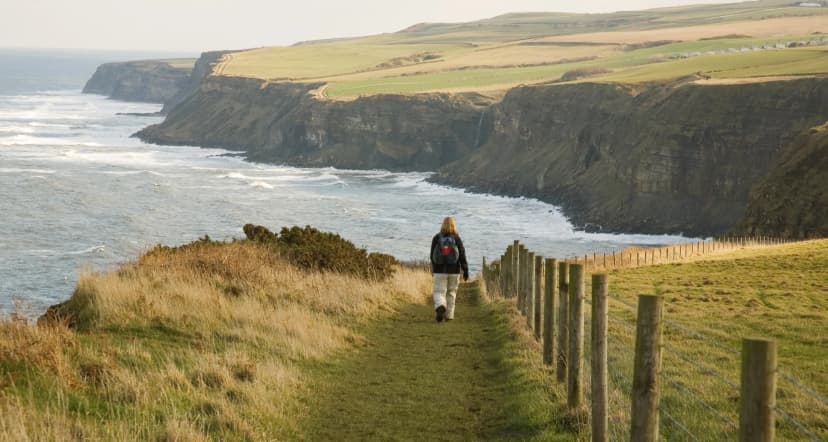
It doesn't matter if you're on a mountain hiking tour or on a relaxed coastal walking holiday — these stretches work for all of them.
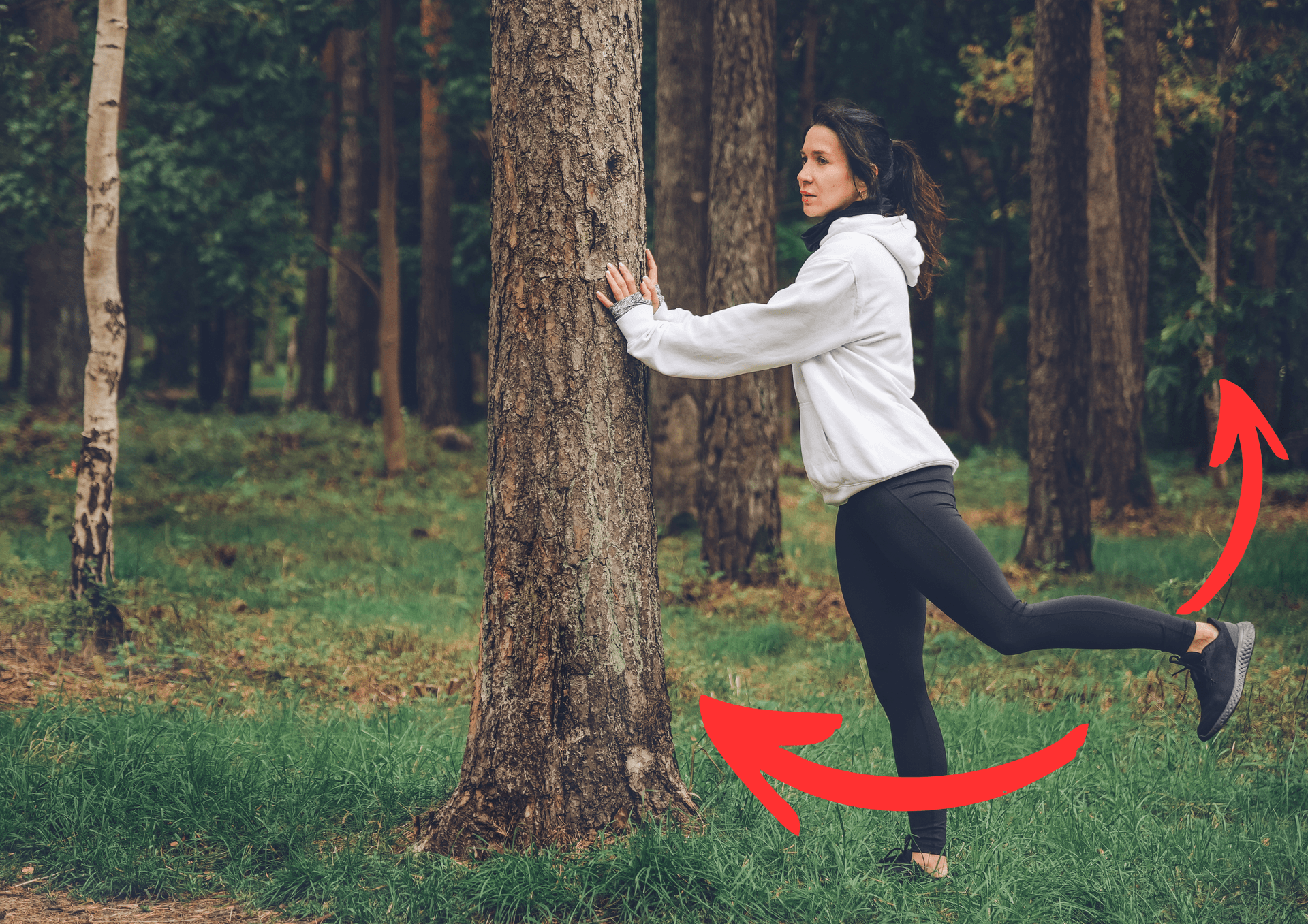
1. Leg Swings
Stand next to a wall, tree, or railing for balance. Swing one leg forward and back in a controlled arc, gradually increasing the range. Do 10–15 swings per leg, then switch to side-to-side swings to open up the hips.
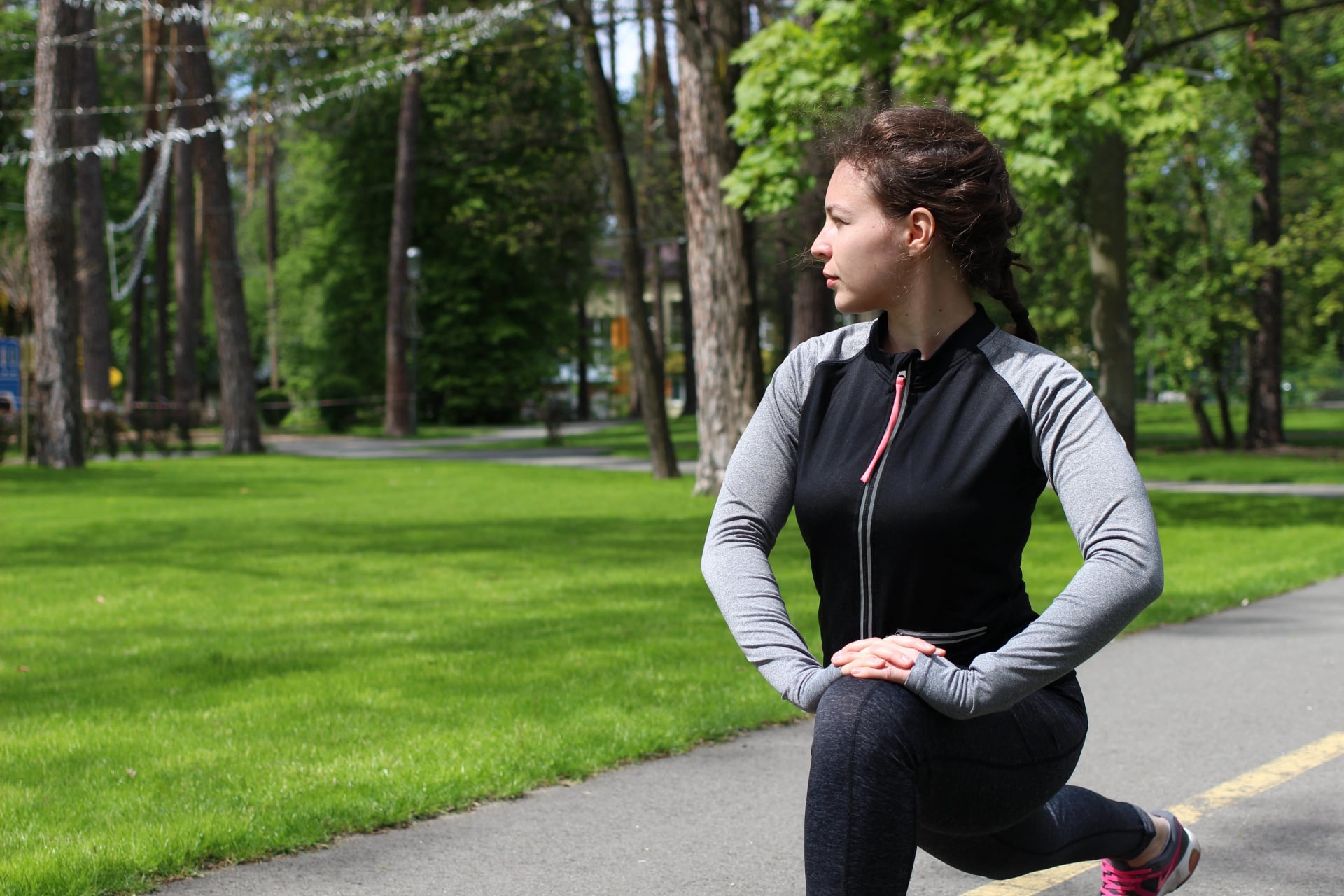
2. Walking Lunges
Take a big step forward and lower your back knee toward the ground. Push off and step into the next lunge. Do 8–10 on each leg.
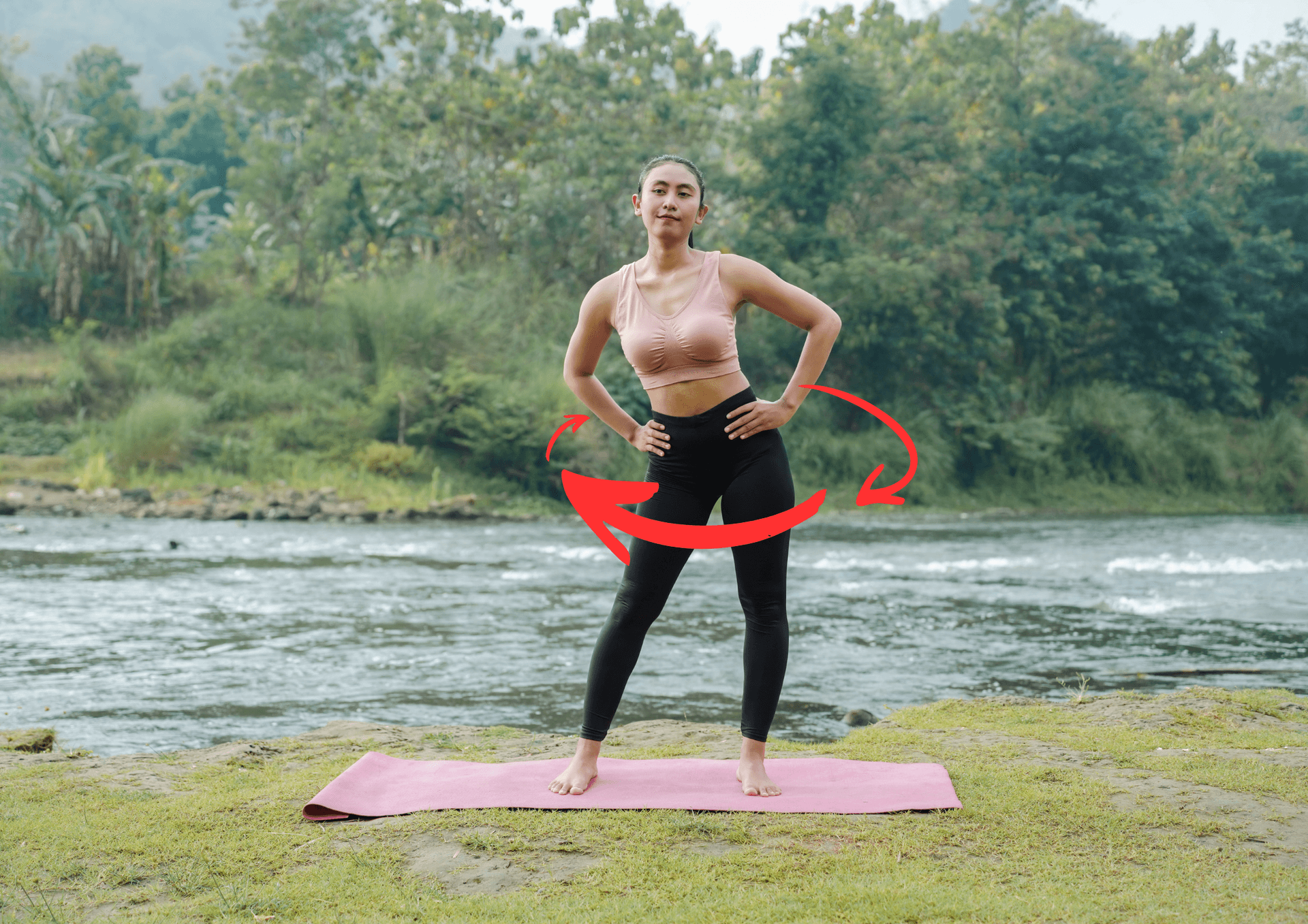
3. Hip Circles
Stand on one leg (hold something for balance if needed) and draw large circles with your raised knee — forward, out, back, and around. Do 10 in each direction, then switch legs.
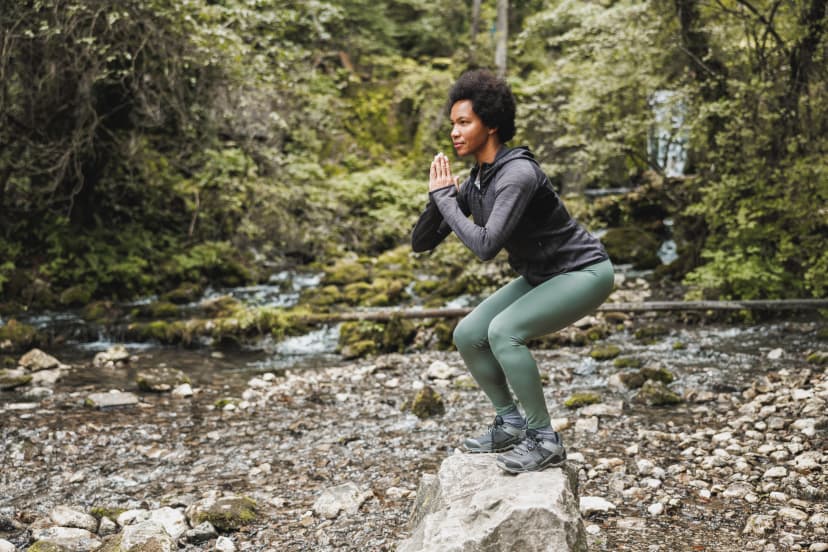
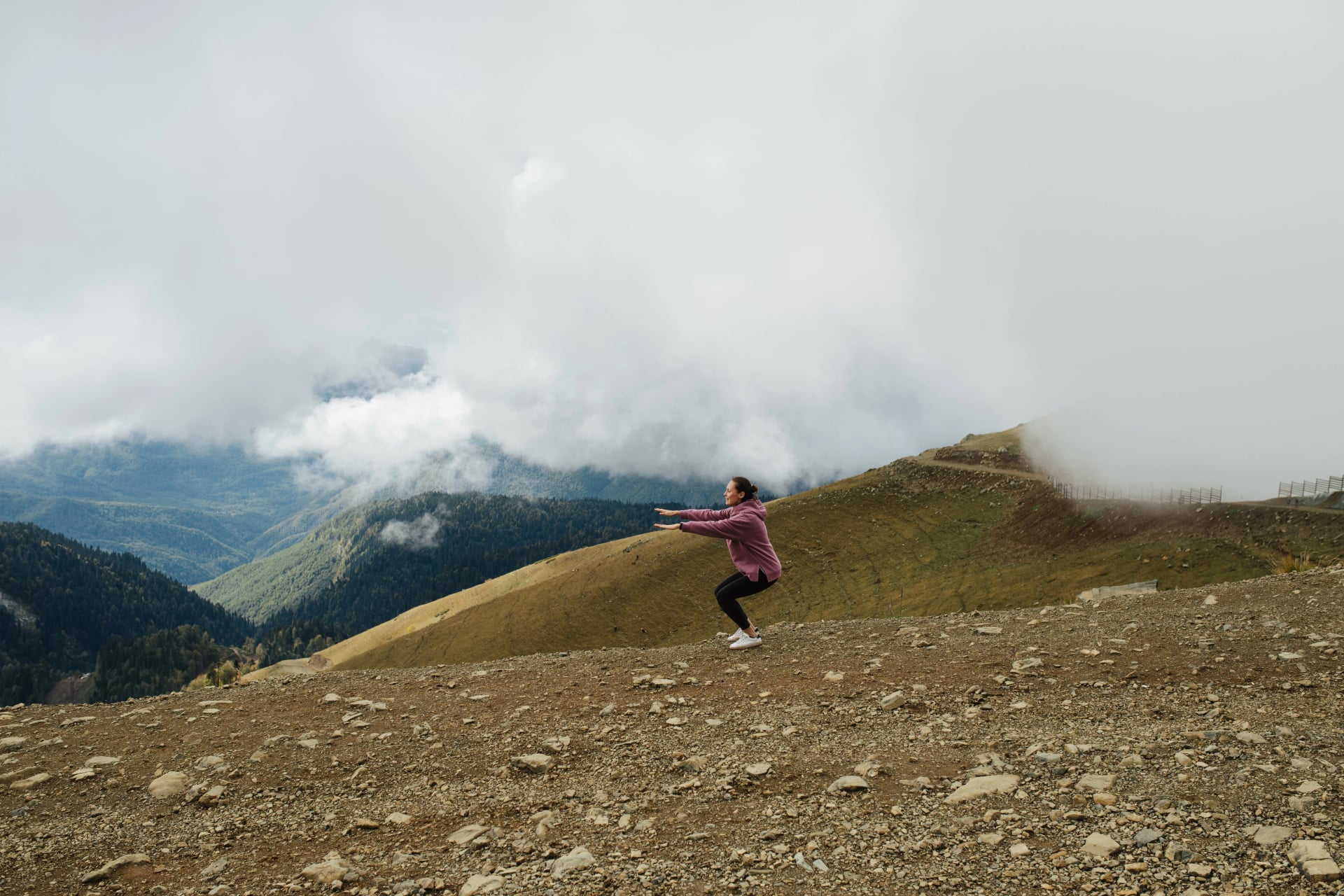
4. Bodyweight Squats
Stand with feet shoulder-width apart. Lower yourself as if sitting into a chair, then stand back up. Do 10–15 reps, nice and controlled.
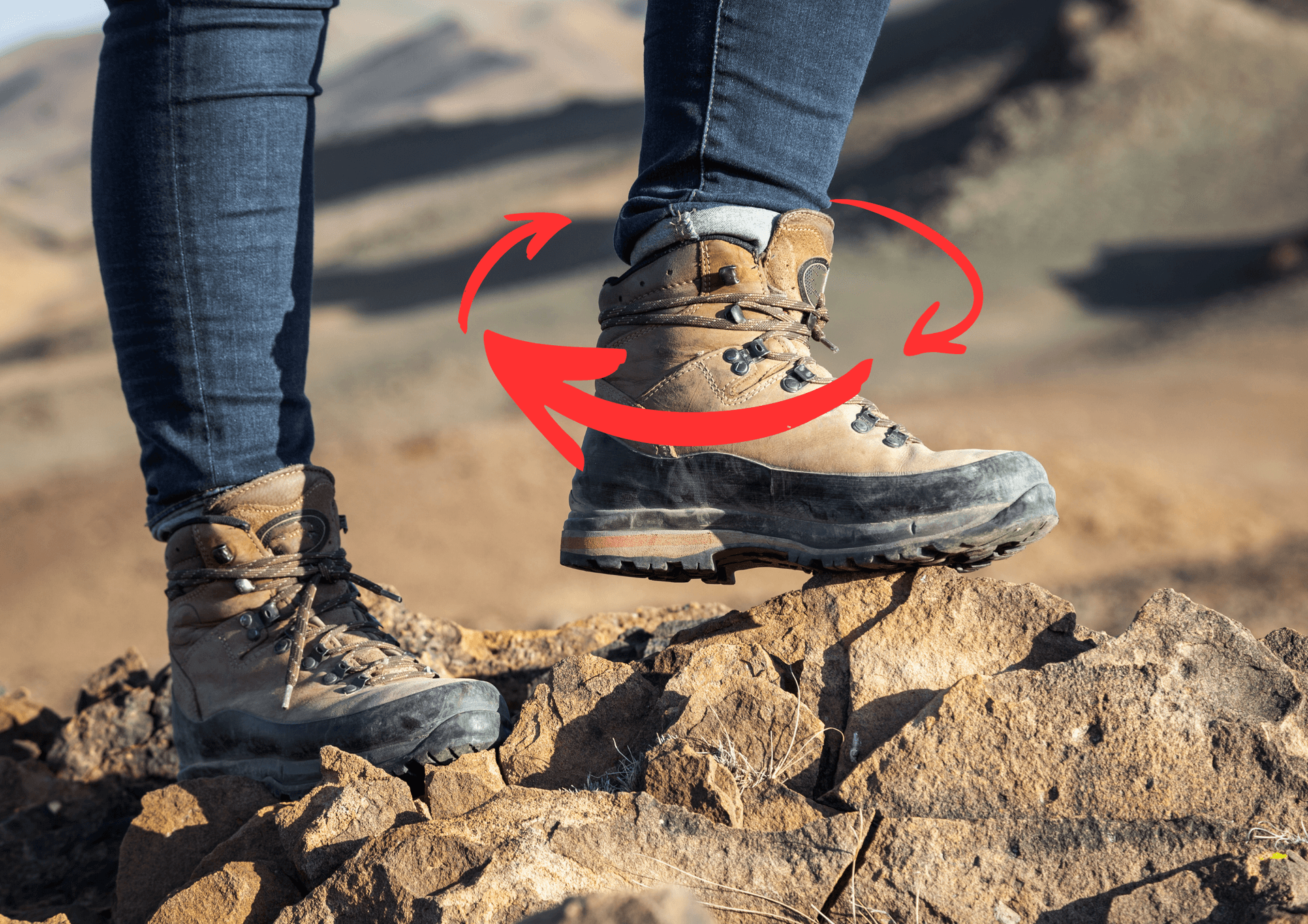
5. Ankle Circles
Lift one foot off the ground and slowly rotate your ankle — 10 circles clockwise, 10 counterclockwise. Switch feet.
After Your Hike: Undo the Damage
This is the stretching that matters most — especially on a multi-day trek. 5-10 minutes should suffice.
Do it while your muscles are still warm, ideally within 15–20 minutes of finishing your walk.
Before the shower. Before the beer. Trust us.
Hold each stretch for 30 seconds. Breathe slowly. Don't bounce.
If it hurts, back off — stretching should feel like relief, not punishment.
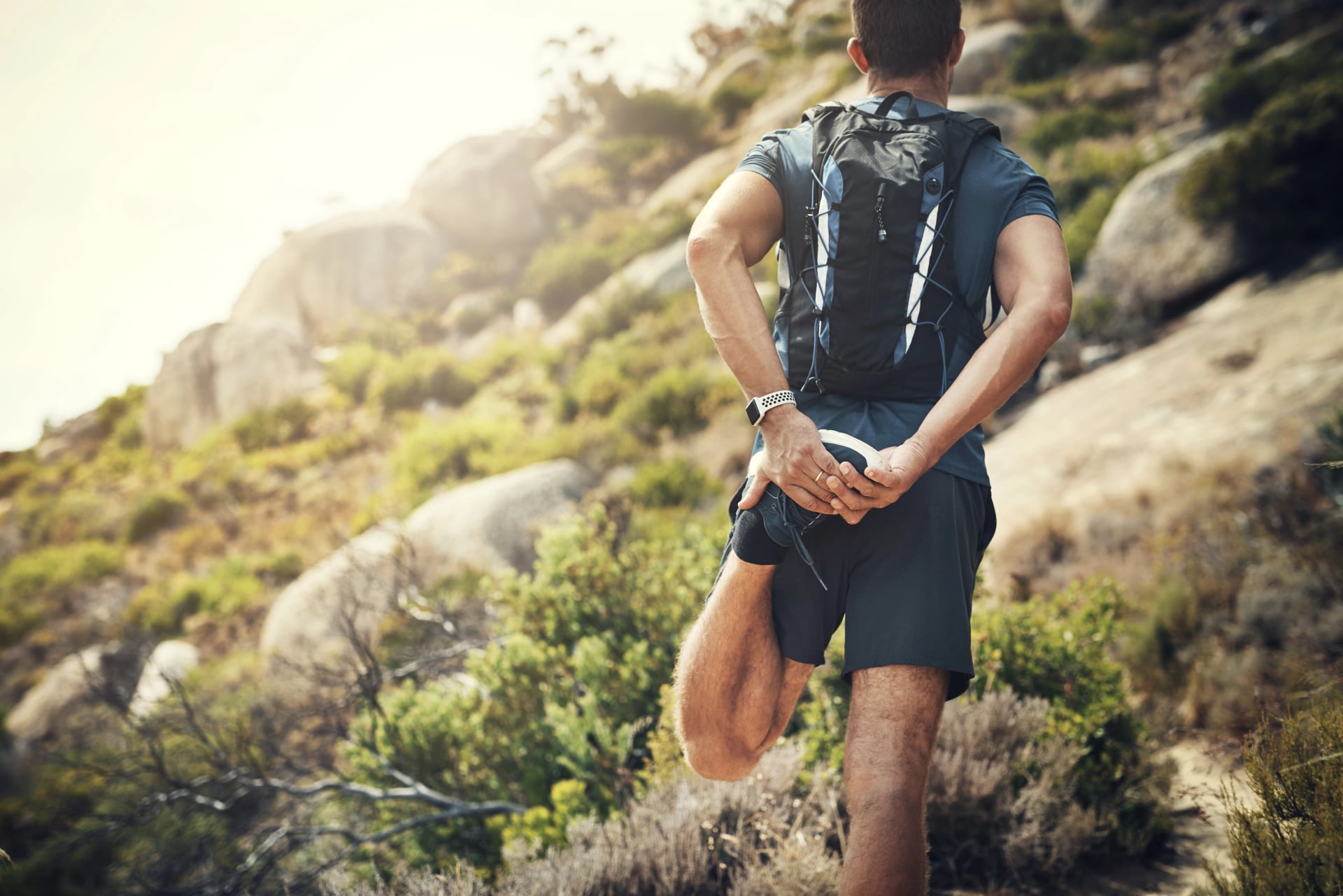
1. Standing Quad Stretch
Stand on one leg (use a wall or tree for balance). Grab your other ankle behind you and gently pull your heel toward your backside. Keep your knees close together and your hips pushed slightly forward.
Why: Your quadriceps work overtime on every descent. This is probably the most important single stretch for hikers.
2. Calf Stretch
Stand at arm's length from a wall or tree. Place one foot behind you, keeping that leg straight and heel on the ground. Lean forward, bending the front knee, until you feel the stretch in the back of your lower leg. Switch sides.
Why: Calves take enormous stress on climbs and uneven ground. Tight calves also contribute to foot pain and plantar fasciitis.
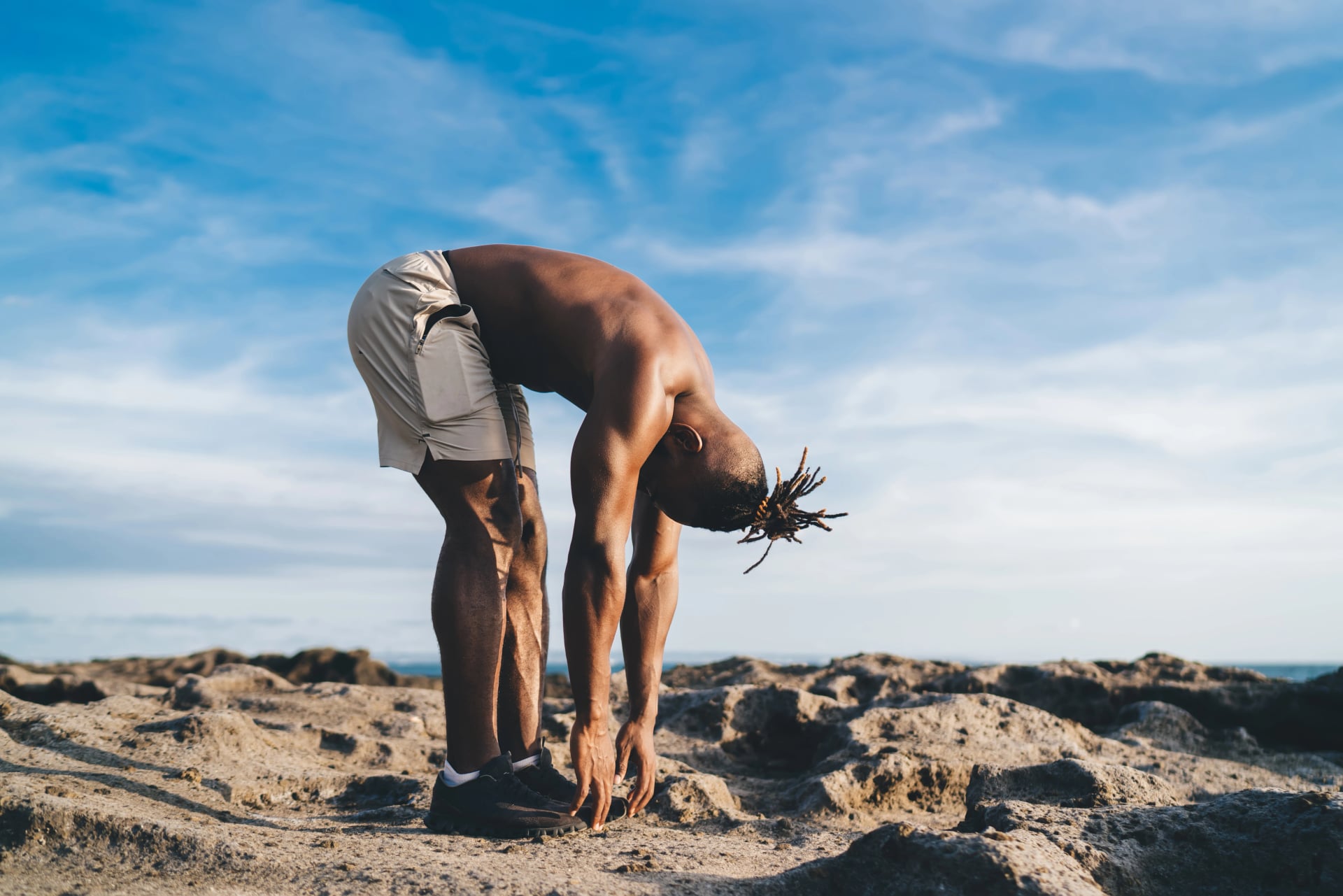
3. Forward Fold (Hamstrings + Lower Back)
Stand with feet hip-width apart. Bend your knees slightly and slowly fold forward from the hips, reaching your hands toward your toes — or wherever they comfortably reach. Let your head hang. Don't force it.
Why: Stretches the entire back of your body — hamstrings, calves, and lower back — all of which tighten up during long days of walking.
4. Hip Flexor Stretch (Runner's Lunge)
Step one foot forward into a lunge position. Lower your back knee to the ground. Keep your torso upright and gently push your hips forward until you feel a stretch in the front of your back hip.
Why: Hiking — especially uphill — tightens the hip flexors significantly. Tight hip flexors pull on your lower back, which is why many hikers get back pain on multi-day treks.

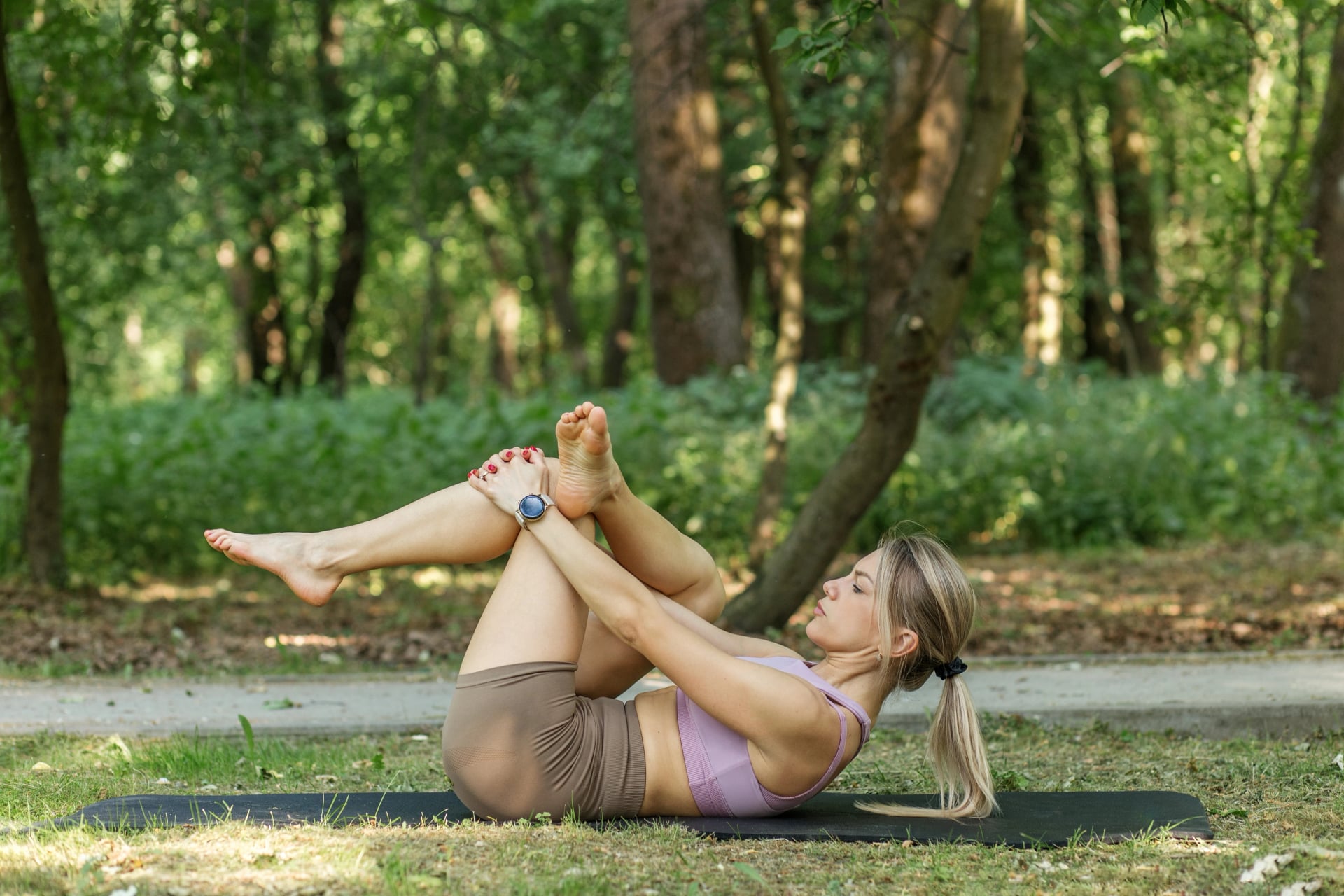
5. Figure-4 Stretch (Glutes)
Lie on your back. Cross one ankle over the opposite knee, making a figure-4 shape. Pull the bottom leg gently toward your chest until you feel a deep stretch in the glute of the crossed leg. If you can't lie down, do this seated or standing against a wall.
Why: Your glutes power you uphill and stabilise you on uneven ground. When they tighten up, your knees and lower back pay the price.
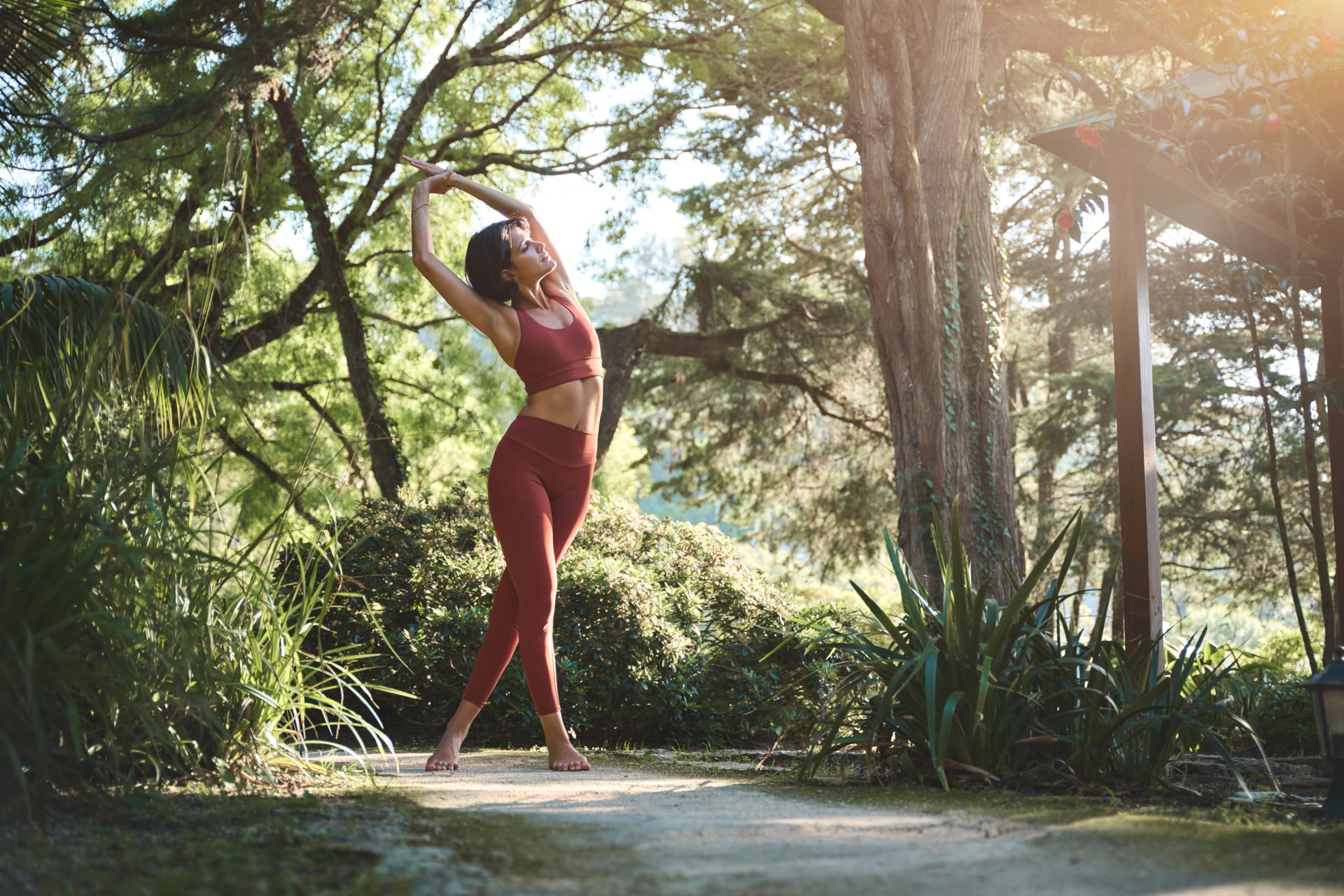
6. IT Band Stretch
Stand and cross one foot behind the other. Lean your hips toward the side of the back leg, raising the arm on the same side overhead. You should feel a stretch along the outside of your hip and thigh.
Why: A tight IT band is one of the most common causes of knee pain in hikers — that nagging ache on the outside of the knee, especially on descents.
7. Shoulder and Chest Opener
Clasp your hands behind your back, straighten your arms, and gently lift them away from your body. Look slightly upward and open your chest.
Why: Carrying a backpack all day rounds your shoulders forward. This stretch counteracts that and relieves tension in the upper back and neck.

You don't need to become a yoga devotee or spend an hour stretching each day.
Five to ten minutes — morning and evening — and your body will handle multi-day hiking dramatically better.
Your future self, stepping out of bed on day four feeling surprisingly human, will thank you.
Put Those Legs to Work!
Browse our hiking and walking tours and find the trail that's calling your name. Or simply tell us where you want to go and we'll help you find the perfect trail.

About this author
Uroš is our travel advisor and a kinesiologist who studied at the Faculty of Sport. An ultra-trail runner and sport climbing judge, he thrives wherever the next challenge waits — mountain biking, alpinism, or ski touring.


.jpg&w=828&q=75)








.jpg&w=828&q=75)