How to Train for Hiking?
How to train for a hike the right way. Practical workouts, strength exercises, and week-by-week plans so you enjoy your hiking holiday — not just survive it.

Uroš
Published October 17, 2025
Edited January 16, 2026
12 min read
Quick links
Don't want to read all this?
We've planned 2,000+ hiking trips. Send your dates, fitness and group size — we'll map the route and book every night.



You've booked the trip. The route looks incredible. You can already picture yourself walking through mountain valleys, arriving at a cosy hut with a cold drink waiting, and soaking in views that no Instagram filter could improve.
Now here's the question nobody wants to ask:
Can your legs actually get you there?
Knowing how to train for hiking isn't about becoming a gym junkie or running marathons. It's about arriving at the trailhead with a body (and head) ready for what's ahead — so you spend your days enjoying the scenery instead of counting the minutes until it's over.
The good news? A bit of preparation goes a long way.
Let's get into it.
How to Prepare for a Hike: Start by Knowing Your Trip
Before you start any training programme, take an honest look at what your trip actually involves.
How far will you walk each day?
What's the terrain like — flat paths, rolling hills, or proper mountain trails with serious climbs?
And how many consecutive days will you be walking?
If you're taking one of our hiking tours, your can check how demanding your tour is day-by-day under the itinerary section.
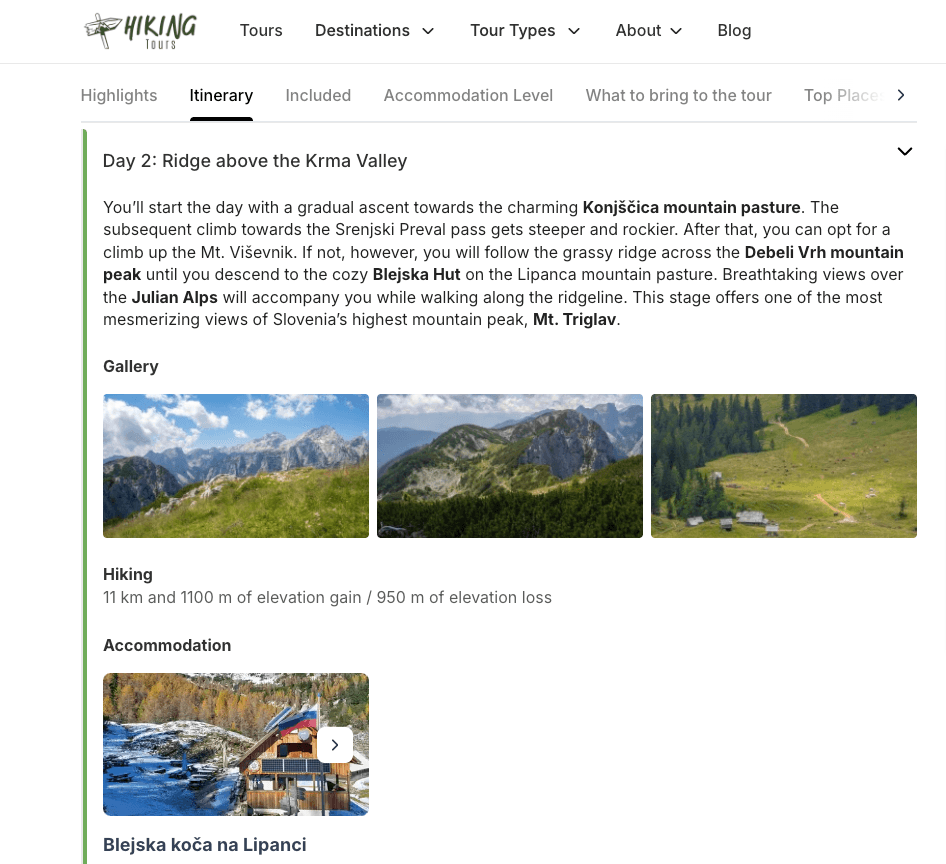
Here's a rough guide to help you figure out how much fitness hiking preparation you'll need:
Easy (flat terrain, under 10 km/day, 1–3 days): 4–6 weeks of preparation
Moderate (hills, 10–20 km/day, 4–7 days): 8–12 weeks of preparation
Challenging (mountain terrain, big elevation changes, 8+ days): 12–16 weeks of preparation
The more demanding the trip, the earlier you should start. And if you're currently not very active at all, add a few weeks to any of those numbers. There's no shame in starting early — only in limping through your holiday wishing you had.
How to Train for a Hike: The Three Pillars of Hiking Fitness
Every physiotherapist, mountain guide, and experienced long-distance hiker agrees on the same three things:
1. Build Your Endurance
Hiking is an endurance sport in disguise. Even a "moderate" day means 5–7 hours on your feet. On mountain trails, your heart works harder with every metre of elevation gain.
The simplest way to build endurance? Walk more.
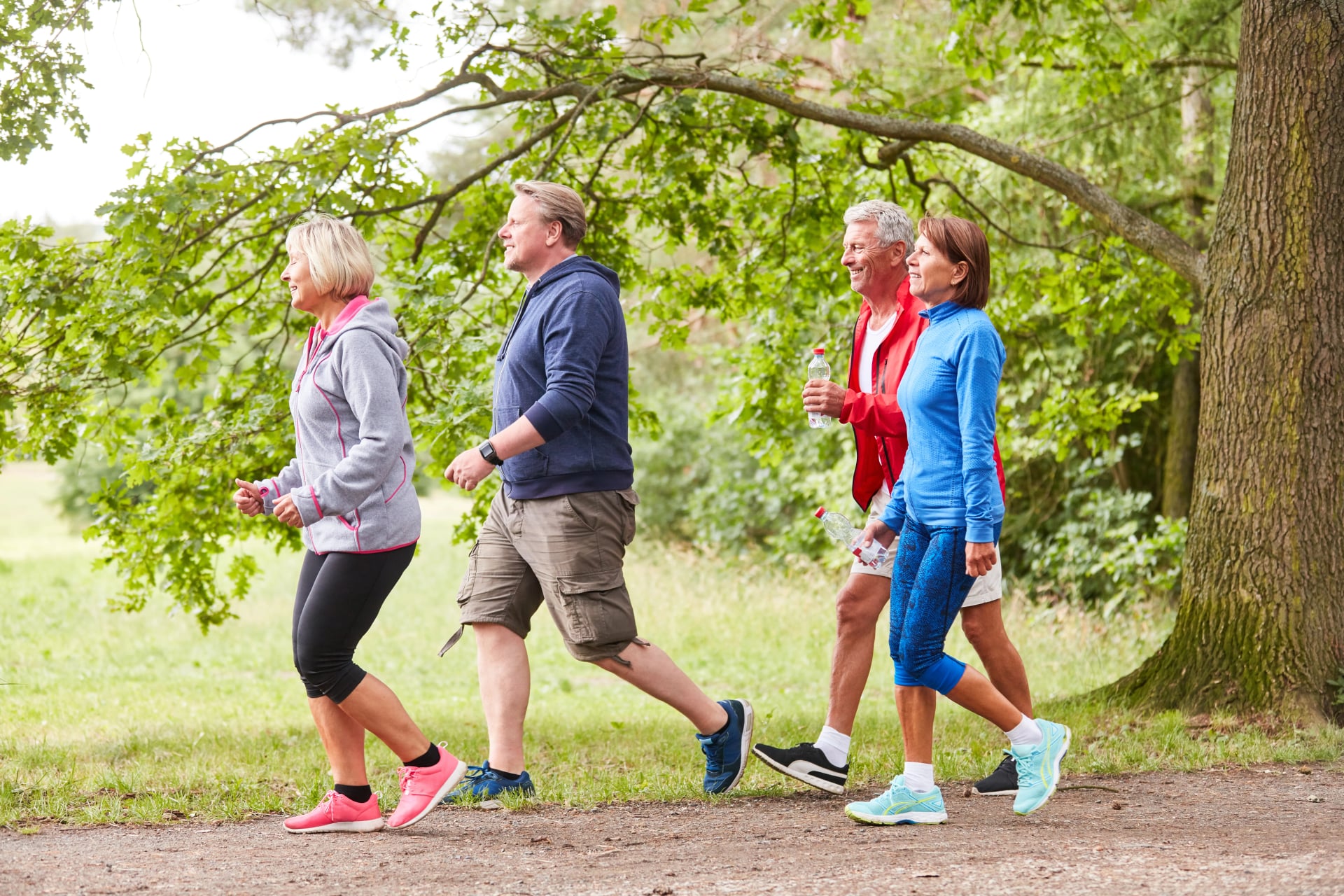
Start going for longer walks. If you normally walk for 30 minutes, make it 45. Then an hour. Then 90 minutes. Build up gradually so that by the time your trip arrives, you can comfortably walk for a duration that's at least two-thirds of what your longest hiking day will be.
Beyond walking, any sustained cardio helps — cycling, swimming, jogging, even a brisk game of tennis. The key is working at a pace where you could still hold a conversation. If you're gasping, you're going too hard for endurance training.
If your trip involves mountains, get your heart used to going uphill. Walk up hills. Climb stairs. Use a stair machine at the gym. Repeat a small hill near your home. It doesn't need to be dramatic — even a modest slope done regularly will make a real difference to how you feel on day one of your trek.
2. Hiking Strength Training
Here's something most people don't think about: strong muscles protect your joints.
Every step on uneven ground, every descent, every hour carrying a pack — your muscles are the shock absorbers. When they get tired, the load transfers to your knees, ankles, and hips. That's when pain and injuries show up.
Hiking strength training doesn't mean heavy barbells and grunting in the gym. It means building strength in the specific muscles that keep you moving safely on the trail:
your quadriceps (front of the thigh),
glutes (backside),
hamstrings (back of the thigh),
calves,
core,
shoulders and upper back (if you'll be carrying a heavier pack).
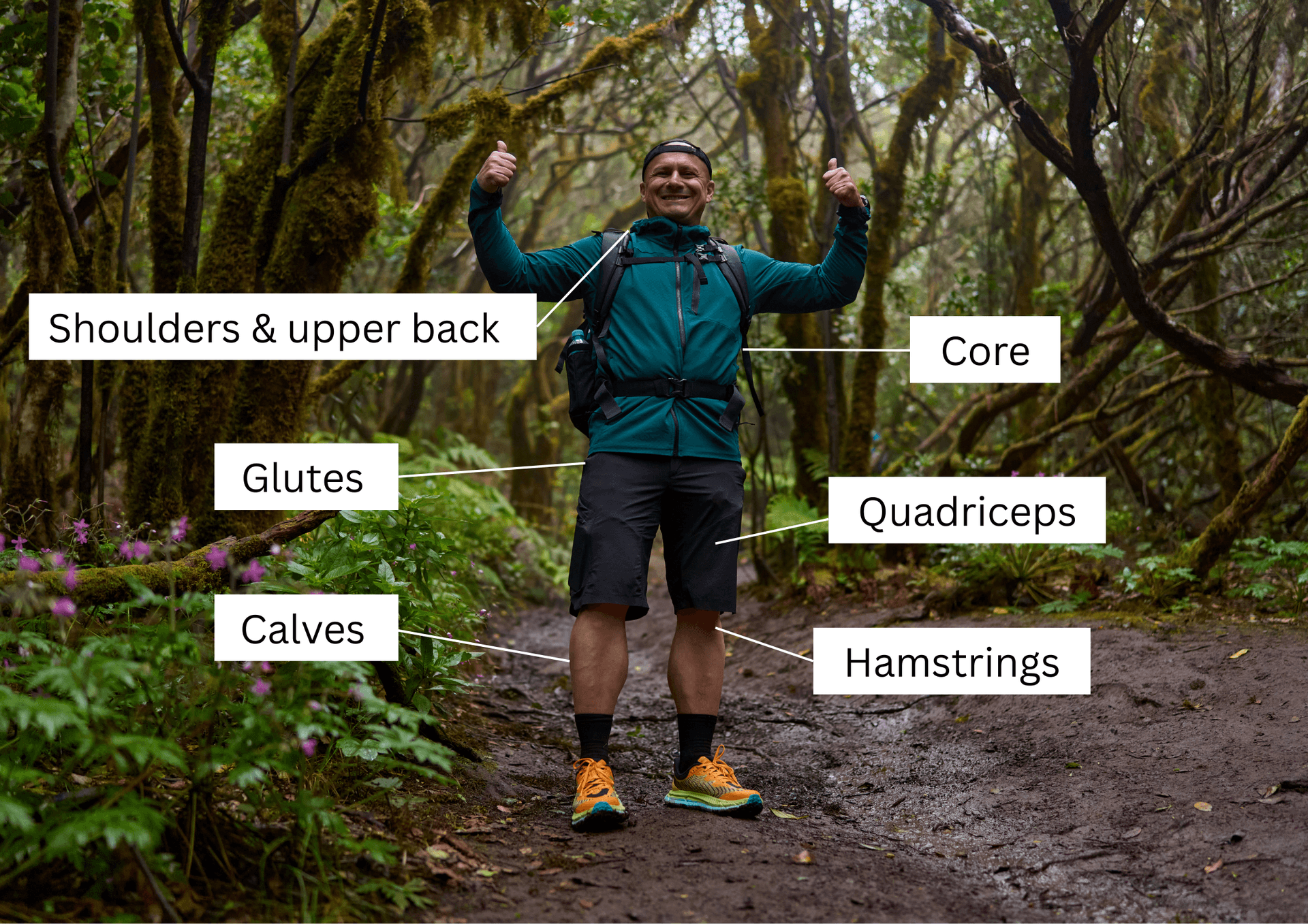
The best exercises for hikers — which you can do at home with no equipment — include:
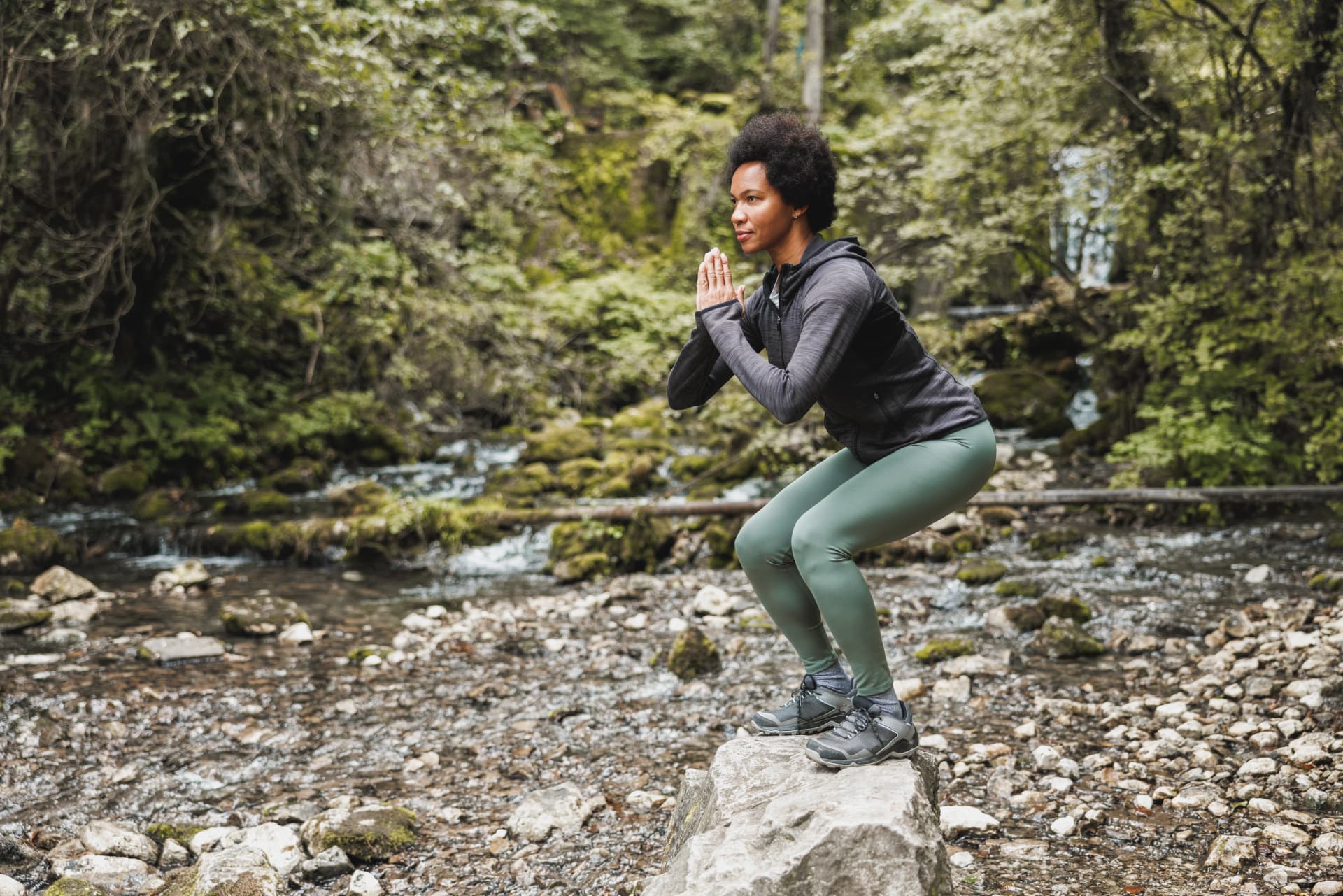
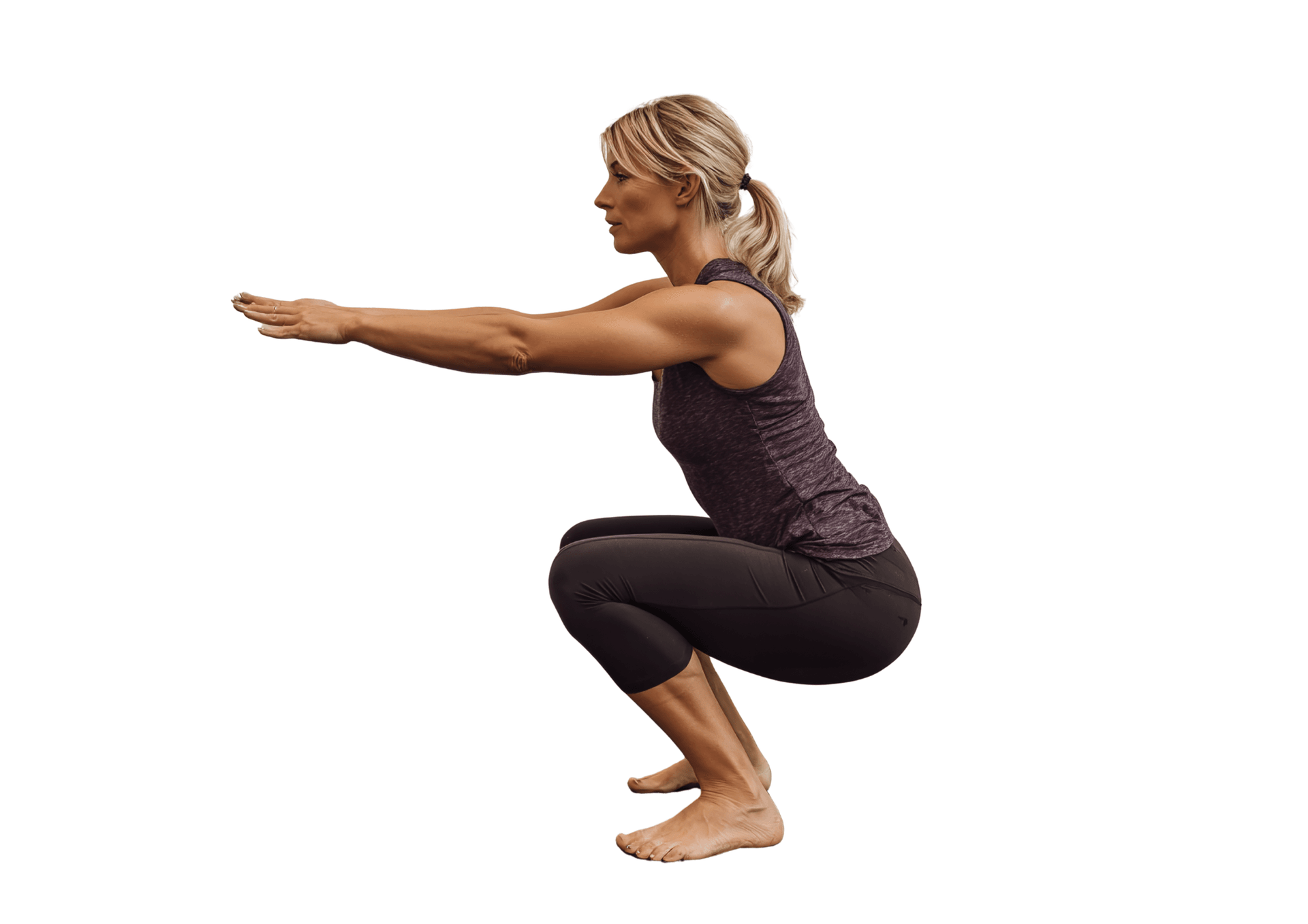
Squats — the single best exercise for hikers. They work your quads, glutes, and hamstrings all at once. Start with bodyweight squats and add weight as you get stronger. Three sets of 15 is a great starting point.
Lunges — walking lunges, reverse lunges, whatever variation you like. They mimic the stepping motion of hiking and build single-leg strength, which is exactly what trail walking demands.

Step-ups — find a sturdy bench, box, or stair. Step up, step down. Simple and incredibly effective. Add a backpack for extra challenge as you progress.

Calf raises — stand on the edge of a step and raise and lower yourself on your toes. Your calves will take a beating on long days, especially on uneven ground.

Planks — your core stabilises everything. A strong core supports your pack, protects your lower back, and keeps you balanced on rough terrain. Hold for 30–60 seconds, repeat three times.

These hiking exercises take under 30 minutes, need no gym. Three times a week and you'll arrive at your trek feeling like a different person.
3. Train for Hiking by Hiking
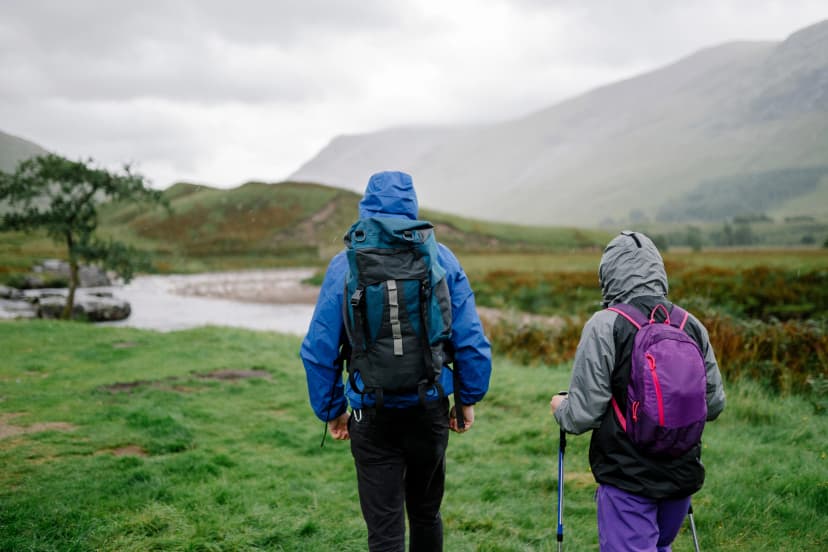
Research shows that adding just one day per week of walking with a loaded backpack can double the training effect of gym work alone. The best way to train for hiking is, unsurprisingly, to go hiking.
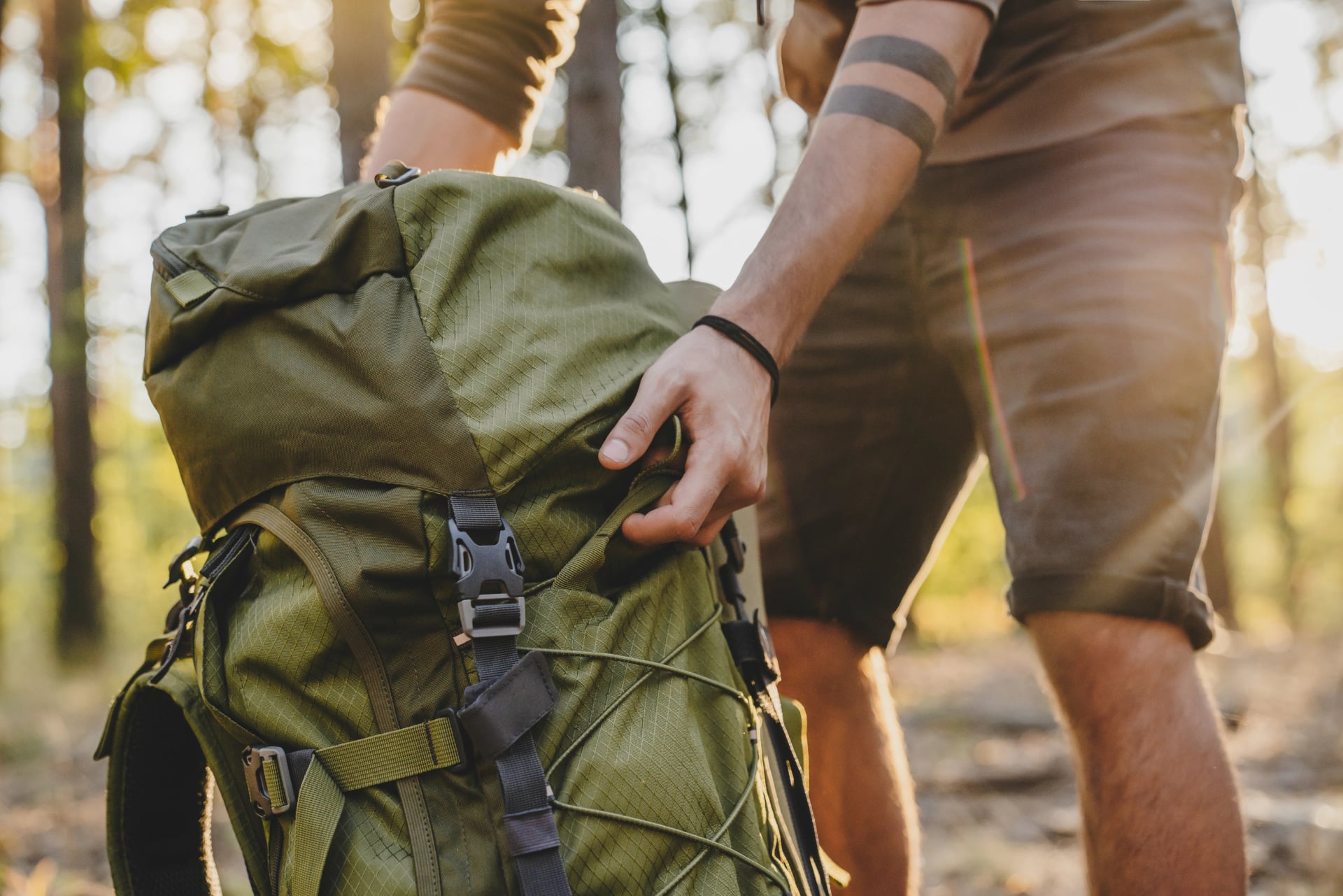
Get out and walk. In your hiking boots. With your actual pack.
Start light — just a few kilos in the bag. Each week, add a bit more weight and a bit more distance.
Progressive backpack loading (a practical guide):
Weeks 1–3: Walk with about 25% of your target pack weight
Weeks 4–6: Increase to 50%
Weeks 7–9: Increase to 75%
Weeks 10–12: Walk with your full target weight
Hiking Exercises for Downhill
Let's address the elephant on the mountain. Most people assume that going uphill is the hard part. It's not. Well, it is — your lungs will confirm that. But it's going downhill that actually does the damage.
When you walk downhill, the forces on your knees are roughly three times greater than on flat ground and significantly more than when going uphill.
Your quadriceps are working overtime to brake your body with every step, and they're doing it in a way muscles find particularly exhausting — lengthening under load rather than shortening. This is called eccentric contraction, and it's why your legs feel like jelly after a long descent.
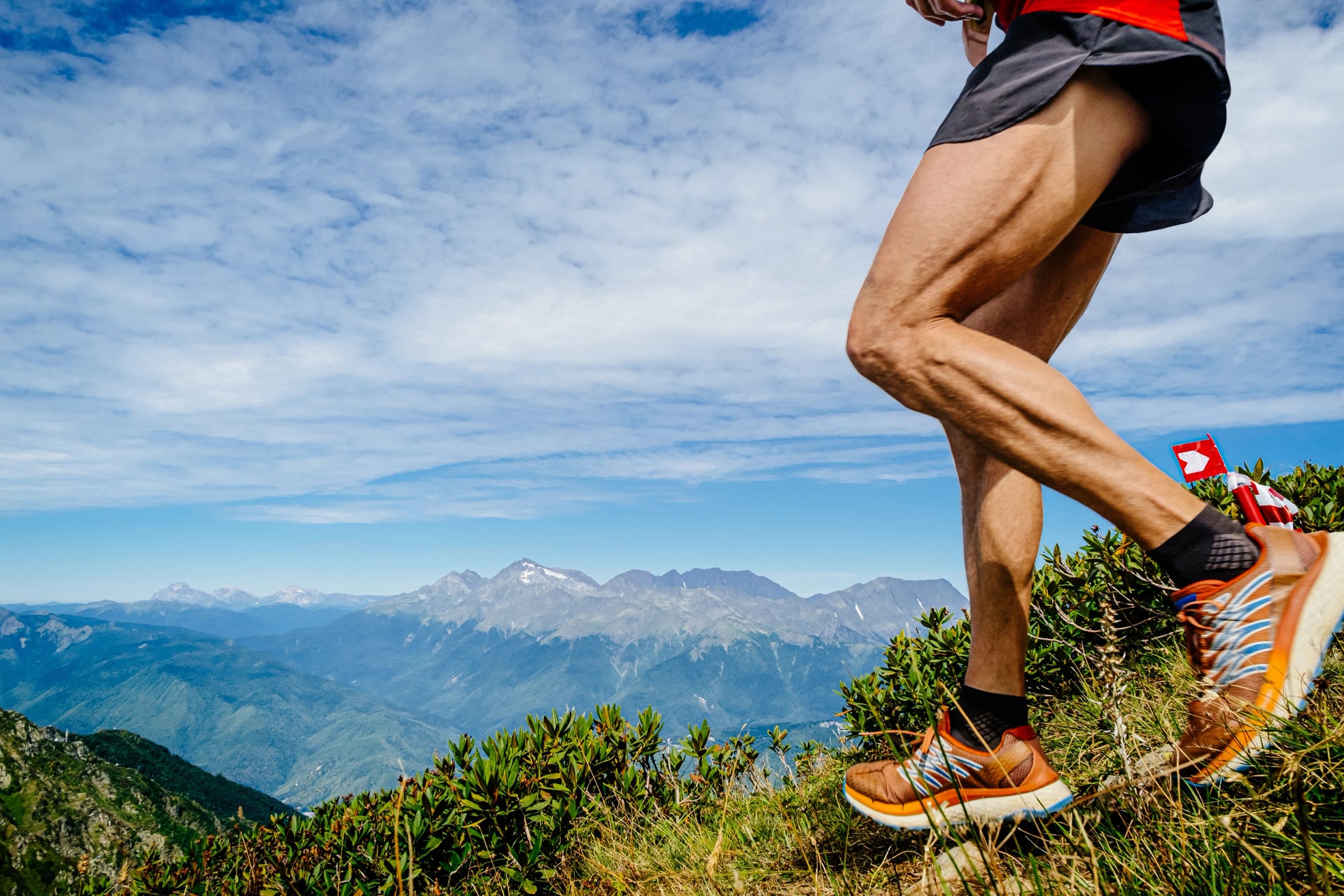
If your trip involves mountain walking, you need specific workouts for hiking downhill. Here's what works:
Slow it down in the gym. When you do lunges or step-ups, focus on the lowering phase. Take 3–4 seconds to lower yourself. This trains your muscles for exactly the kind of work they'll do on a descent.
Do step-downs. Stand on a step and slowly lower one foot to the ground, controlling the movement with the standing leg. This is one of the most hiking-specific exercises you can do.
Walk downhill. If you have access to hills, walk down them. With a pack. It sounds obvious, but many people only train on the flat and then wonder why descents on their trek are so punishing.
Get trekking poles. Studies show that poles reduce the compressive forces on your knees by about 25%. If your holiday involves any significant descents, poles aren't just a nice-to-have — they're essential kit.
How to Train for Altitude Hiking
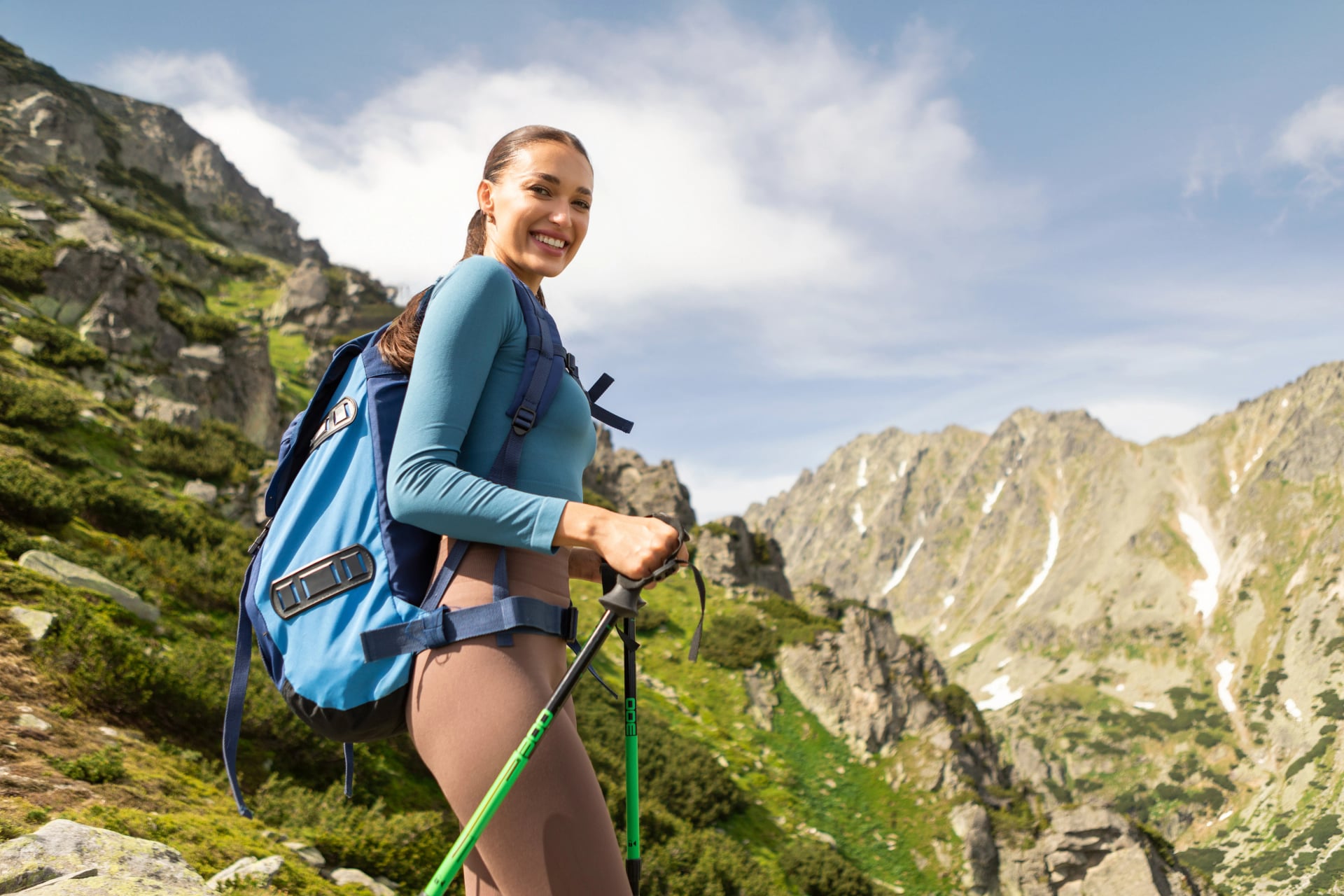
If your trek takes you into the mountains, you need to think about two additional challenges:
big elevation gains and,
for higher treks, thinner air.
1. Training for Elevation Gain
Walking 800 metres uphill isn't the same as walking on flat ground, even if the distance is shorter. Your legs and lungs work dramatically harder with every metre of ascent. If you live somewhere flat, you need to simulate this as part of your hiker workout.
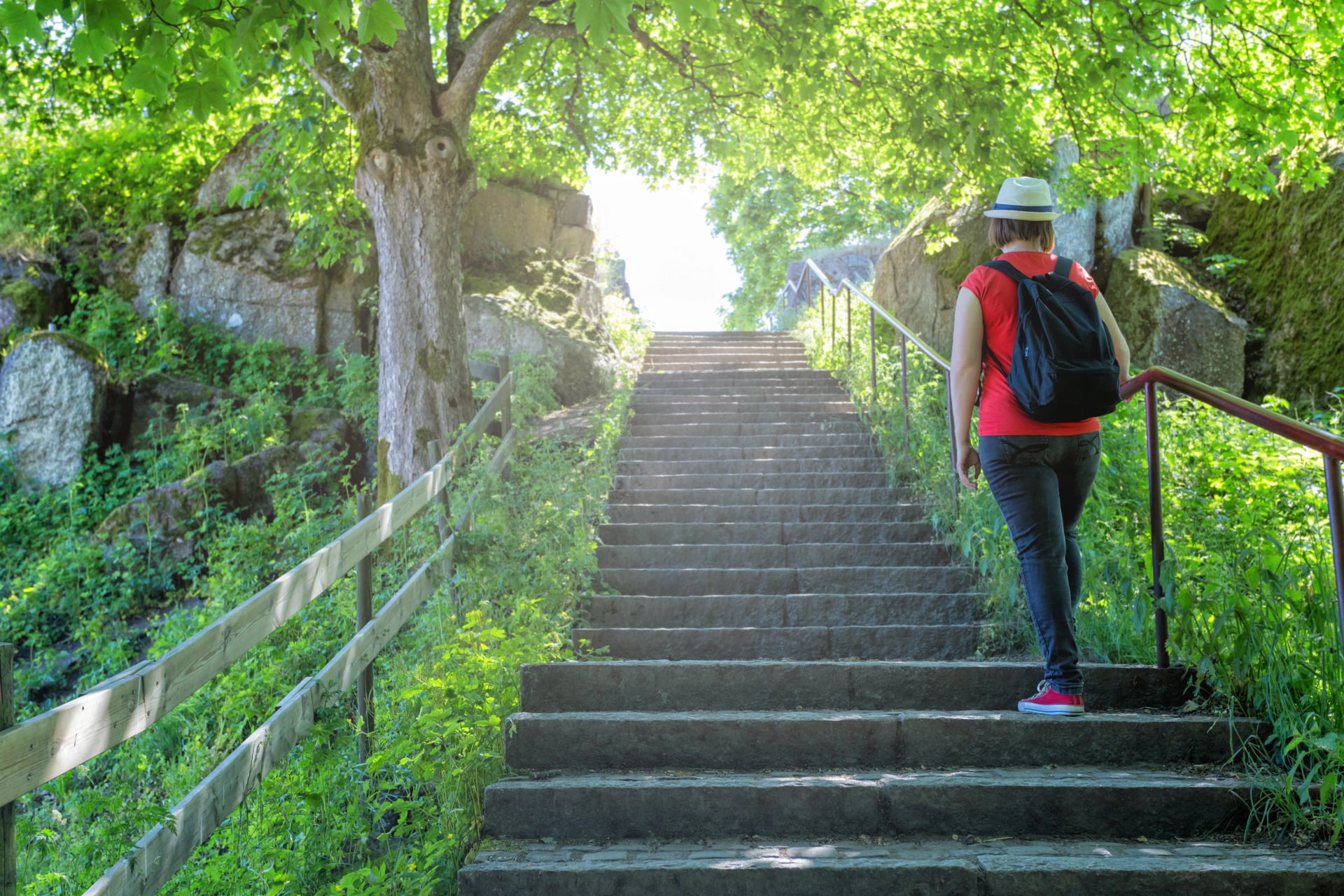
The best substitute for mountain climbing is stairs. Stairwells in tall buildings, stadium steps, or a stair machine at the gym — all work brilliantly.
Walk up and down repeatedly, ideally with a pack, and build up the duration each week. A small local hill, done in repeated loops, is another great option. It's not glamorous, but it's effective.
2. Dealing with Altitude
Above about 2,500 metres, the air contains fewer oxygen molecules per breath, and your body has to work harder for the same output.
Your VO2 max — the maximum amount of oxygen your body can use — drops roughly 1% for every 100 metres gained above 1,500 metres. Even a very fit person at sea level will feel significantly slower and more tired at 3,000 metres.

For most European mountain holidays — the Alps, the Dolomites, the Pyrenees — altitude isn't usually a major concern, as most trails stay below the point where serious problems begin. But if your trek goes higher, keep these points in mind:
Acclimatise gradually. Don't rush to high elevations. Above 2,500 metres, limit your daily elevation gain to 300–500 metres.
Stay well hydrated. Your body loses water faster at altitude. Aim for 3–4 litres per day and drink before you feel thirsty.
Build your aerobic fitness beforehand. The fitter your cardiovascular system, the more capacity you have to cope with reduced oxygen. Activities like running, cycling, swimming, and HIIT training all improve VO2 max.
Recognise the symptoms. Headache, nausea, and fatigue at altitude could be Acute Mountain Sickness. If symptoms appear, don't go higher. If they worsen, descend.
Being fit doesn't make you immune to altitude effects — it can affect anyone regardless of fitness level. But a strong aerobic base gives your body more reserve to cope with it.
A Simple Weekly Workout Plan
Here's a weekly structure that works for most people learning how to train for a hike. Adjust the intensity based on your trip — more hills and heavier packs for mountain treks, more distance for longer flat walks.
Monday — Hiking strength training. Squats, lunges, step-ups, calf raises, planks. 30 minutes. Focus on legs and core.
Tuesday — Cardio. 30–60 minutes of brisk walking, cycling, swimming, or jogging. Include hills or stairs if your trip is in the mountains.
Wednesday — Rest or easy walk.
Thursday — Strength + balance. Same exercises plus upper body work and balance exercises (single-leg stands). 30 minutes.
Friday — Cardio with hills. Walk with a bit of incline or do stair repeats. 30–60 minutes.
Saturday — Long walk. This is your key session. Each week, go a bit further and carry a bit more weight. Wear your hiking boots and your actual pack.
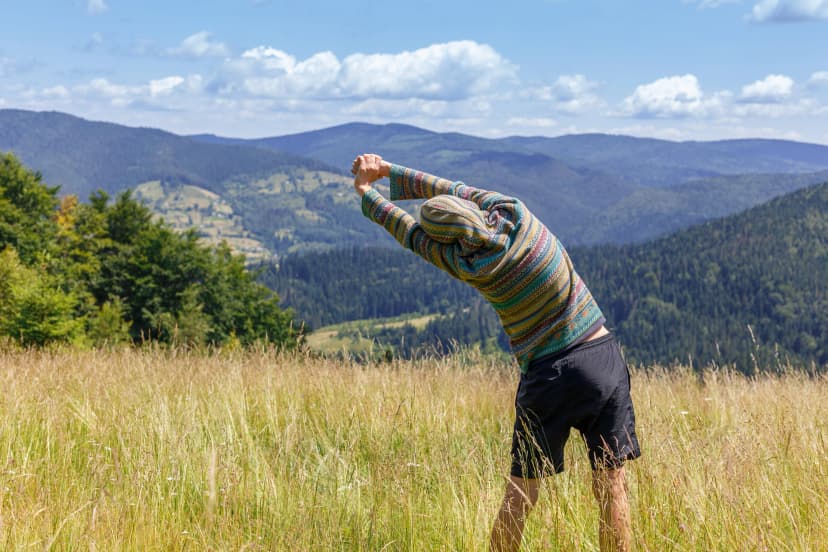
Sunday — Rest and stretch. Focus on calves, quads, hamstrings, and hip flexors. Easy does it.

Each week, increase your distances and weights by about 10%.
Every third or fourth week, take it easy — reduce the load and let your body recover. In the final week before departure, dial everything back. Walk gently, stretch, rest. You've done the work — now let your body absorb it.
Short on Time?
Life is busy. Not everyone has 12 weeks and five days a week to train. If you're pressed for time, these are the non-negotiable hiking exercises that give you the most bang for your buck:
Walk every day. Even 20 minutes counts. Take the stairs instead of the lift. Walk to the shops. Park further away from the door. Every step adds up.
Do squats and lunges every other day. Three sets of 15, bodyweight only. Takes five minutes. Your legs will notice.
One long walk per weekend in your hiking boots with a pack. Make it longer each week. This is the single most valuable training session you can do.
Break in your boots now. Whatever time you have, spend some of it in your actual hiking footwear.
Stretch your legs in the evening. Five minutes of calf, quad, and hip flexor stretching. Reduces stiffness and keeps you ready for the next day.
It's not a perfect programme, but it's miles better than doing nothing. And doing nothing is the only truly bad option.
The Bottom Line
Learning how to train for hiking doesn't require a personal trainer, a gym full of equipment, or the discipline of a professional athlete. It requires a few weeks of consistent effort, some good boots, and the willingness to get out and walk.
The payoff is enormous. Instead of surviving your trek, you'll love it.
That's what a hiking holiday is supposed to feel like.
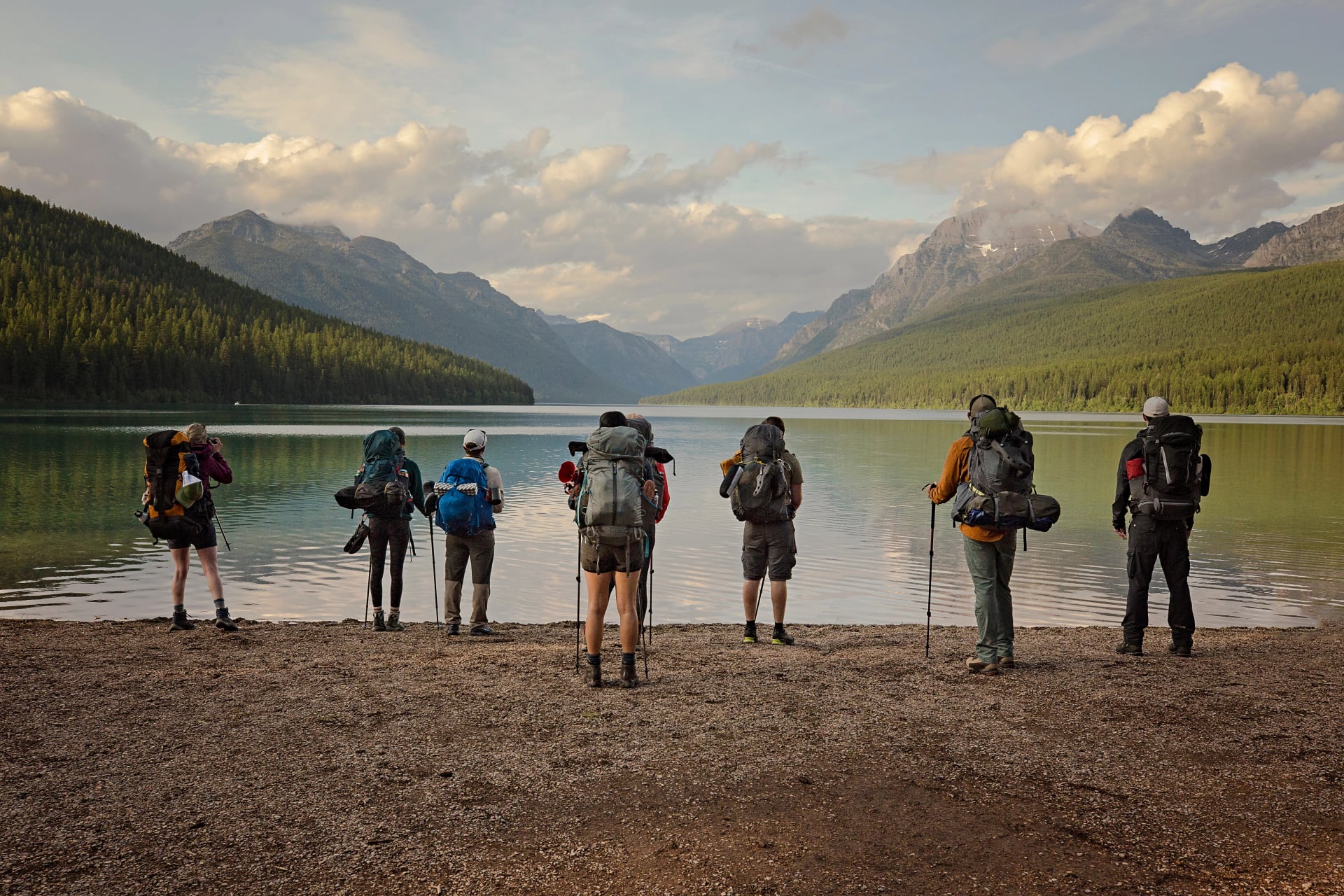
So start now. Lace up your boots. Walk out the front door. Your adventure begins well before you reach the trailhead.
Still looking for the right hike?
Browse our collection of hiking tours and find the one that fits your travel style and fitness level.
And if you’re not sure which route is best for you, just reach out to our team — we’ll be happy to help you choose the perfect trip.

About this author
Uroš is our travel advisor and a kinesiologist who studied at the Faculty of Sport. An ultra-trail runner and sport climbing judge, he thrives wherever the next challenge waits — mountain biking, alpinism, or ski touring.

.jpg&w=828&q=75)









.jpg&w=828&q=75)