Cinque Terre: the Ultimate Hiking Guide
Which trails are open, which ones are worth the climb over the crowds, when to go, and how to arrange for truly carefree holidays.

Ajda
Published September 19, 2026
Edited September 19, 2026
14 min read
Quick links
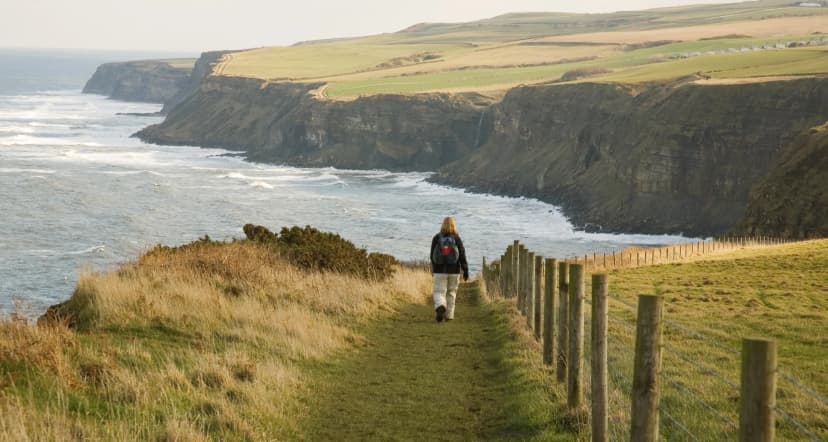
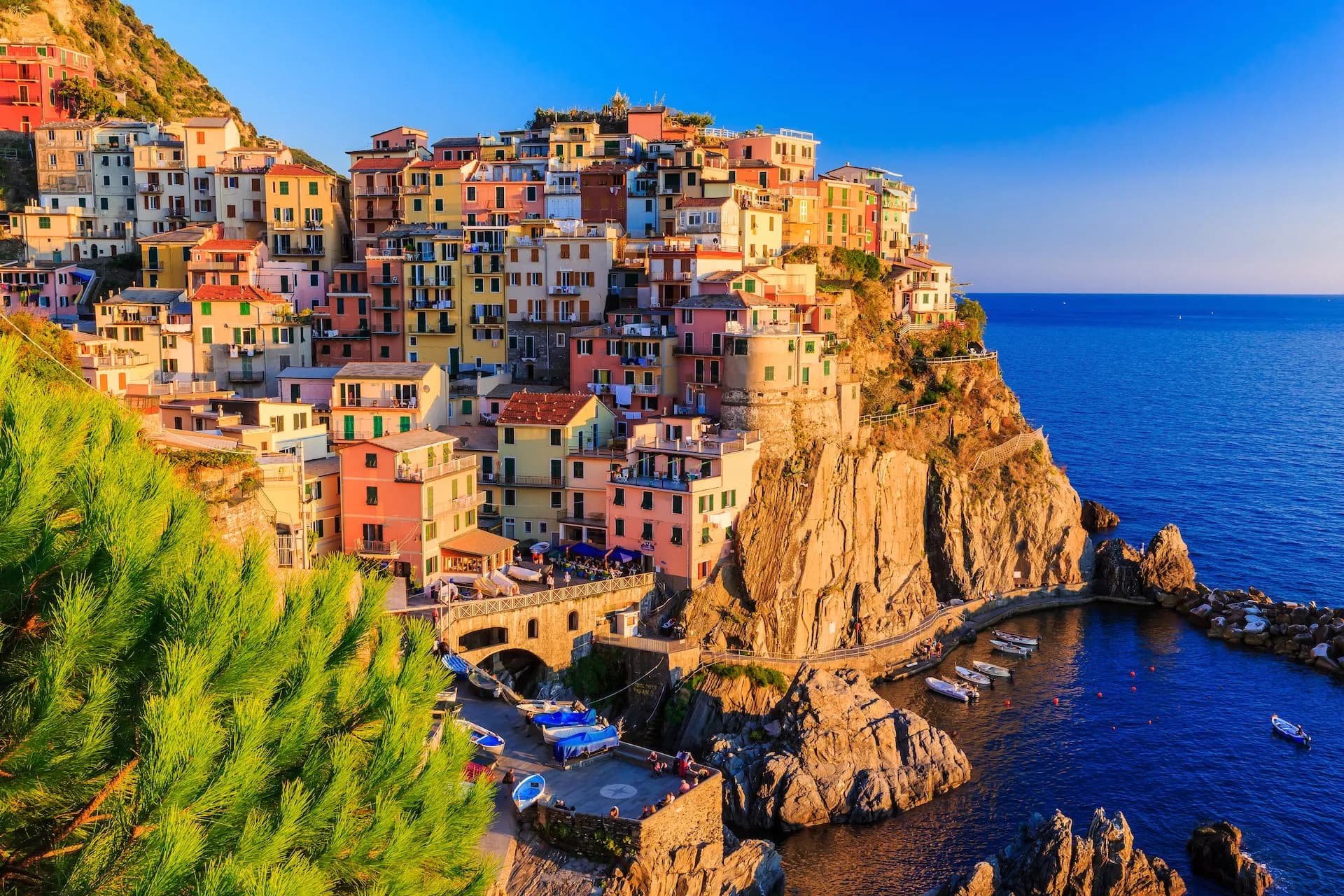
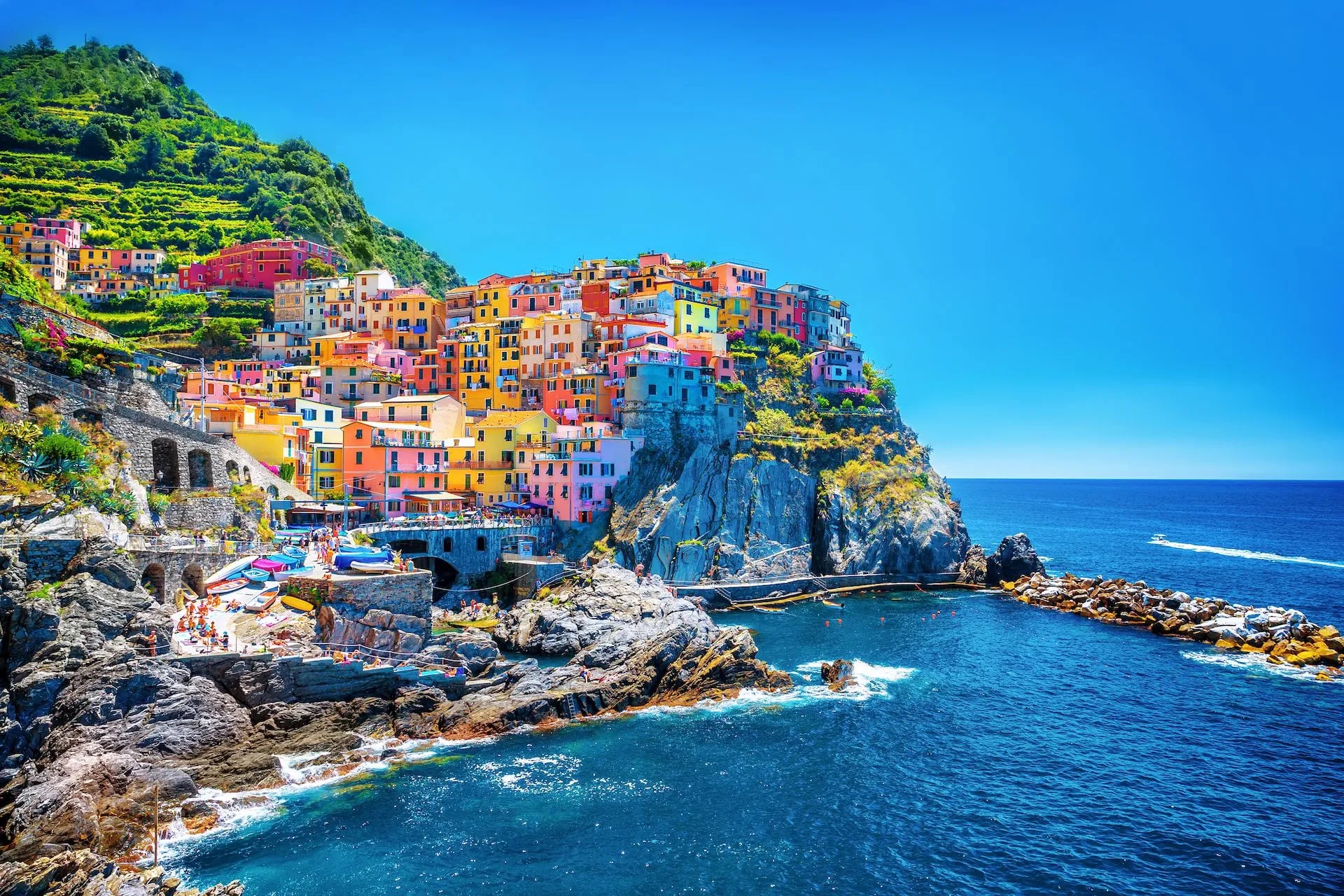
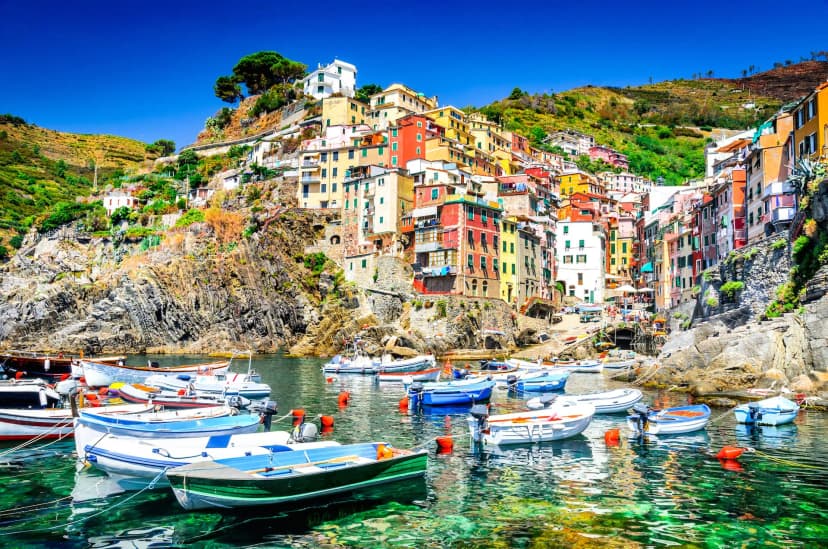
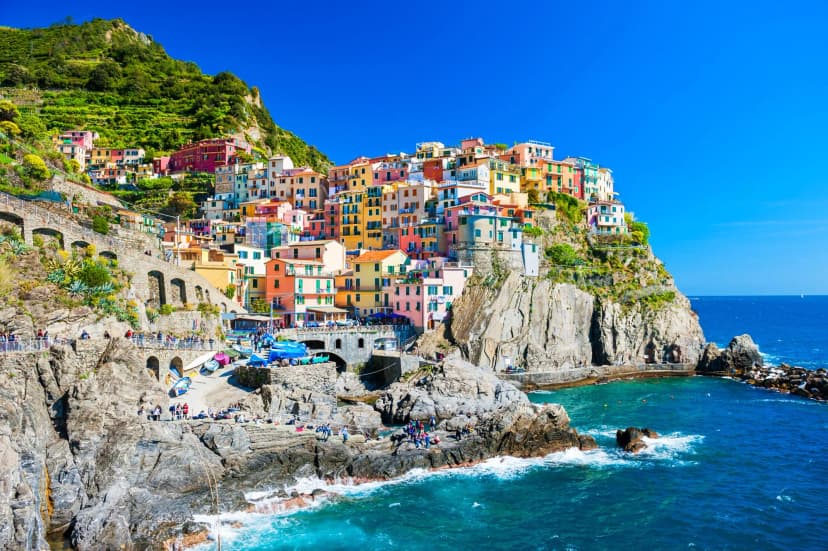
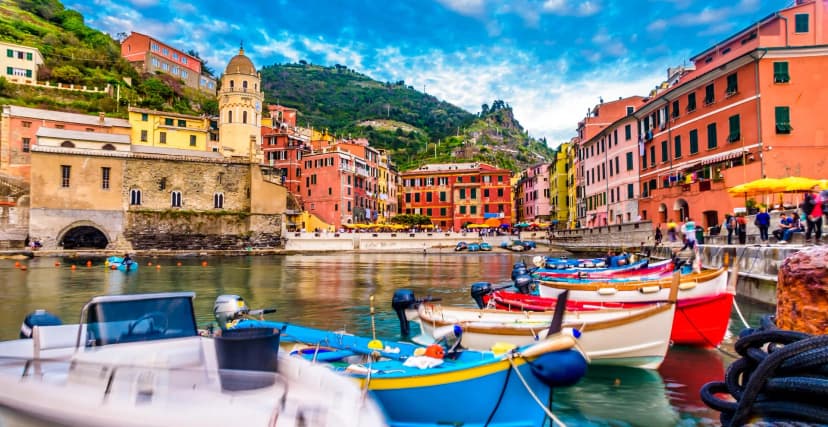
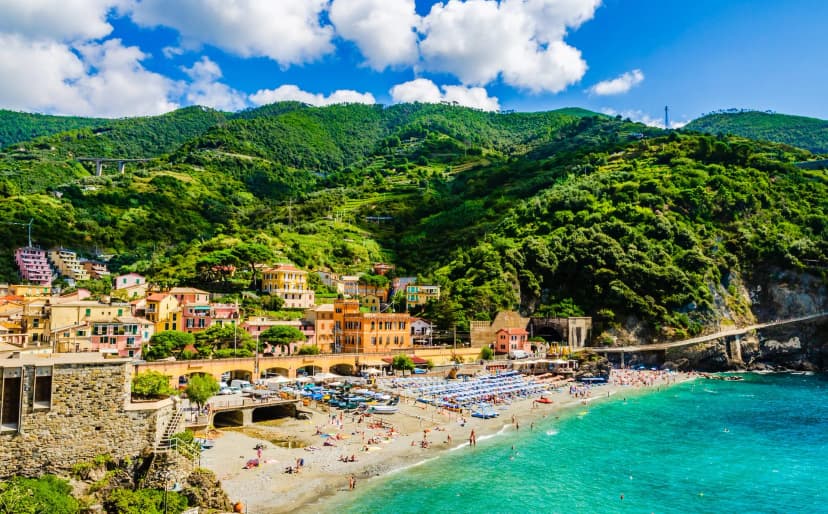
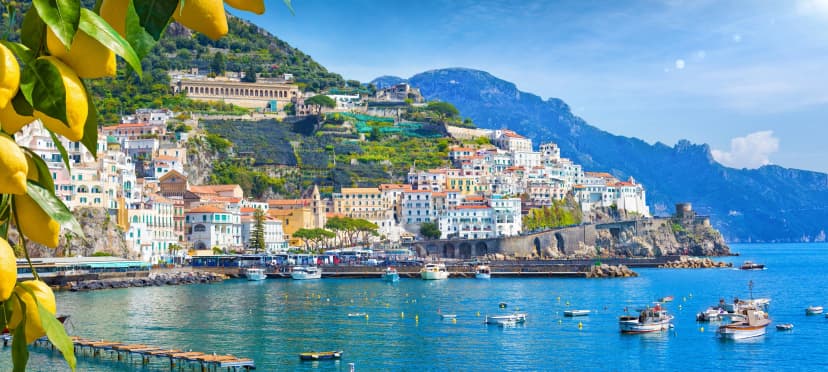
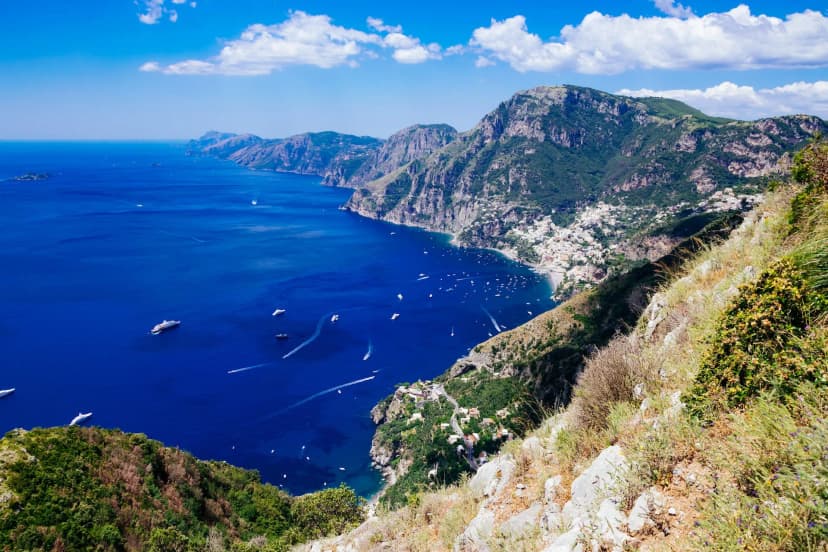
Cinque Terre is one of those places where the postcard truly matches what you see. Five villages painted in ochre, terracotta, and pink press against the cliffs of the Italian Riviera in Liguria, and the paths that link them — cut by centuries of farmers and pilgrims — are the reason to walk here rather than just take the train.
The classic coastal walk, the Sentiero Azzurro (Blue Trail), connects the villages. Three of its four sections are open in 2026 — including the famous Via dell'Amore, which fully reopened in February 2025 after twelve years of closure. Only the Manarola–Corniglia section remains closed for landslide work, with reopening expected around 2028.
Behind the villages, a wider network of Ligurian trails rises into terraced vineyards, medieval sanctuaries, and holm-oak ridges where you can walk for hours and see almost no one.
In short
Where: Ligurian coast, northwest Italy — five villages strung between Levanto and La Spezia
What: A UNESCO-listed strip of coastal paths and vineyard trails, roughly 40 km end-to-end if you link the high routes
When: Late April to early June and mid-September to end October — everything in between is hot and crowded
Difficulty: From stone-step strolling on the coast to steep on the sanctuary and ridge trails
The Routes Worth Knowing
The Sentiero Azzurro (Blue Trail) — Park Trail 592
592-1 Via dell'Amore (Riomaggiore → Manarola) — ~1 km · flat · Easy · open, timed booking, one-way
592-2 Manarola → Corniglia — closed since 2012, reopening expected around 2028
592-3 Corniglia → Vernazza — 4.137 km · 269 m · EE · open, 1h30, the most-walked open section
592-4 Vernazza → Monterosso — 3.668 km · 217 m · EE · open, 2h, big stone steps
Other Trails
Alta Via delle Cinque Terre (AV5T, formerly path #1) — ~40 km · rises to ~800 m · Hard · ridge from Portovenere to Levanto, 2 to 3 days
Sanctuary trails (five separate loops) — 4 to 7 km each · 300 to 500 m · Moderate · one per village, quiet even in high season
Punta Mesco walk (park path 590) — 7 to 8 km · 350 to 400 m · Moderate · out-and-back or loop, cape west of Monterosso
The Case for Walking
The Cinque Terre Express train links all five villages in under thirty minutes, and combining it with walking is the sensible pattern for most visitors — train in one direction, walk in the other, repeat. If you have more than a couple of days here, though, the case for building the trip around the paths is a strong one.
The land is entirely handmade. Every terrace, every dry-stone wall (locals call them muretti a secco — an estimated 7,000 kilometres of them across the park), every switchback path was cut by farmers who needed to grow wine and olives on cliffs that had no business growing anything. Walking between villages puts you inside that landscape at the pace it was built for, and the scale of the work becomes something you feel rather than just see.
There is also the matter of light. The coast faces roughly southwest, which means golden hour paints the villages twice — first light from the eastern paths, sunset from the western viewpoints.
The Blue Trail (Sentiero Azzurro)
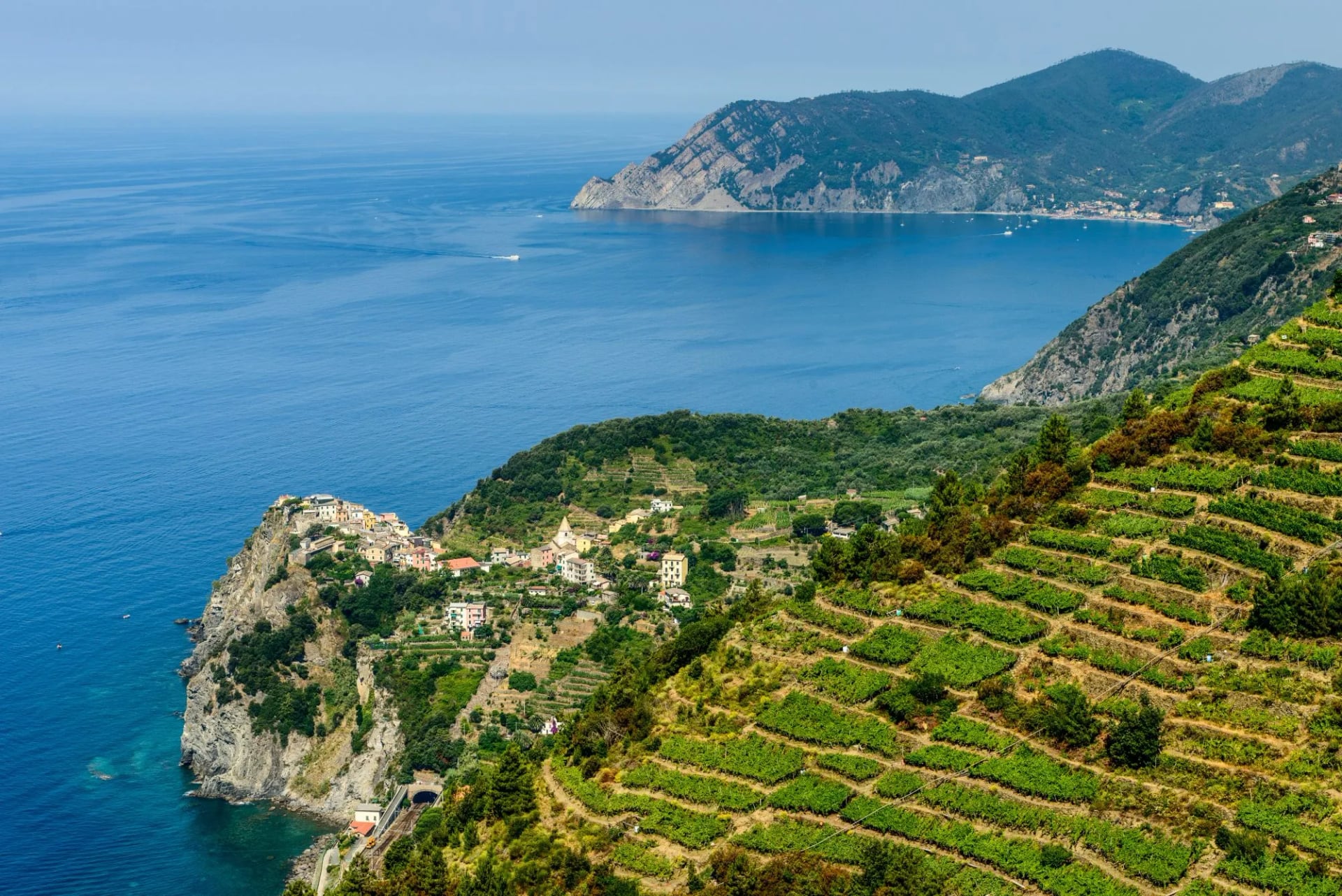
The Sentiero Azzurro is the postcard route — a coastal path (park trail 592, historically called SVA2) split into four numbered sections that connect Riomaggiore, Manarola, Corniglia, Vernazza, and Monterosso al Mare in that order. Three of the four are open in 2026, and one remains closed. Here's a quick overview for each of them.
Via dell'Amore (592-1, Riomaggiore → Manarola)
Fully reopened on 14 February 2025 after twelve years of closure. Access is one-way from Riomaggiore to Manarola, with mandatory timed-entry booking (200 people per 30-minute slot; up to 400 per hour). From March 2026 the section is included in both versions of the Cinque Terre Card — no separate ticket required. Summer hours in 2026 run 9 am to 9 pm; winter hours 9 am to 6 pm. Book your slot on the park's site before you travel.
Manarola → Corniglia (592-2)
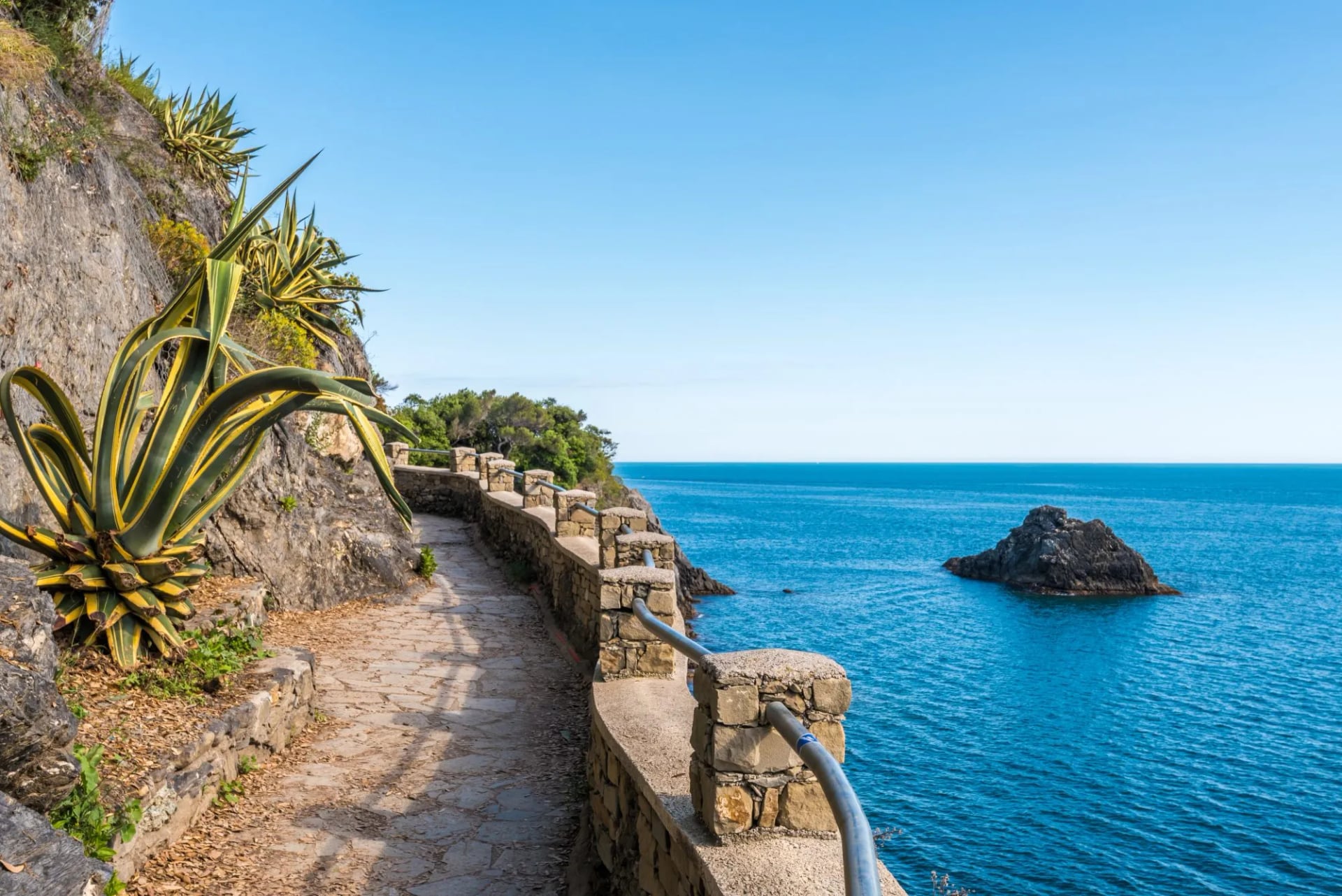
Closed since a 2012 landslide and still closed in 2026, with the park expecting reopening around 2028. Only the first 300 metres from Manarola are walkable, out to a panoramic point. To move between Manarola and Corniglia on foot, take the high inland detour via Volastra — around 3.5 km with roughly 600 m of ascent, 90 to 120 minutes. Otherwise, the regional train covers the gap in three minutes for a few euros.
Corniglia → Vernazza (592-3)
Open. 4.137 km, 269 m of ascent, about 1 hour 30 minutes at hiking pace. The park classifies this as EE (for experienced hikers), which reflects the steep steps and exposed sections rather than length. This is the most-walked open section — start early or late to avoid stop-start pace.
Vernazza → Monterosso (592-4)
Open. 3.668 km, 217 m of ascent, about 2 hours. Also rated EE. Big stone steps flanked by dry-stone walls, exposed to the sun for most of the route.
A few things worth knowing before you set off. All three open sections require a Cinque Terre Card (see below) — the card now covers Via dell'Amore as well as the northern sections, from March 2026. All are one-way corridors with limited passing. Water is available in the villages but not on trail. Sun exposure is total between May and September; there is no shade until you drop into a village.
The Higher, Quieter Trails
Above the villages, a second world begins.
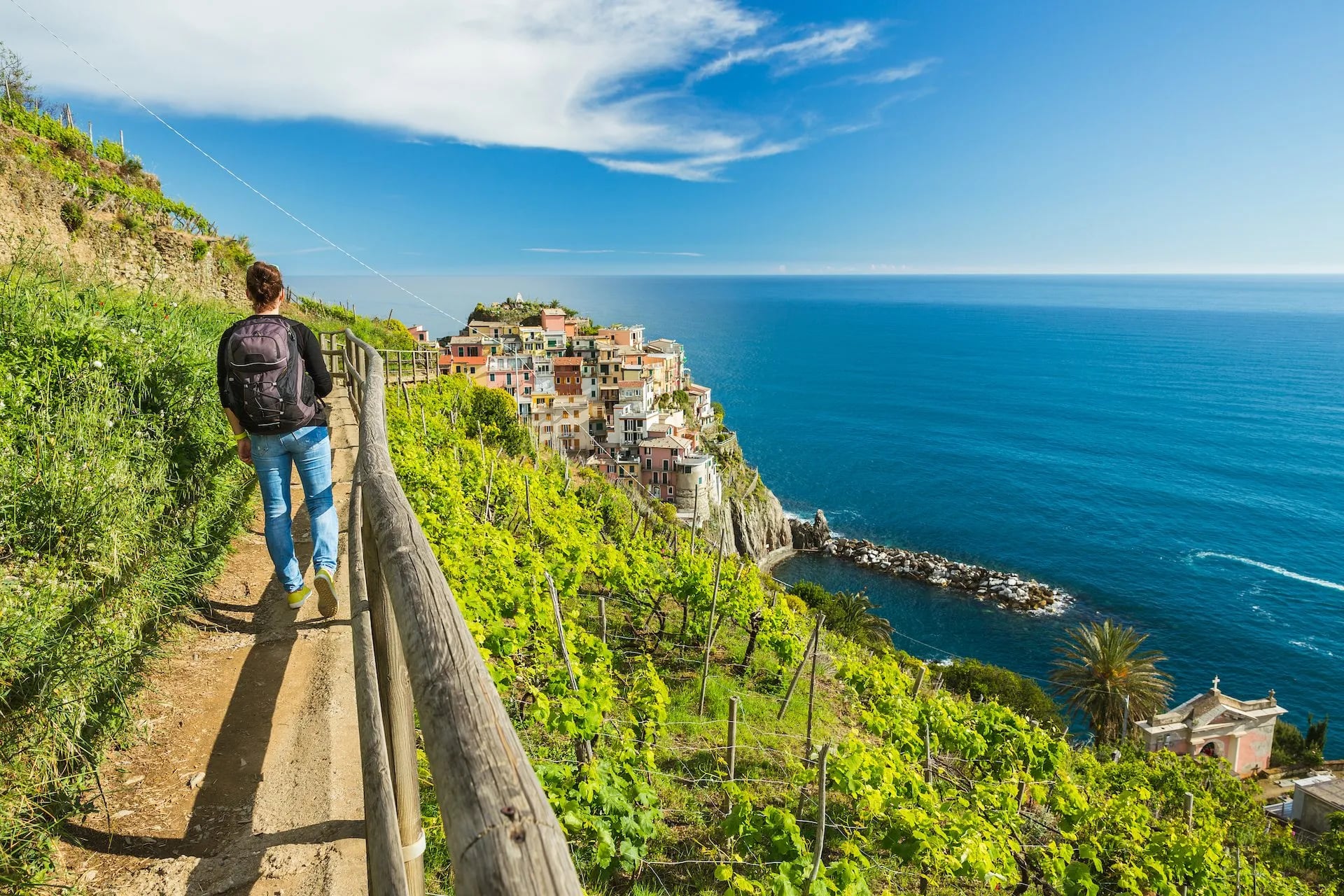
The Alta Via delle Cinque Terre (AV5T, formerly path #1) follows the crest of the hills, rising from sea level at Portovenere in the south to around 800 metres at its highest point before descending to Levanto in the north. The full route runs roughly 40 km and takes 10 to 11 hours of walking, usually split across two or three days with overnights in villages below (there are no huts on the ridge itself). The route passes above every one of the five villages, with side-trails descending to each in 45 to 90 minutes.
The sanctuary trails are the other network worth building your days around. Every village has a Marian sanctuary set on the hillside above it — Nostra Signora di Montenero above Riomaggiore (the only one you can't reach by road, and therefore the quietest), Nostra Signora della Salute at Volastra above Manarola, Nostra Signora delle Grazie at San Bernardino above Corniglia, Nostra Signora di Reggio above Vernazza, and Nostra Signora di Soviore above Monterosso, traditionally one of the oldest Marian sanctuaries in Liguria.
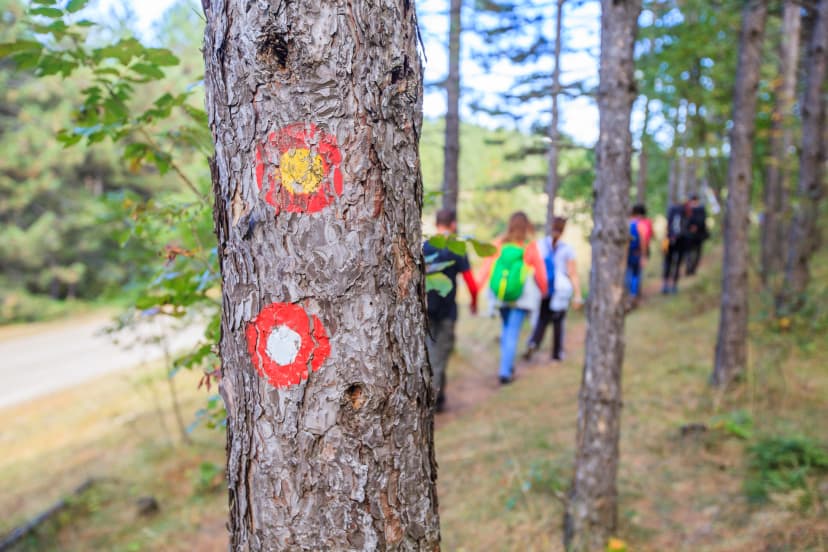
Each is reached by a stone-cobbled pilgrim path that climbs 300 to 500 metres from the village, often through vineyards, and all are marked with the white-red CAI trail signs. The loops take three to five hours.
Finally, there is the Punta Mesco walk at the northern end. From Monterosso, park path 590 climbs the ridge west toward the cape, past the ruined hermitage of Sant'Antonio del Mesco and out to a former Navy semaphore station and WWII bunkers near the tip. On a clear day, the full curve of coast to Portovenere is visible.
Reckon on 7 to 8 kilometres and 350 to 400 metres of ascent for an out-and-back, three to four hours at walking pace; a longer loop connecting through to Levanto is also possible for a fuller day. If you have one afternoon in the park and want a quieter alternative to the coastal path, this is the one.
If you would rather have the daily rhythm and accommodations arranged, our 8-day Cinque Terre Walking Tour links the open coastal sections with a sanctuary walk and the Punta Mesco cape over a week, based in guesthouses in the villages.
The Five Villages
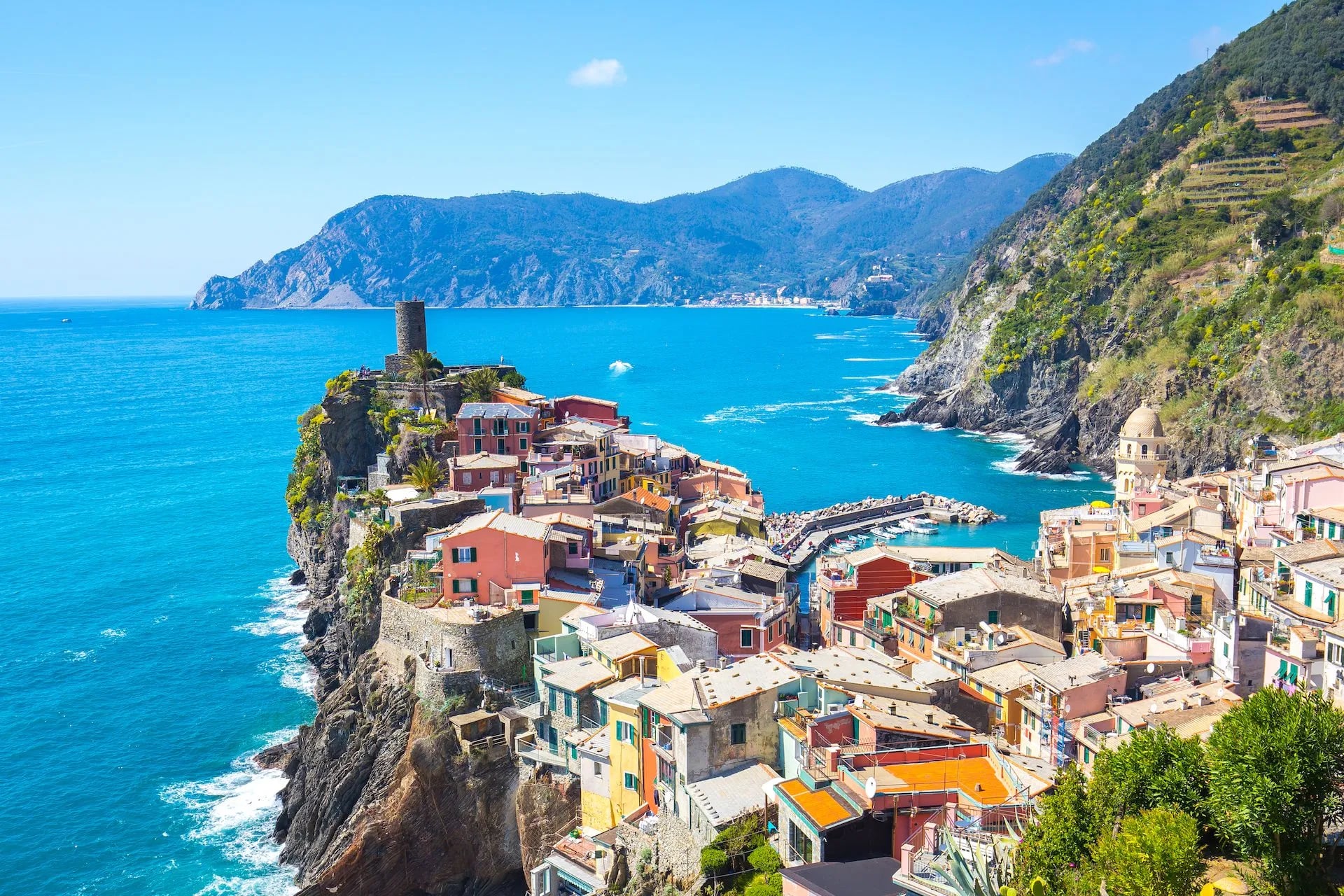
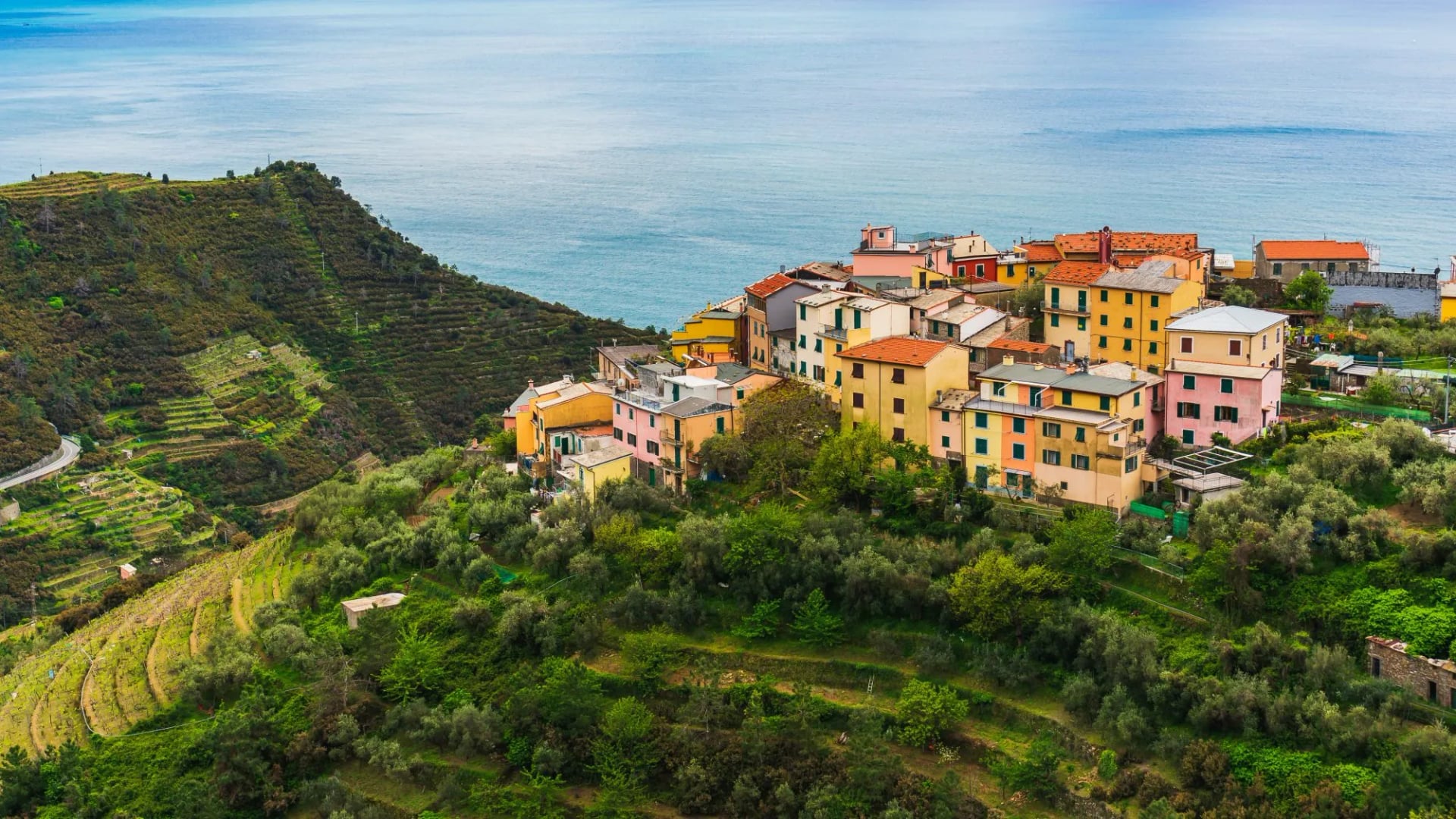
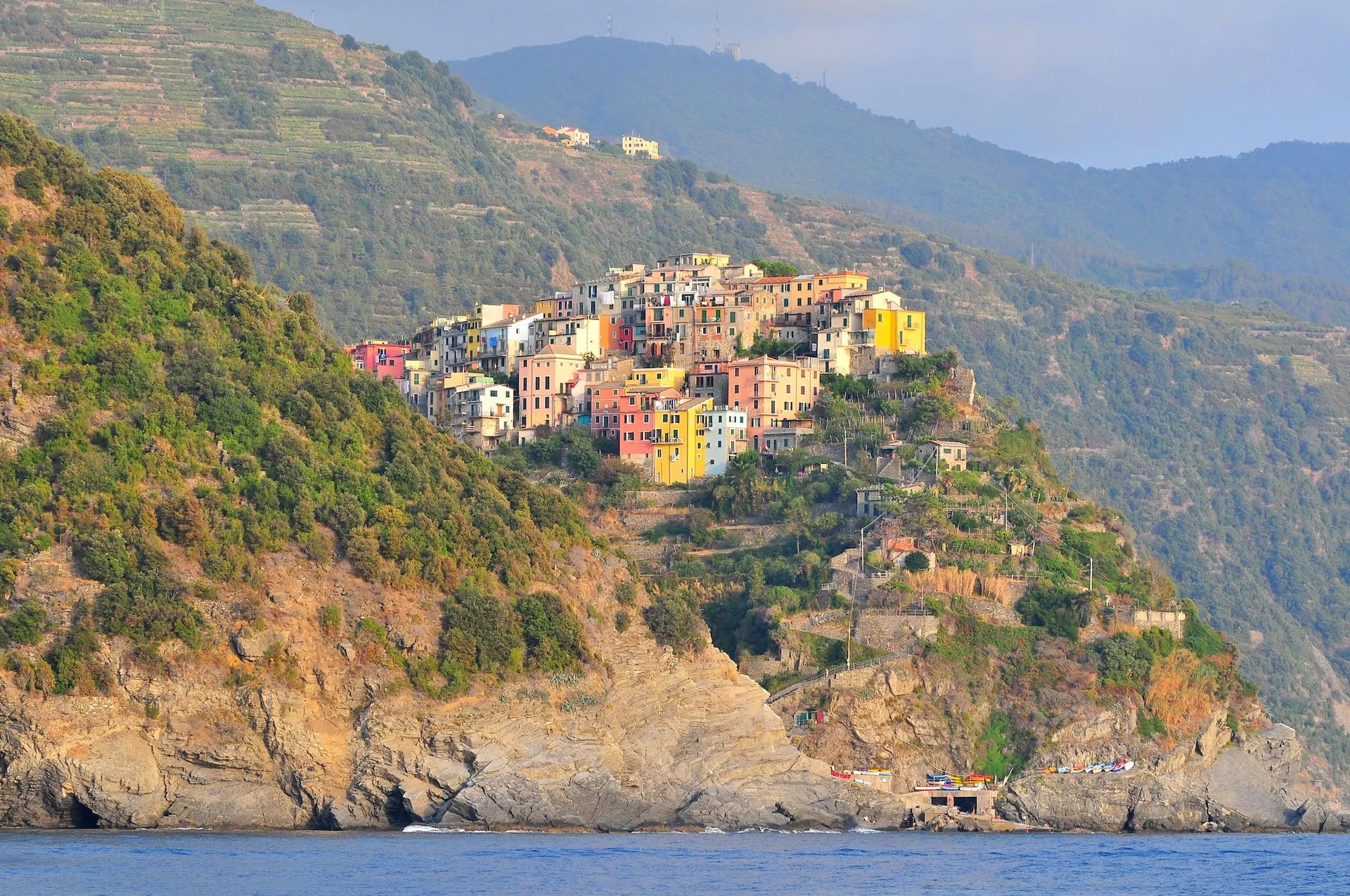
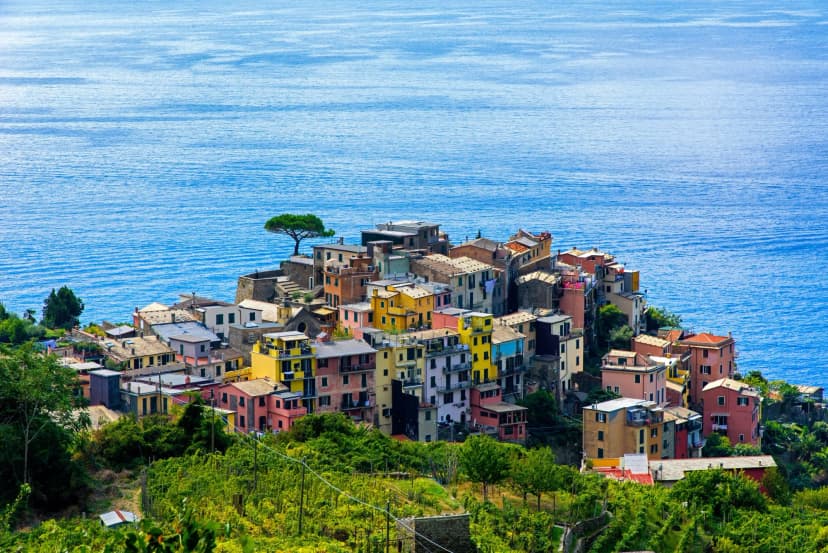
The word cinque means five, and each village has its own character — worth knowing before you decide where to base yourself.
If you plan to walk the two northern coastal sections in both directions, base in Vernazza or Corniglia. If you want a small beach at the end of the day, base in Monterosso. If you want vertical charm and short access to the sanctuaries above, base in Manarola or Riomaggiore.
When to Go
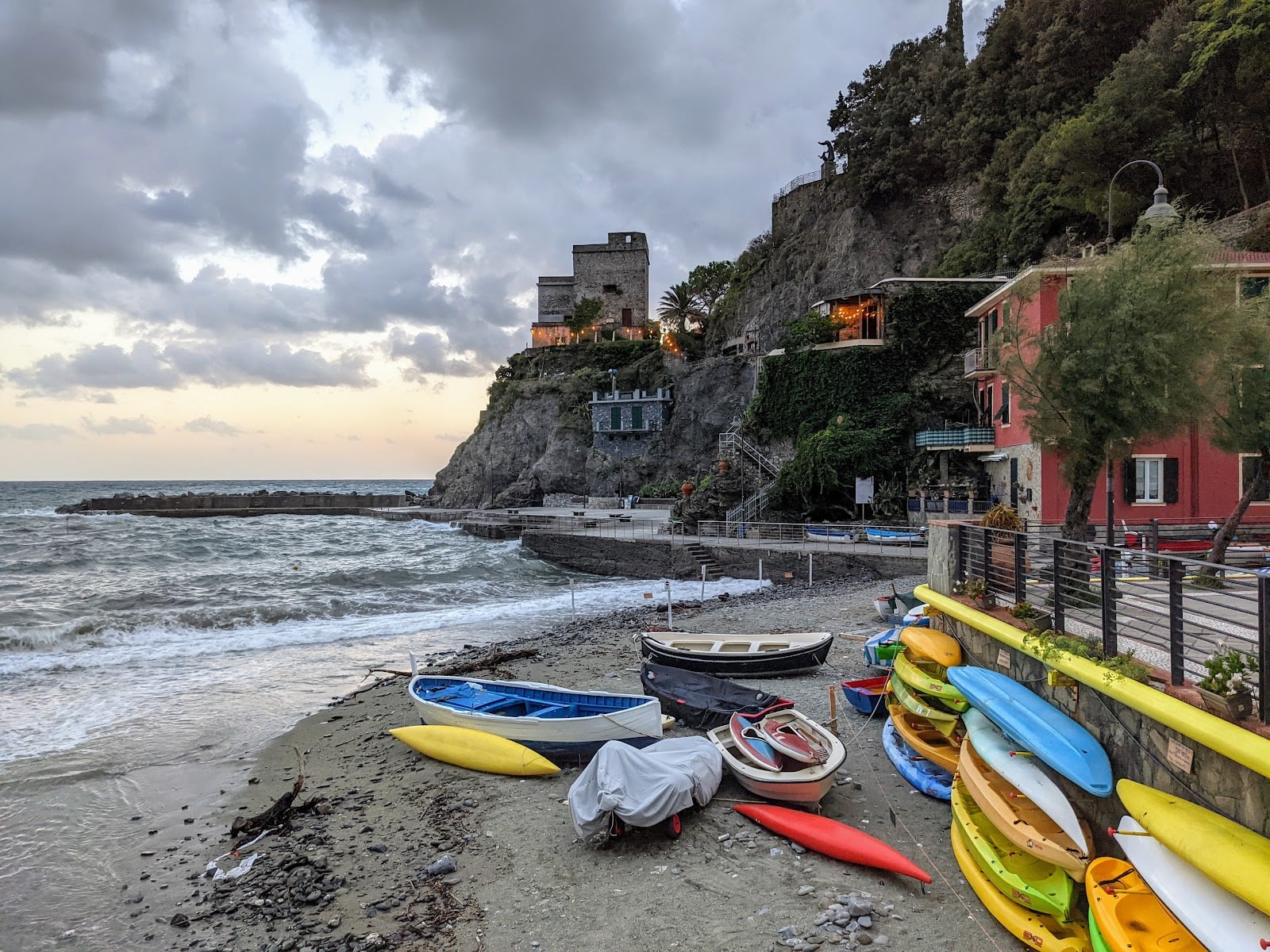
The walking season runs roughly late March to early November, with the last of the boats and some restaurants closing around the beginning of that month.
April and May are the local favorite. Wildflowers cover the terraces, temperatures sit in the high teens to low twenties, and the coastal path is warm without being punishing. Some rain, mostly in April, and Easter weekend is unusually busy — otherwise, this is close to ideal.
June to August is the busy window. Daytime temperatures reach 30–35°C on exposed sections, the villages fill by mid-morning, and the open coastal sections slow to a walking pace of the person in front. Setting out by 6.30 am keeps the trails comfortable and the light beautiful; book accommodation months ahead.
September and early October rival May and are often better — the sea is still warm enough to swim, the grape harvest is in full swing (a September walk through the vineyards puts you inside it), and the crowds ease from mid-September as European school holidays end.

Mid-October to early November is a genuinely lovely window. Long light, warm days, cool evenings, and the whole park settles into a slower rhythm as the summer crowds thin. Occasional heavy rain hits the coast — an all-weather layer earns its place in the pack.
Winter closes many restaurants and B&Bs but leaves the trails open and the villages nearly empty. If you can handle short daylight and grey days, it has its own appeal.
Tourist Card, Trains & Getting Around
The park sells two cards, and the difference between them isn't always obvious in the queue. Here's how they work.
The Cinque Terre Trekking Card covers access to the ticketed sections of the Sentiero Azzurro (Via dell'Amore, Corniglia–Vernazza, and Vernazza–Monterosso from March 2026) and the local park buses. Prices are tiered by demand band — green (low), yellow (average), red (high) — so a 1-day adult card in 2026 runs from around €22 on quieter days up to €35 on peak weekends. Multi-day versions are also sold. If you plan only one or two coastal walks and are happy to move between villages on foot or by boat, this is enough.
The Cinque Terre Card Treno MS bundles the Trekking Card with unlimited use of the regional train between Levanto and La Spezia — every village stop in between included. It's the more common choice for hikers, since it lets you train back after a long walk without buying separate tickets, and pays for itself after a few rides.
Both cards are sold in 1-day, 2-day, and 3-day versions, valid from mid-March to early November each year. Buy at any park Welcome Centre, at village train stations, online at card.parconazionale5terre.it, or through the MyPass app. Visitors staying in participating hotels in Riomaggiore, Vernazza, or Monterosso can access a discounted rate. Third-party resellers exist and are almost always more expensive.
Beyond the cards, three things to know about getting around:
By train
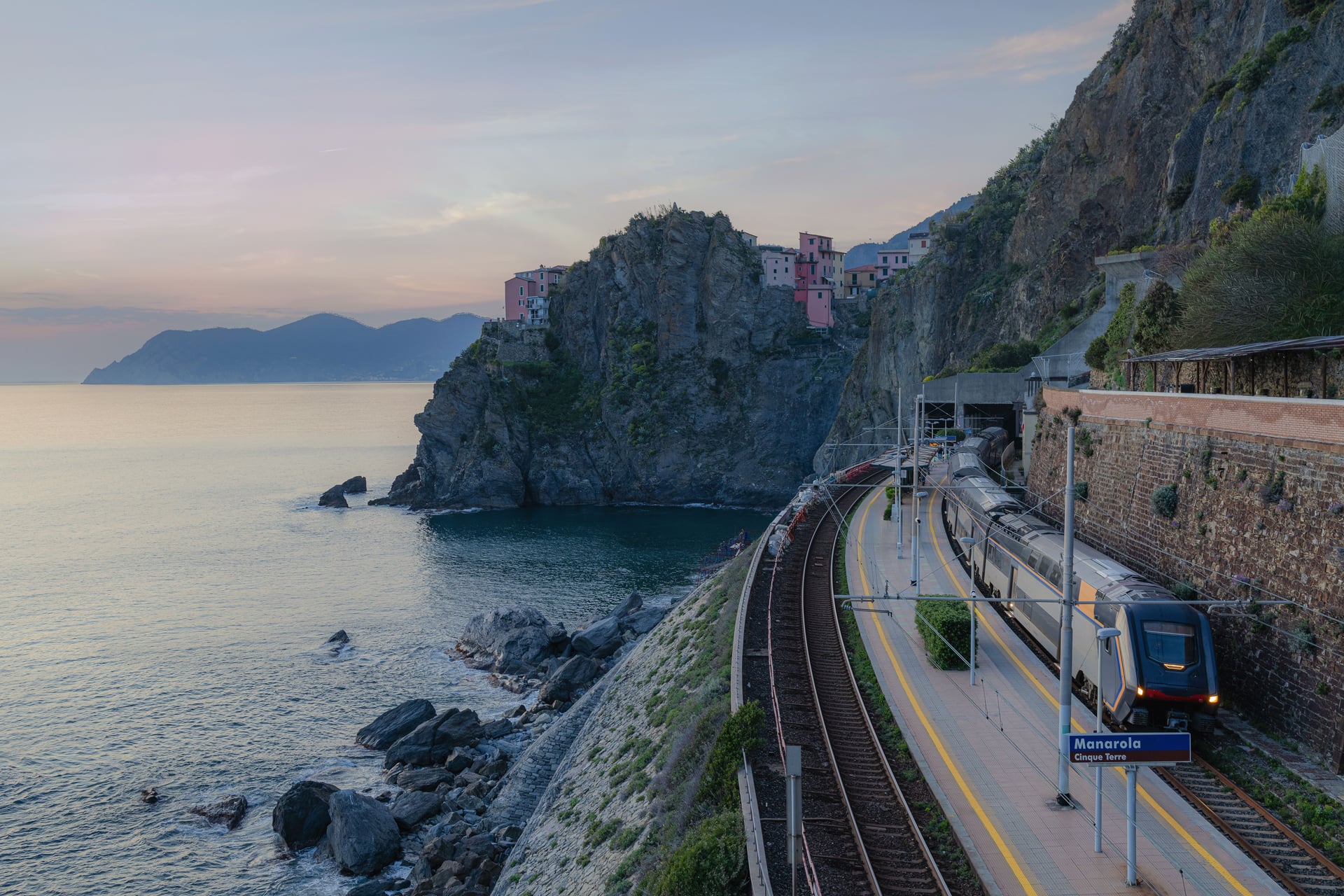
La Spezia Centrale is the main gateway from Rome (about four hours), Milan (about three), Florence (about two and a half), and Genoa (about ninety minutes). From La Spezia, the Cinque Terre Express runs every 15 to 30 minutes into the villages, taking under half an hour to reach Monterosso at the far end. Coming from the north, Levanto is a good alternative arrival station.
By air
Pisa (PSA) is about 90 minutes away by direct train from La Spezia or Levanto. Genoa (GOA) is closer as the crow flies but requires a Volabus shuttle to Genova Brignole plus a train, so budget closer to two hours end-to-end. Milan Malpensa and Florence add roughly an hour more.
By boat
From April through October, ferries link Portovenere, Riomaggiore, Manarola, Vernazza, and Monterosso, weather permitting. Corniglia is skipped — it has no harbour. Ferries are slower than the train and more expensive, but the view of the villages from the water changes how you see the coast.
Cars are effectively excluded from the villages, and even bringing one to Riomaggiore or Monterosso for hotel access can mean parking a kilometre away.
Sleeping and Eating
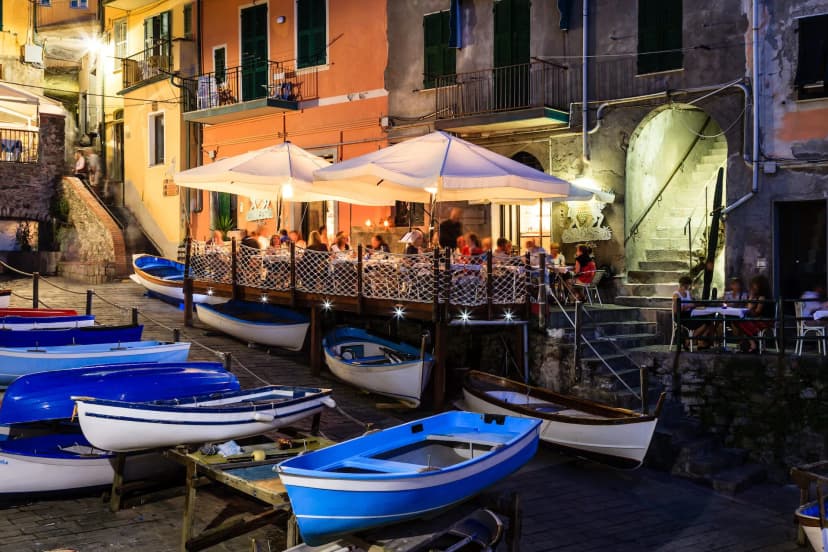
There are no mountain huts in Cinque Terre. Overnight, you stay in the villages themselves — small guesthouses, family-run B&Bs, boutique hotels, and the occasional larger property in Monterosso. Availability tightens sharply from May onward; for July and August, book three to six months ahead.
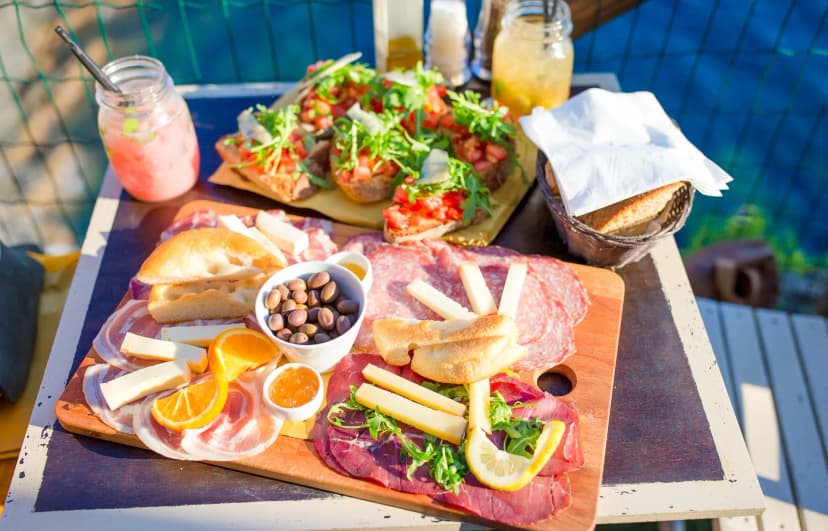
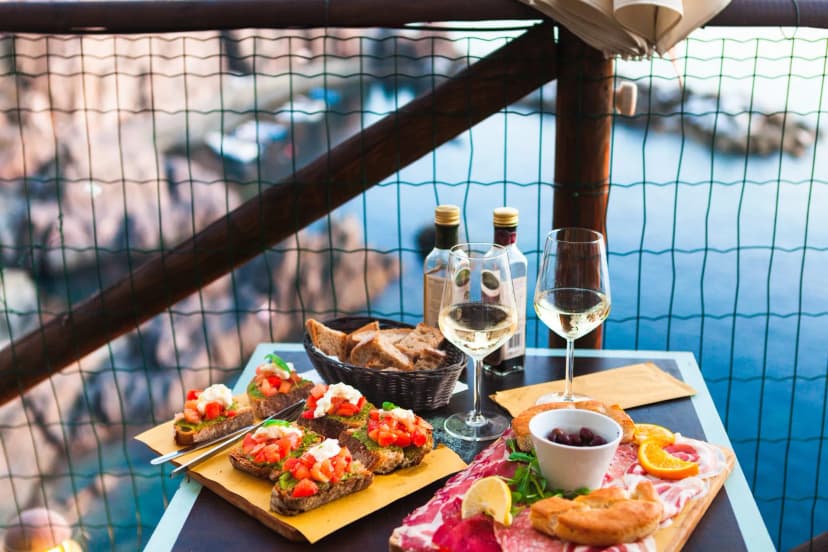
The food is Ligurian, which means less butter and cream than northern Italian cuisine and more olive oil, herbs, seafood, and grains. A few things to try while you're walking.
Difficulty and Required Fitness Level
Hikers frequently underestimate the Cinque Terre trails. Distances are short — the longest open coastal section is 4.1 km, sanctuary loops top out around 8 km — but the ascent per kilometre is high, the surface is uneven stone, and summer heat compounds the effort.
Coastal Sentiero Azzurro (open sections): 217 to 269 metres of ascent per section, done on stone steps that vary from ankle-high to knee-high. Non-hikers with reasonable fitness manage them in the shoulder seasons. In July heat, they become a genuine workout.
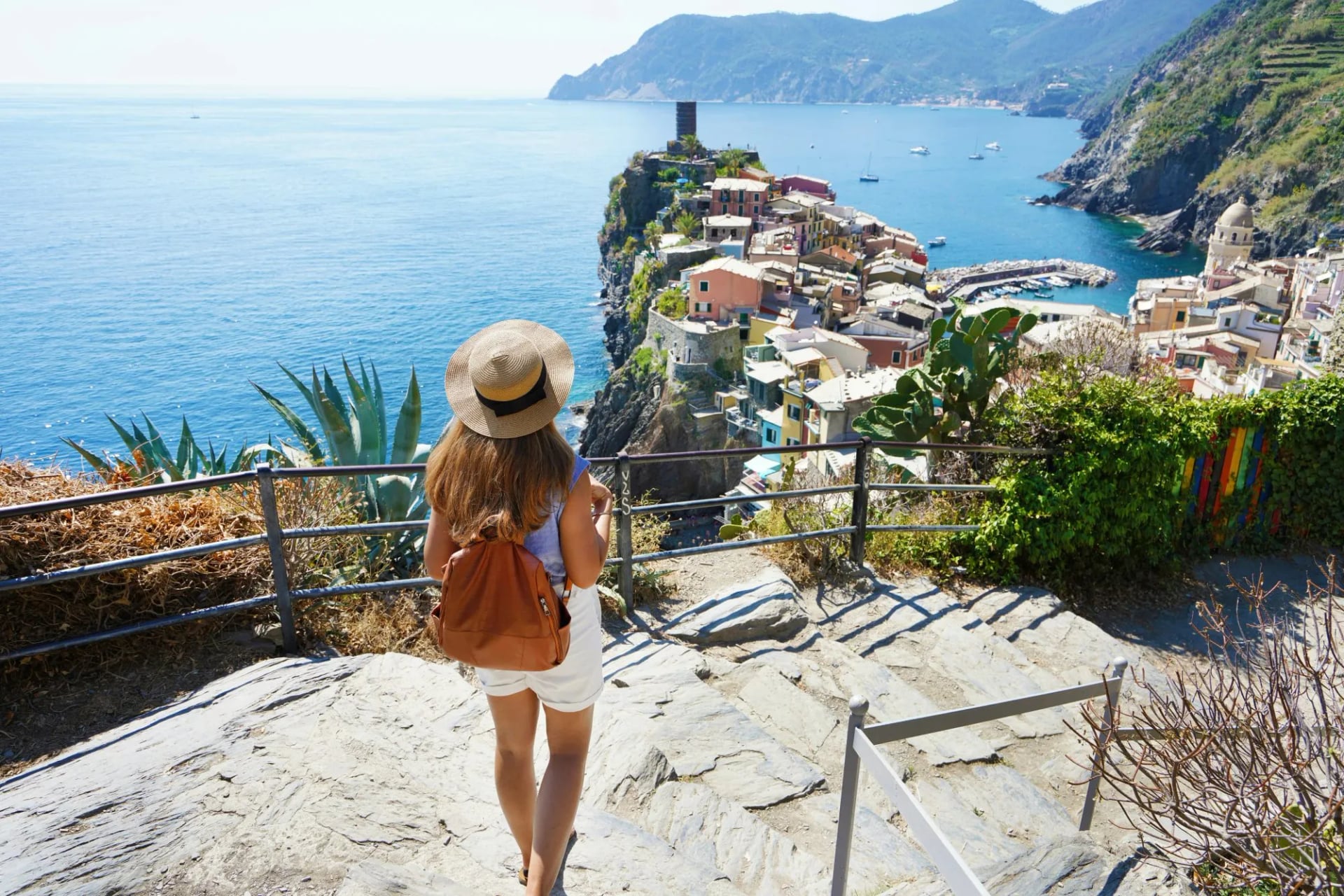
Sanctuary trails: 300 to 500 metres of ascent over 4 to 7 kilometres. Half the walkers turn back before the top. The other half find them the highlight of the trip.
Alta Via delle Cinque Terre (ridge route): roughly 1,300 to 1,500 metres of cumulative ascent across two to three days. This is a real hiking effort — plan for it like a moderate day in the Apennines, with backpack, poles, and hiking-fit legs.
Punta Mesco walk: roughly 350 to 400 metres of ascent, 7 to 8 kilometres, three to four hours. The most forgiving of the "real" walks, and the best introduction to what the higher trails feel like.
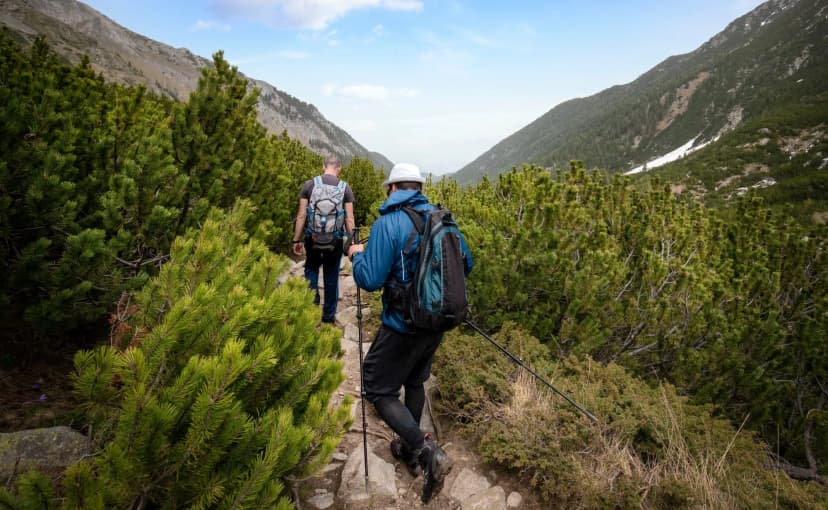
Trekking poles are useful on the sanctuary trails and essential on the ridge. Grippy hiking shoes matter more than most first-time visitors realise — the polished stone steps turn slick in light rain, and thin-soled trainers or sandals don't grip either surface well.
If you are new to hiking or want to see the coast without the ridge effort, our 6-day Cinque Terre Highlights tour is built around the two open coastal sections, boat rides, and short village walks — a gentler entry point that still gets you out on trail every day.
Ready to Walk the 5 Villages?
Cinque Terre works whether you have five days or two weeks. For a full week focused on the coast, sanctuary loops, and Punta Mesco, the 8-day self-guided Cinque Terre Walking Tour is the natural fit. If you have less time and want the classic villages without pushing hard, the 6-day Highlights is the gentler option.
And if you want to extend into Tuscany afterwards — the vineyards of Chianti, the hills above Lucca, the coast toward the marble mountains of Carrara — the 14-day Ultimate Liguria & Tuscany tour links the two regions in a way that is hard to piece together on your own.
Every tour we run in Cinque Terre is self-guided, which means:
Accommodation booked in family-run guesthouses and small hotels in the villages
A digital guidebook with maps, GPS files, day-by-day route notes, and restaurant picks
Luggage transfers between villages where you change base
Train tickets and the Cinque Terre Card sorted where relevant
On-trip support by phone or WhatsApp if a trail closes, a train strikes, or the weather shifts
Our full range of Cinque Terre trip options is on the destination page — the same trails, three different rhythms, one park where the walking is genuinely worth the flight.

About this author
Ajda is our travel advisor, raised in a village surrounded by mountain peaks. Hiking entered her life early on and remains her favorite way to reconnect with nature.




.jpg&w=828&q=75)