48 Peaks, 18 Glacial Lakes: Hiking Durmitor National Park
Who Durmitor is for, who it isn't, and how to spend a hiking week in Montenegro's great limestone amphitheatre in the north.

Ajda
Published September 25, 2026
Edited September 25, 2026
11 min read
Quick links
Don't want to read all this?
We've planned 2,000+ hiking trips. Send your dates, fitness and group size — we'll map the route and book every night.



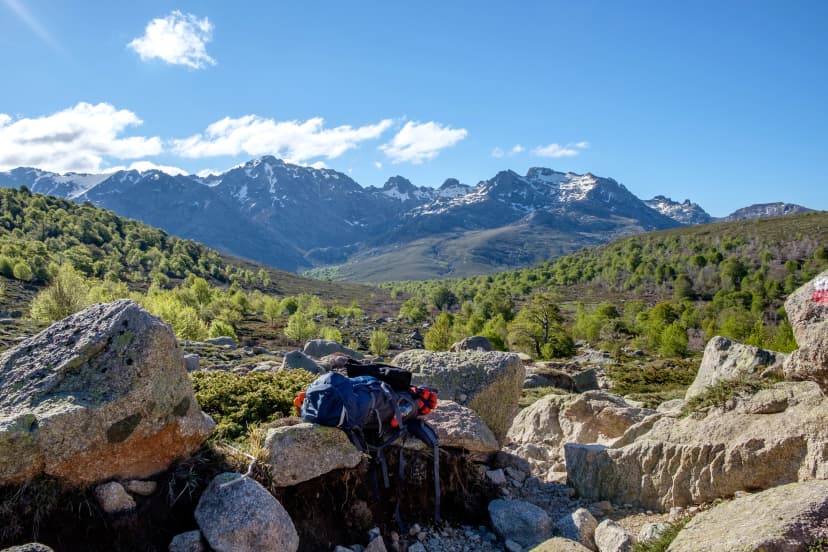
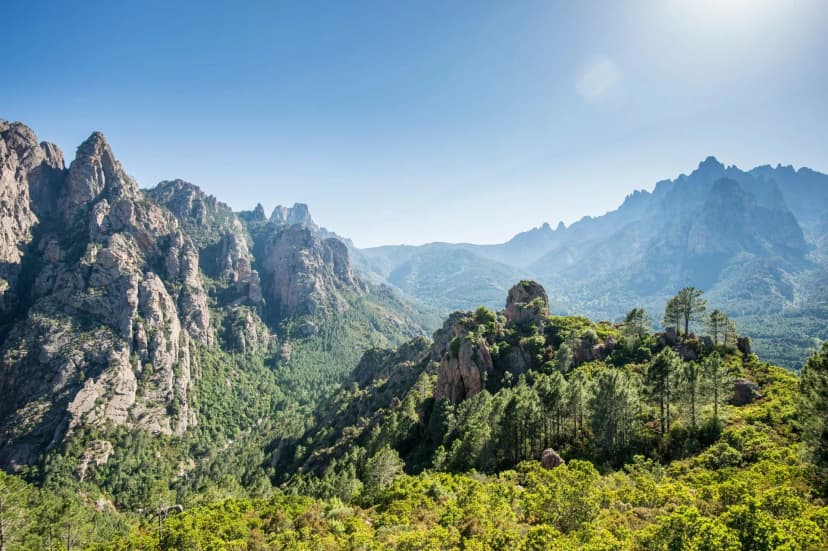
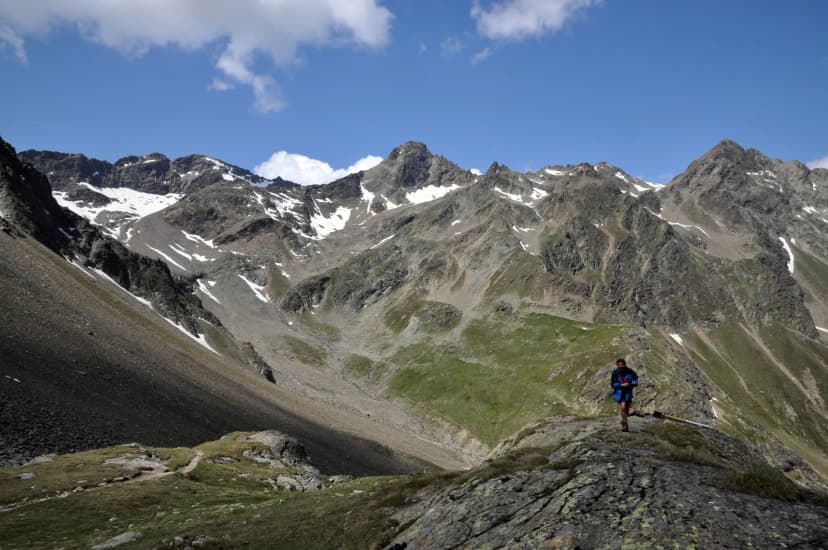
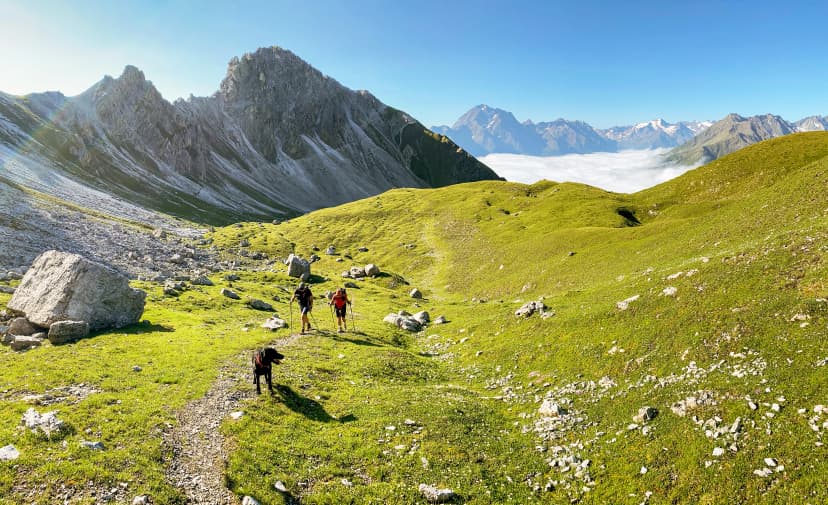
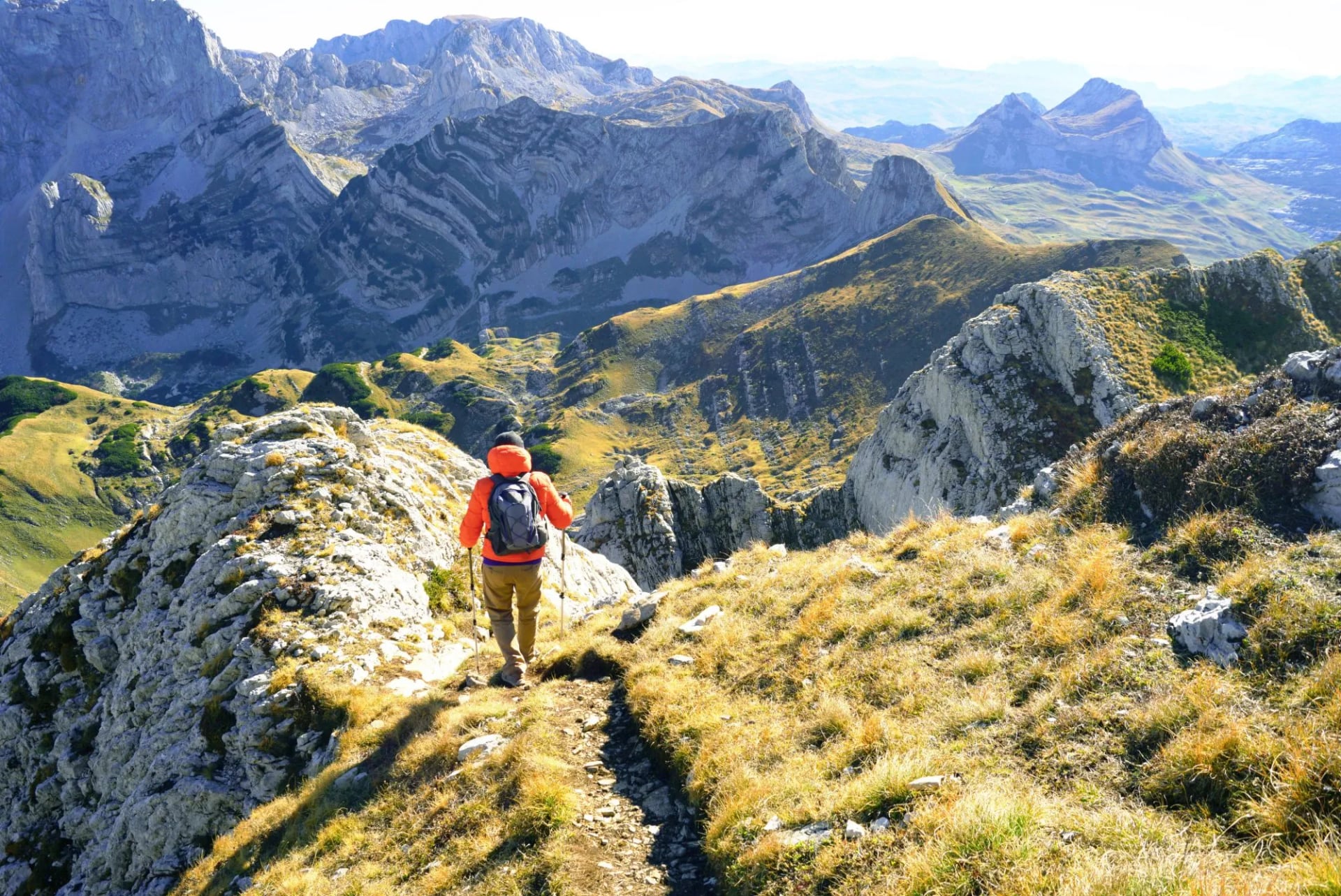
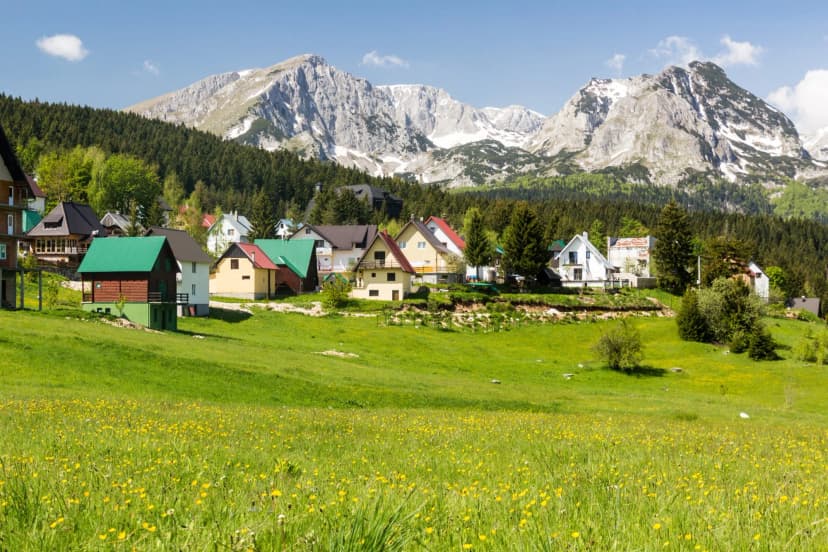
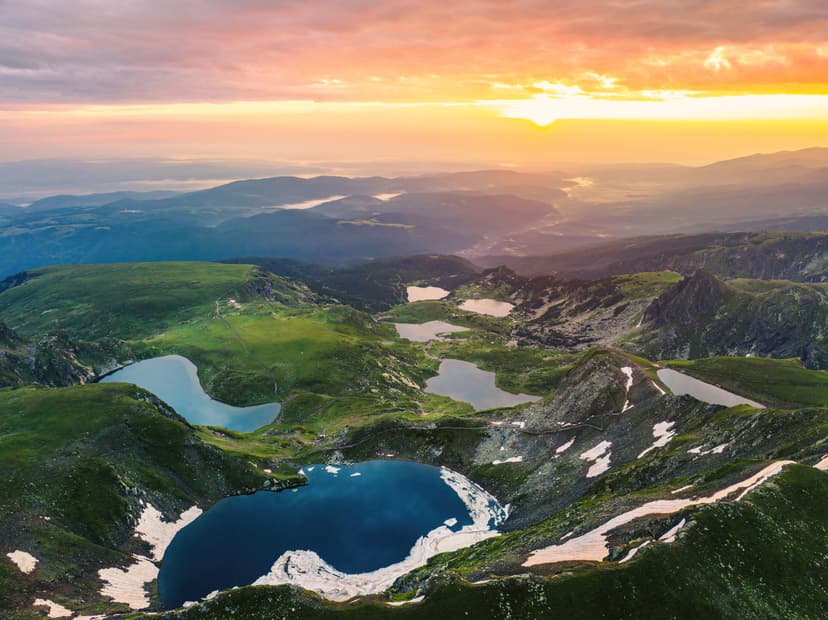
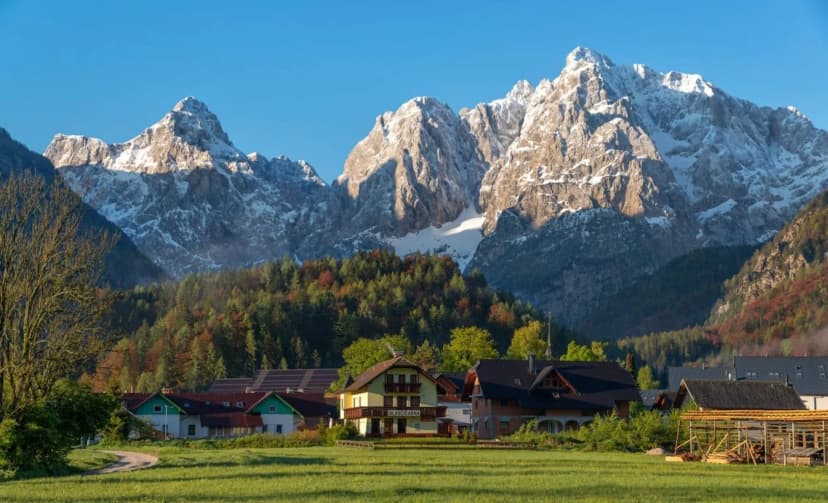
Durmitor is a UNESCO-listed limestone national park in northern Montenegro, and it is the reason most serious hikers come to the country in the first place. The park covers 34,000 hectares of alpine karst about two-and-a-half hours by road from Podgorica, and it holds forty-eight peaks above 2,000 meters, eighteen glacial lakes, one cabled summit, and Europe's deepest river canyon along its northern edge.
Most Montenegro hiking trips include at least a few days in Durmitor, or even stay the whole week.
This guide covers what is actually worth walking — the classic scramble to Bobotov Kuk, the ice cave at 2,180 meters, the Škrka lake circuit, the striped-limestone summit of Prutaš — plus the base logistics that first-time visitors always ask about: where to sleep in Žabljak, how the Sedlo road works, and what the park fee pays for.
The essentials:
Where: Northern Montenegro, roughly 2.5 hours by road from Podgorica airport.
Base town: Žabljak at 1,450 meters.
What to walk: Bobotov Kuk (2,523 m — the classic scramble), Prutaš, Ice Cave (Ledena Pećina), Škrka Lakes, Black Lake loop.
Difficulty: Alpine mountain terrain. Half-day loops around Black Lake work for anyone; the summit routes are six-to-ten-hour days with real exposure.
When: Mid-June to late September. Sedlo road usually opens by late May and closes in October.
Park fee: €5 for a day ticket, or €13.50 for an annual all-parks pass.
What Makes Durmitor Different
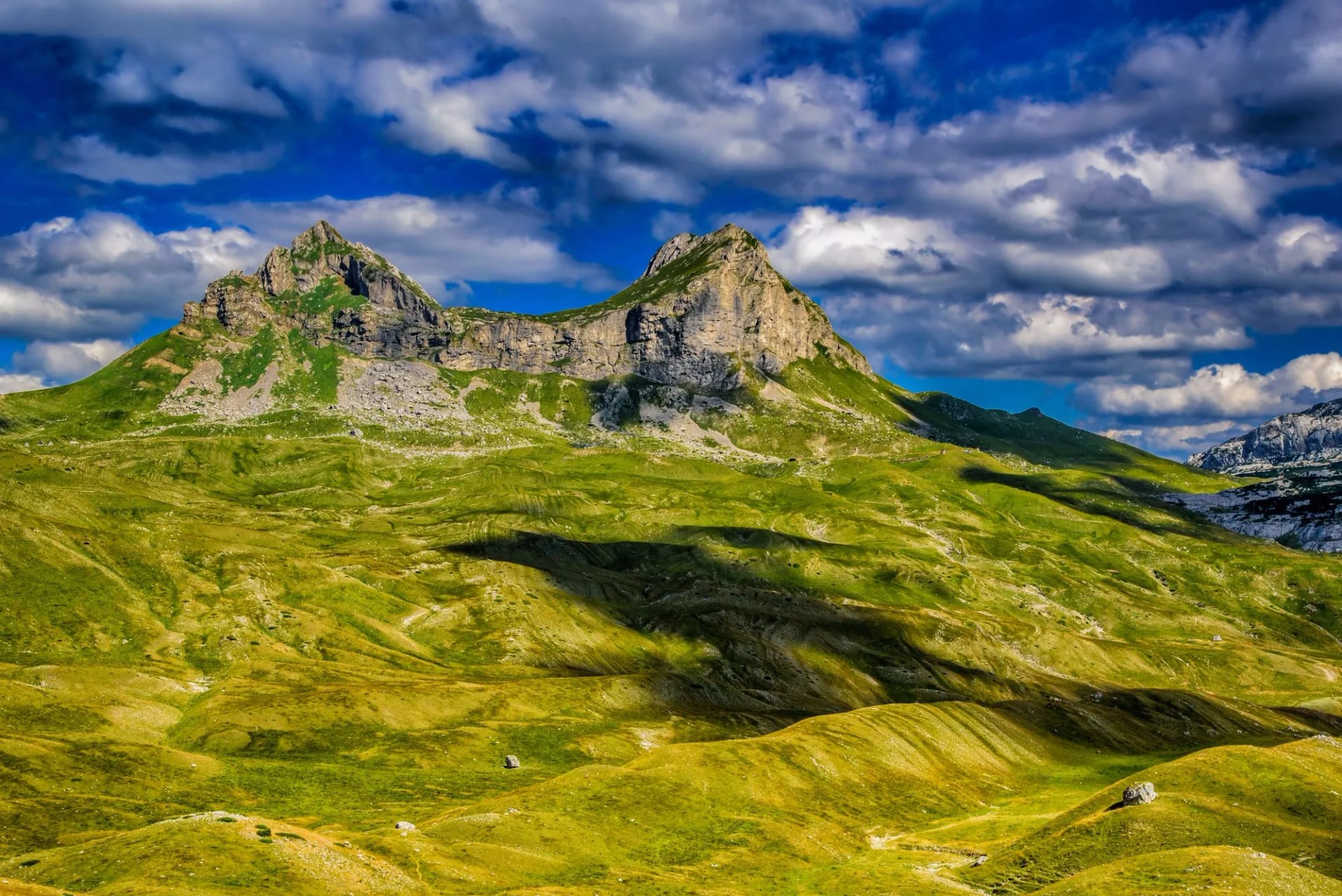
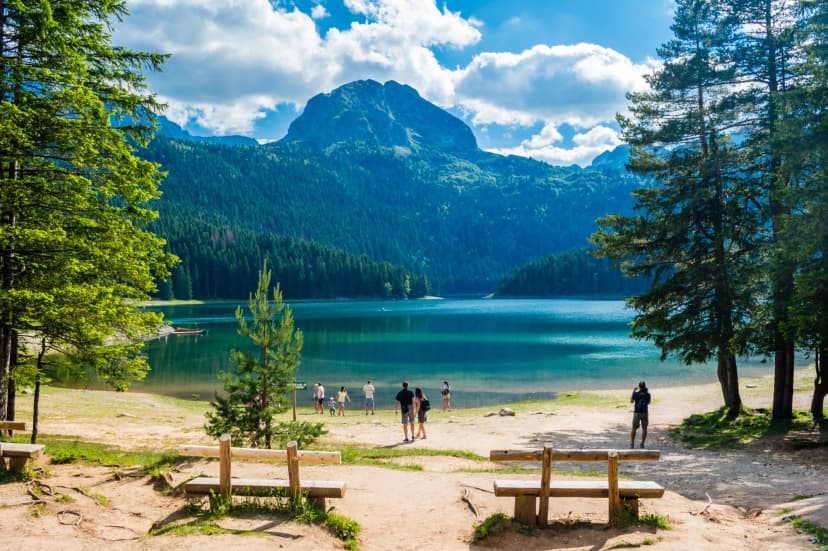
Durmitor walks like the Alps and prices like the Balkans. The park concentrates 48 peaks above the tree line, 18 glacial lakes locals call gorske oči — "mountain eyes" — and a limestone architecture that generations of geologists have used as a textbook. The biggest of them, Black Lake, sits at 1,416 meters, three kilometers from Žabljak.
The comparative context matters. Ranges of this altitude in the Alps route you through a busy tourism economy — chairlifts, refuges booked four months out, queues on the classic ridges. Durmitor delivers the same terrain with none of the polish and a fraction of the crowd. A summit morning on Bobotov Kuk that would draw a queue in the Dolomites will put you on the top with three or four other parties.
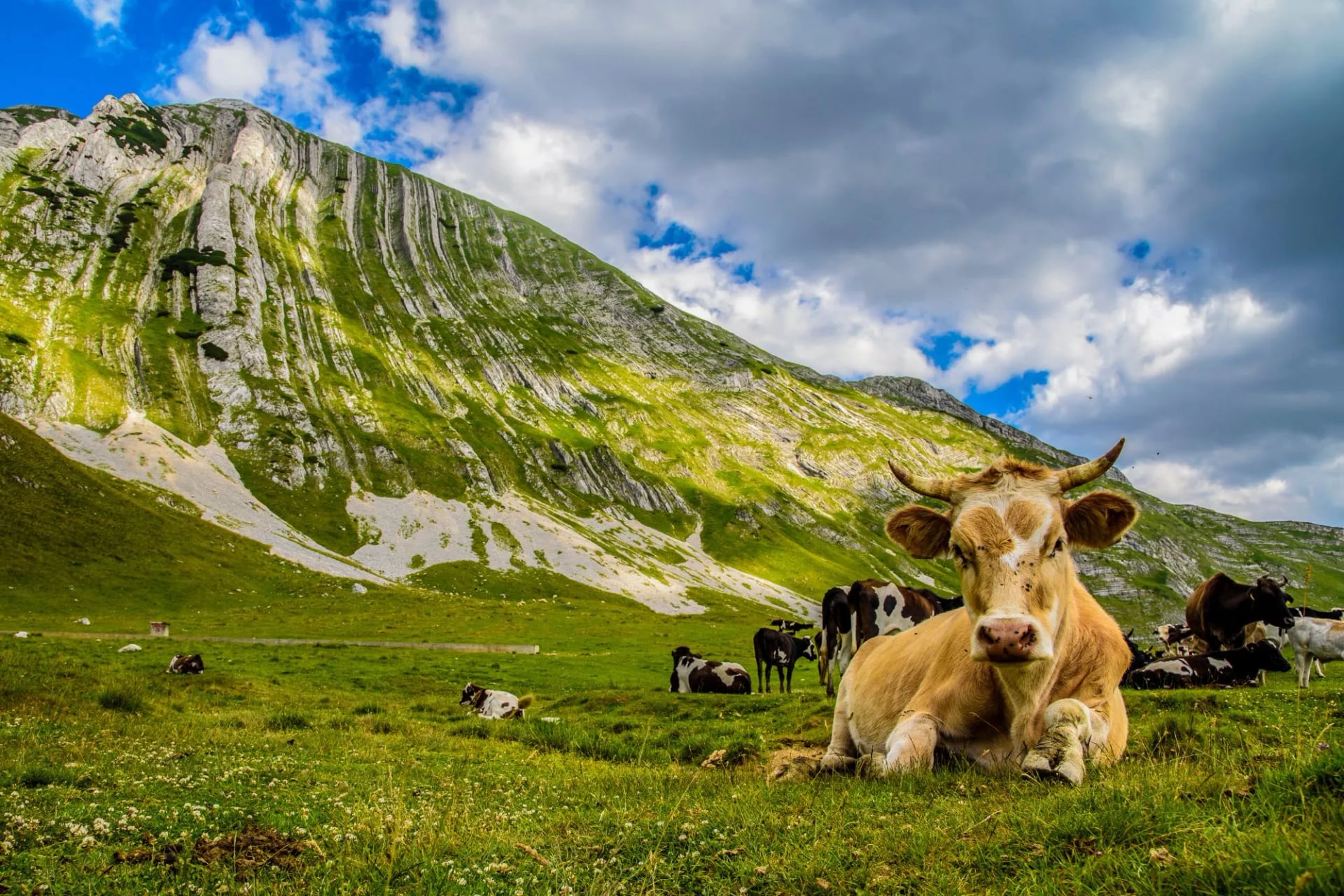
The park is also alive in the working sense. Shepherds still drive livestock up to summer huts in June and back down in September, and the forest between Žabljak and the Tara River is one of the last stands of primeval black pine in Europe. This is not a wilderness preserved for tourists; it is an actively used mountain landscape that admits hikers as guests.
Trails Worth Walking
Six routes carry the bulk of Durmitor hiking traffic. Start with the ones that fit your fitness and give yourself a rest day between the two big summit days.
Bobotov Kuk from Sedlo
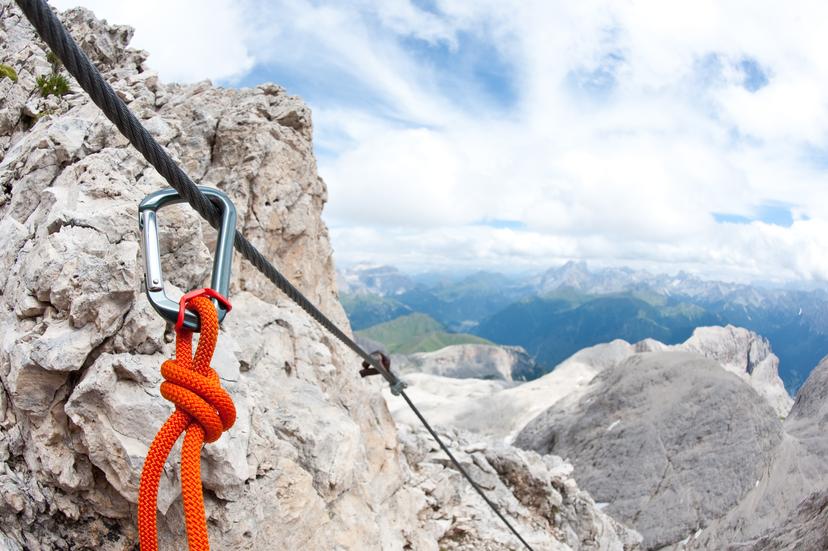
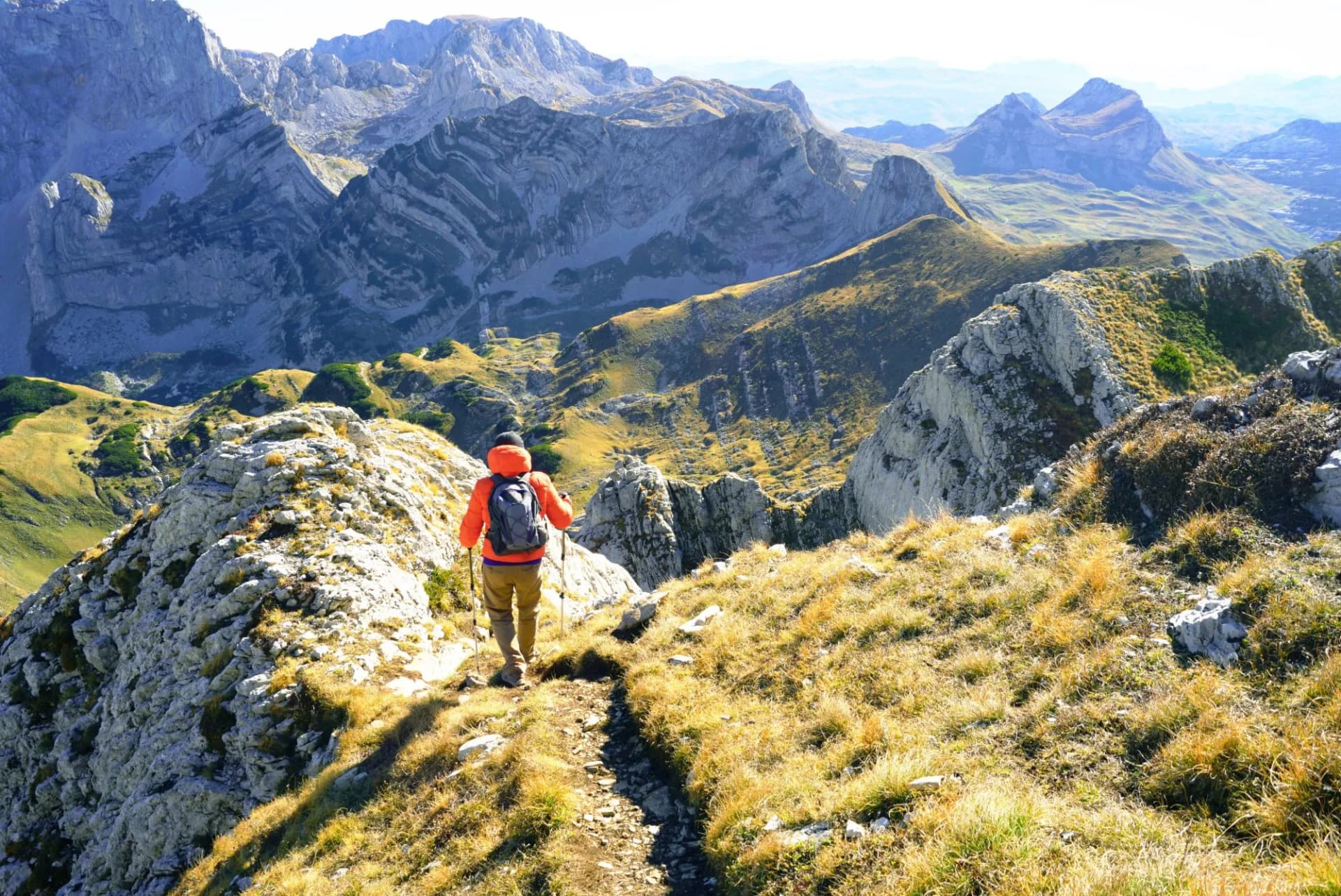
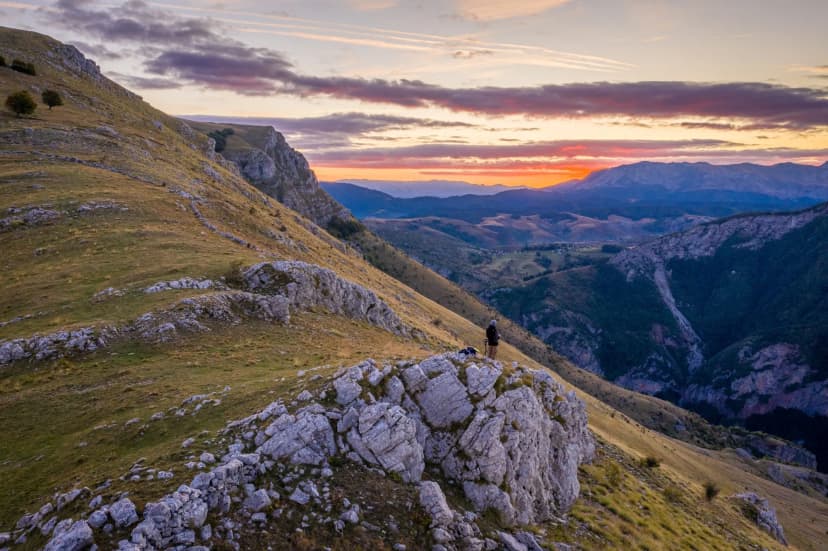
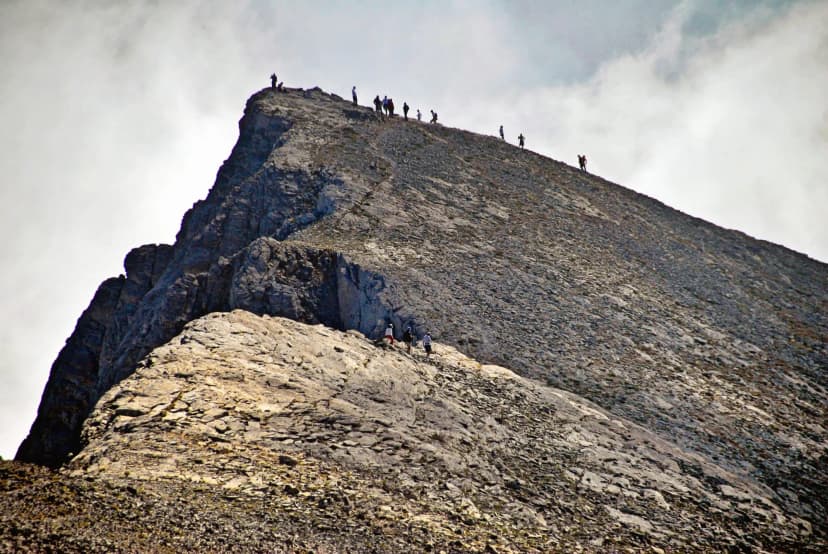
This is the classic. Sedlo pass sits at 1,907 meters, reached by a paved but narrow mountain road out of Žabljak. From the pass, the trail runs about 5.6 kilometers one way to the summit at 2,523 meters, gaining roughly 600–700 meters of net ascent over five to six hours of round-trip walking. The final 30–40 meters to the top use fixed steel cables bolted into the limestone.
This is not via ferrata — you need no gear, no harness, no clip-in. It is a class 2 scramble with a handrail. Hikers with a working head for exposure clear it comfortably; hikers with genuine vertigo turn around at the base of the cables, and the view from that point is already the walk's payoff.
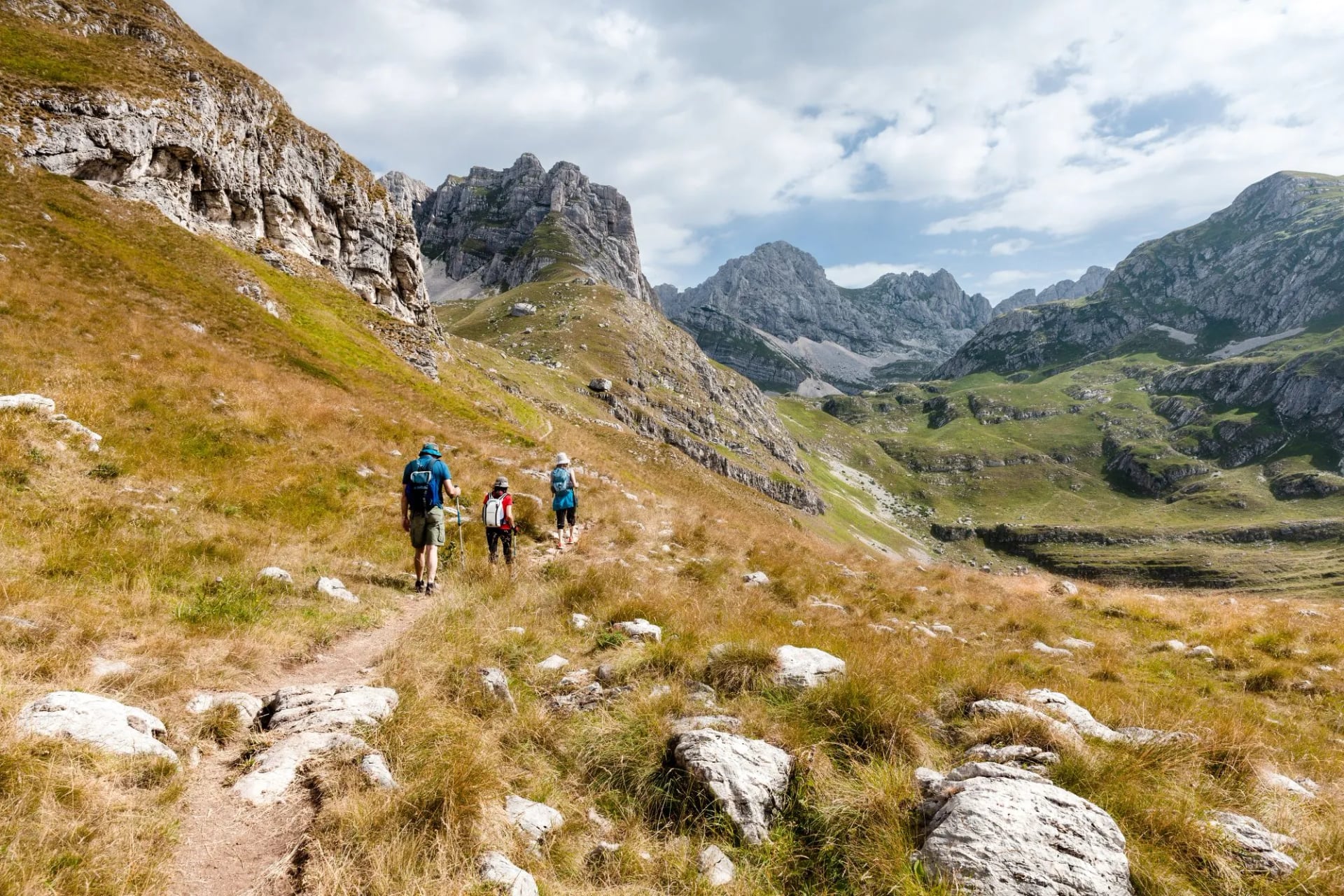
The longer alternative from Black Lake runs 20–24 kilometers round-trip with 1,100 meters of ascent — a ten-to-twelve-hour day. Take Sedlo unless you want the mileage as its own reward.
The Ice Cave (Ledena Pećina)
A limestone cavity on the flank of Obla Glava at 2,180 meters, holding ice year-round. From the Pitomine trailhead above Žabljak the walk is about 7 kilometers one way with 740 meters of ascent, three to four hours up and a little less coming down.
Combine it with Bobotov Kuk on a strong day (both start from Sedlo and share the first hour of trail) or make it a stand-alone six-hour walk. Walking on a snow floor inside pale limestone in July is one of Durmitor's most-remembered moments.
Prutaš and the Škrka Lakes
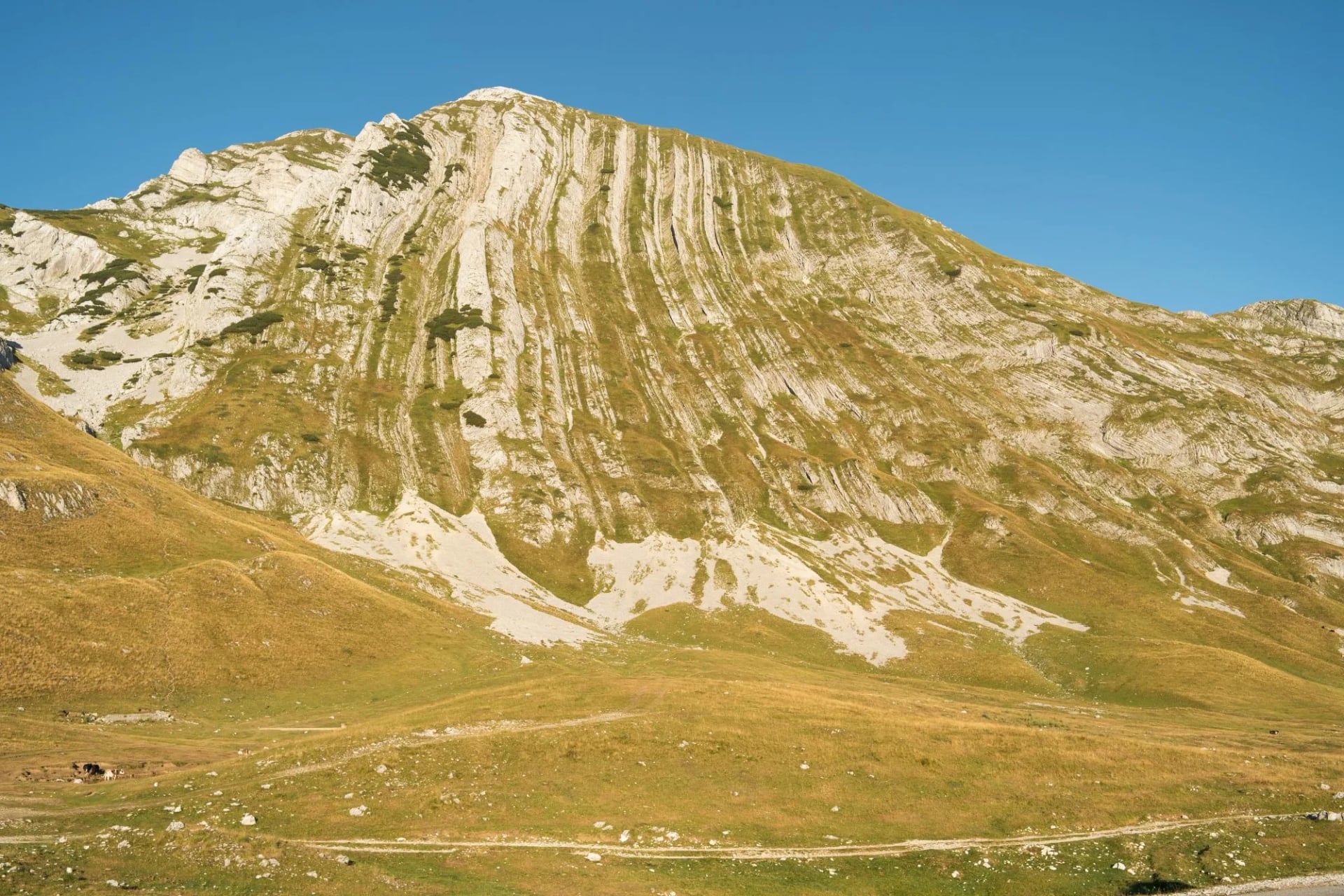
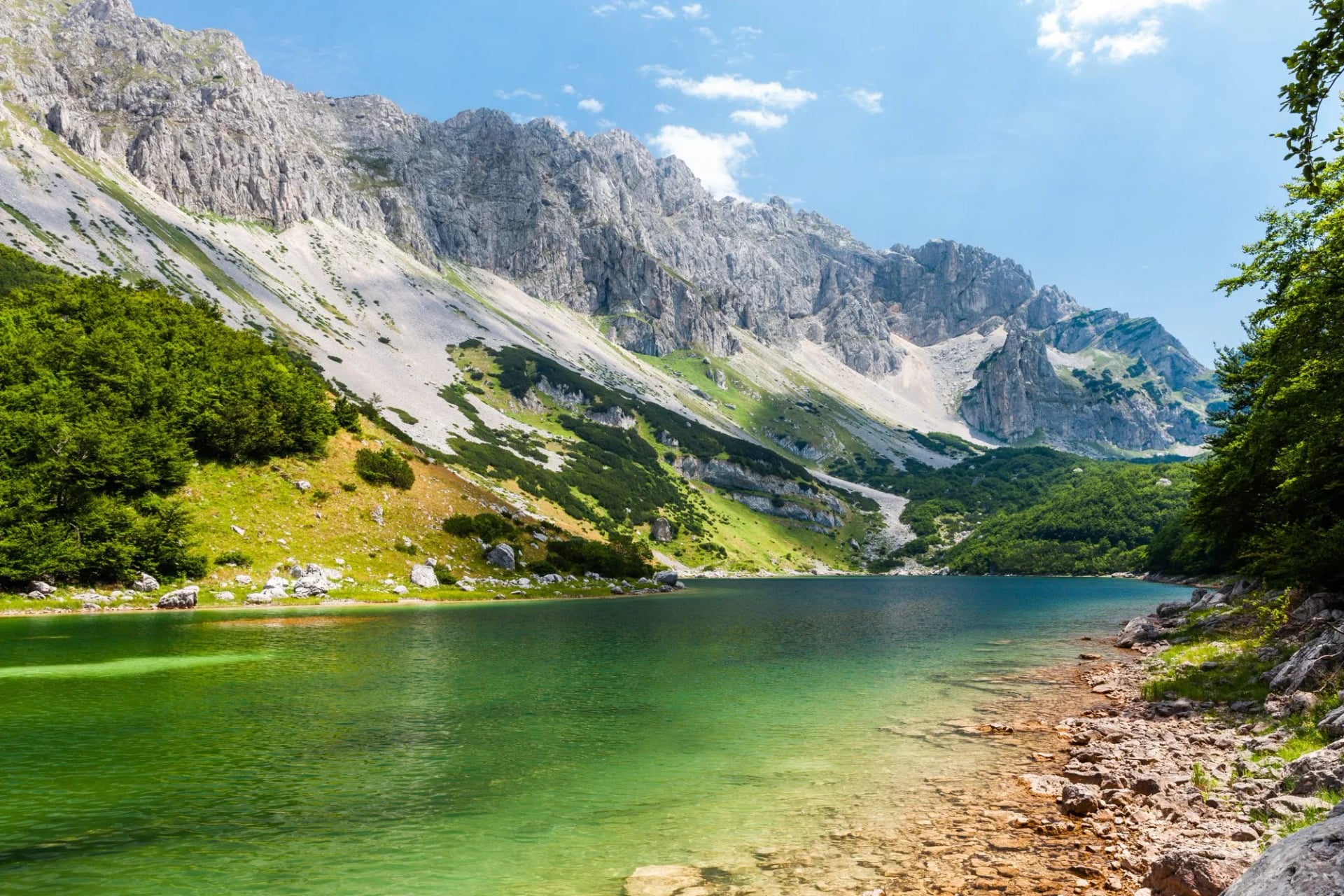
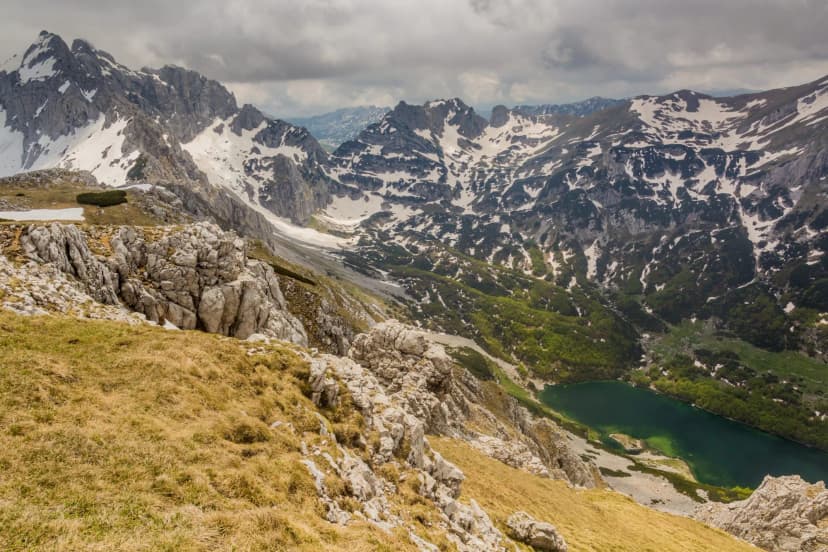
Southern Durmitor's signature day. Prutaš (2,393 meters) takes its name from the vertical striped limestone bedding on its face — prutaš means striped. The classic route runs from the Dobri Do (Šarban) trailhead over the Škrčko Ždrijelo saddle at 2,114 meters to the summit, four to five hours round-trip, moderate throughout, no cables. Extend it into a loop past Veliko Škrčko Jezero (1,686 m) and Malo Škrčko Jezero (1,711 m) with an overnight at Škrka mountain hut.
Two summit days pair naturally: Bobotov Kuk from Sedlo on the first, Prutaš and the Škrka circuit on the second. That is the shape of most guided Durmitor itineraries. Our own self-guided Durmitor trip takes a different line through the same massif, with walking days on Crvena Greda, Prutaš and Planinica.
Black Lake and the Forest Loops
Durmitor's most-photographed feature and its gentlest walk. Crno Jezero sits at 1,416 meters, three kilometers from Žabljak — five minutes by car, or half an hour on foot. The lake is actually two connected basins — Veliko Jezero and Malo Jezero — joined by a narrow channel that dries out in late summer and splits them into visually separate lakes.
The lakeshore path runs 3.5 kilometers, roughly ninety minutes on level ground. Best used as an arrival-day acclimatization, a rest day between summit efforts, or a family walk. Multiple forest loops extend from the shoreline into the surrounding black-pine stand.
Savin Kuk and Međed for the More Ambitious
For hikers who have done Bobotov Kuk and want more, two peaks give the massif a second look without the queue.
Savin Kuk (2,313 m) is the ski peak directly above Žabljak — easy to moderate, three hours of ascent, no technical sections, and a straight-line view across to Bobotov Kuk.
Međed (2,287 m) is the harder proposition: a sustained exposed ridge scramble via Struga, roughly four hours one way, more technical than Bobotov Kuk. Neither draws the classic-route crowd.
The Tara Canyon Rim
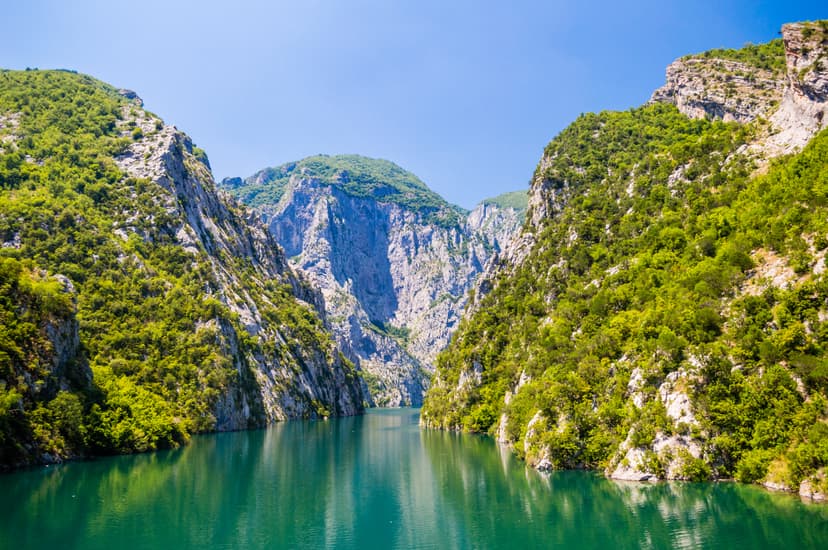
Durmitor's northern boundary drops into the Tara River Canyon — 1,300 meters deep, the deepest river canyon in Europe.
The most walked rim viewpoint is Ćurevac at 1,625 meters, about 8 kilometers north-east of Žabljak, reached from the road parking in 30–45 minutes. This is a photo-day walk rather than a summit day; pair it with a Black Lake morning for a rest-day pattern.
Where you’ll start
Four trailheads carry almost all Durmitor foot traffic. Where you start determines which peaks you can reach in a day and whether you need a car:
Where to Sleep in the Park
Durmitor hiking splits between two accommodation categories: Žabljak in the valley, or the hut up on the massif. Most itineraries mix both — Žabljak for arrival, departure, and rest days; a night at a hut for the summit block.
Škrka Mountain Hut
Škrka sits at 1,723 meters between the two Škrka lakes in the southern part of the park. It has around nine indoor beds, a wooden dormitory (palače), and ground for tents outside.
The hut is open mid-June to end of September, and it requires a sleeping bag. Reservations go through the Tourist Organisation of Žabljak by email; there is no online booking. This is the base for the Prutaš + Škrka circuit and any multi-day southern-Durmitor traverse.
Family guesthouses in Žabljak
Žabljak's default lodging is family-run guesthouses — usually breakfast included, most within ten minutes of the town center and the trailheads. English is variable; a phrasebook or translator app pays for itself. Expect wood stoves in winter and hot water heated on demand.
When to book
For July and August, book six to eight weeks out — Žabljak fills fast for the summer weekends. Shoulder season is more flexible; direct-book close to arrival if you can. The mountain hut fills months ahead for the peak-summer weekends and takes reservations by email only.
The Season
Durmitor's usable hiking window runs mid-June to late September. Outside those months, the highest passes carry snow, the Sedlo road is closed, and the huts are shuttered.
Durmitor Month by Month
Wildflowers peak on the plateau in the second half of June, and the hut opens around the 15th
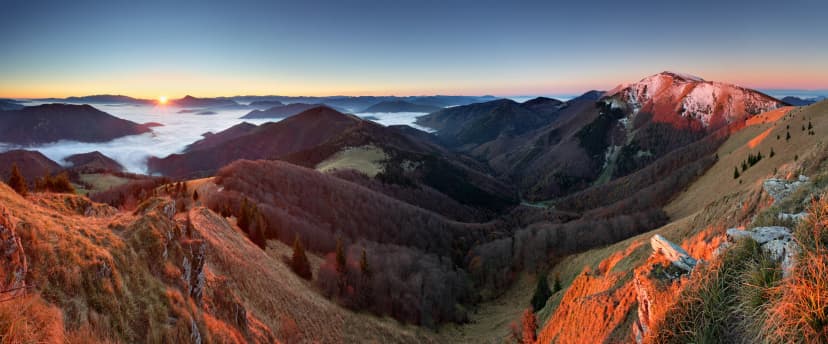
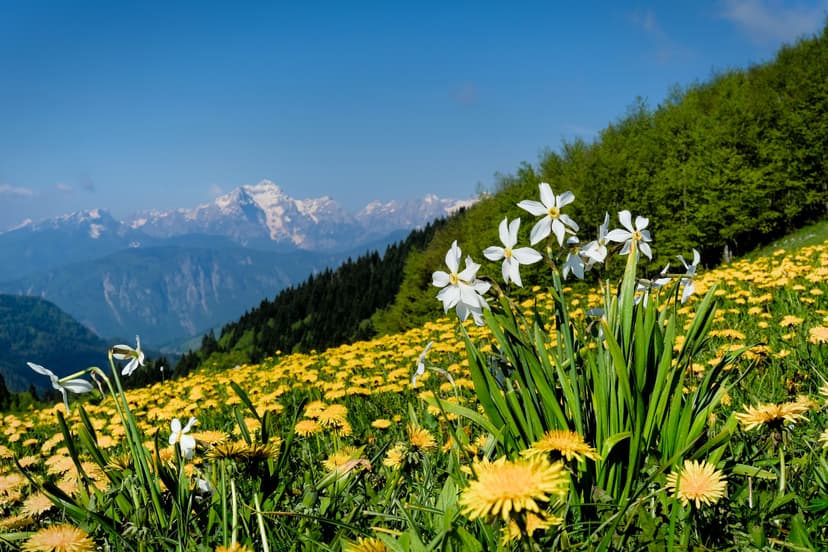
June opens the season. Black Lake and Savin Kuk are walkable by the first week, and Sedlo road typically opens between mid-May and early June depending on the winter. Wildflowers peak on the plateau in the second half of the month, and Škrka hut opens around 15 June. Expect cold nights and patchy snow above 2,000 meters well into the third week.
Wildflowers peak on the plateau in the second half of June, and the hut opens around the 15th
Local guides start by six and are back below the treeline before the afternoon cloud builds
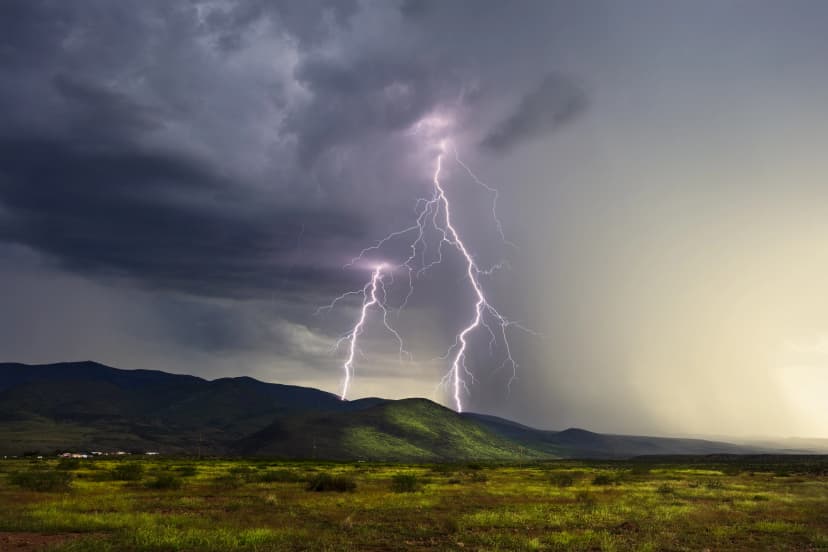
July and August are the busiest months and the most reliable for weather — with the caveat that afternoon thunderstorms are the working assumption on exposed ridges from mid-July. Local guides start Bobotov Kuk hikes by six in the morning and are back below the treeline by early afternoon. Book accommodation two months out for these dates.
Local guides start by six and are back below the treeline before the afternoon cloud builds
Mid-teens by day but frost above 1,800 m from the third week, so pack for a freezing dawn start
September is the sweet spot. Trails empty out after the first week, the light turns golden on the limestone, and daytime temperatures stay in the mid-teens. Expect frost above 1,800 meters by the third week of the month and dress for below-freezing pre-dawn starts. Škrka hut closes at the end of September, so plan huts around the closing date.
Mid-teens by day but frost above 1,800 m from the third week, so pack for a freezing dawn start
Getting to Žabljak
Podgorica's international airport handles most inbound Durmitor traffic and sits about 175 kilometers and roughly 2.5 hours from Žabljak by road. Tivat, on the coast, adds an hour but has more summer flights from western European hubs.
By bus, direct services run from Podgorica to Žabljak roughly four times daily, taking around three hours through Kolašin. Buy tickets at the station kiosk in cash; drivers rarely accept cards. The scenic option is the Belgrade–Bar railway through Kolašin, one of the most spectacular mountain lines in Europe — take a taxi or a connecting bus for the last leg from Kolašin to Žabljak.
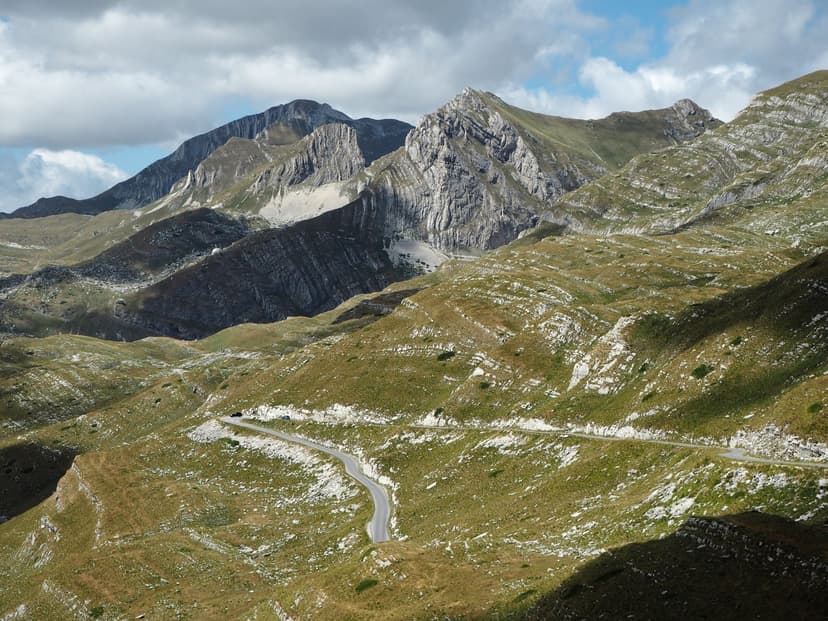
Once you are in Žabljak, the town center is walkable to most trailheads on the northern side of the park. Sedlo pass needs a car or a shared taxi from Žabljak — call the driver the evening before by WhatsApp.
Before You Lace Up
Even hikers with alpine experience arrive with a few assumptions about Durmitor that need adjusting.
What to Know Before You Go
The last 30 to 40 meters run on fixed cables, and the view from their base already pays for it
Bobotov Kuk's final 30–40 meters to the summit uses fixed cables bolted into limestone. It is not via ferrata; there is no gear required.
Hikers with functioning hands and a head for exposure clear it in under ten minutes. Hikers with genuine vertigo turn around at the cables, and the view from that point already justifies the walk.
The last 30 to 40 meters run on fixed cables, and the view from their base already pays for it
Cloud takes the upper ridges between noon and three, and there is no shelter above Lokvice
Afternoon thunderstorms build between 12:00 and 15:00 on the exposed upper ridges, with no shelter above Lokvice or the Bobotov Kuk saddle. Start every summit hike at dawn.
Leave Žabljak by six in the morning if you are driving to Sedlo, and by five if you are walking from Black Lake.
Cloud takes the upper ridges between noon and three, and there is no shelter above Lokvice
Five euros a day covers the park, and wild camping inside these boundaries is banned outright
Entry is €5 per visit, or €13.50 for an annual pass covering all five Montenegrin national parks. Buy at the Black Lake kiosk or online. Parking at Black Lake is separate.
Wild camping is banned inside park boundaries — pitch on the ground at Škrka hut, at Lokvice, or in the campsites in Žabljak. Open fires are always forbidden.
Five euros a day covers the park, and wild camping inside these boundaries is banned outright
Paved since 2015 and fine in a 2WD, but it shuts with the first serious snowfall in October
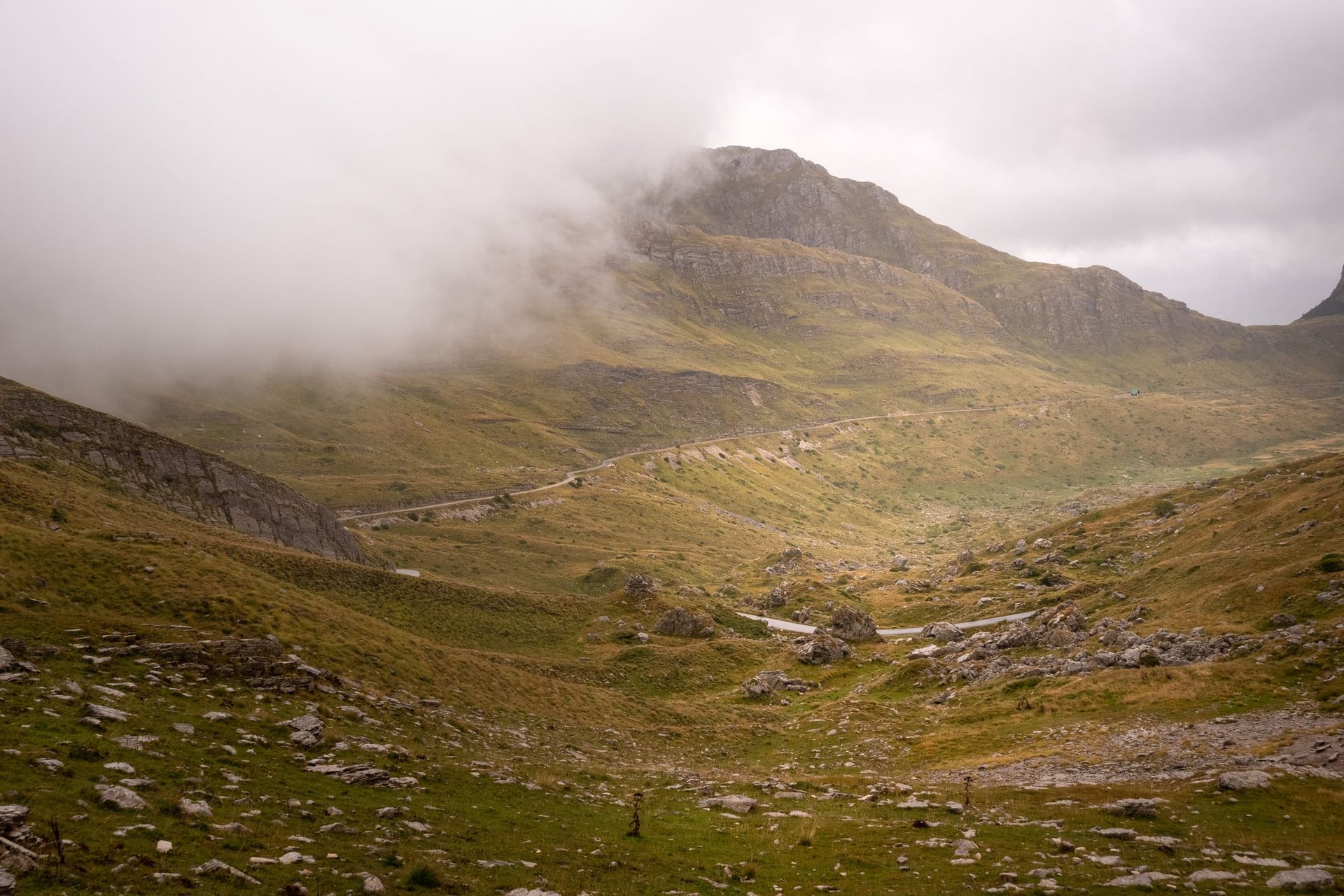
The P14 road to Sedlo pass has been paved since 2015, so it needs no 4WD, but it is narrow, unlit through the tunnels, and unsuited to coaches or camper vans. Any 2WD rental handles it if you drive slowly.
The road usually opens between mid-May and early June and closes with the first serious snowfall in October.
Paved since 2015 and fine in a 2WD, but it shuts with the first serious snowfall in October
Plan Your Durmitor Trip
Our self-guided Durmitor tour is a five-day route based in Žabljak, with three walking days: Crvena Greda above Jablan Lake, Prutaš from Šarban with the Škrčka lakes below you, and the long crossing to Planinica. Every tour includes:
Four nights in a handpicked three-star hotel in Žabljak, with breakfast
A detailed digital guidebook with GPS files for every hiking day
Tour design, logistics and all the bookings
24/7 support line during the tour
Airport transfers and car rental are not included, so budget for a car or a shared taxi to reach the Šarban and Planinica trailheads.
Read Self-Guided Tours Explained for how the model actually works day-to-day, and the Hiking Difficulty Guide for what the 3/5 Technical and 3/5 Fitness ratings mean in practice. For the wider Montenegro picture, our full Montenegro range covers Durmitor alongside the Accursed Mountains and the Bay of Kotor.
Book early for July and September dates — the Škrka hut fills months in advance for the summer weekends.

About this author
Ajda is our travel advisor, raised in a village surrounded by mountain peaks. Hiking entered her life early on and remains her favorite way to reconnect with nature.
.jpg&w=828&q=75)


.jpg&w=828&q=75)