Slovenia's Quietest Alpine Ridge: Hiking the Karawanks
What to know before walking Slovenia's 120-km border ridge — the Golica narcissi window, Mt. Stol, and how the Karawanks compare to the Julian Alps.

Jon
Published September 18, 2026
Edited September 18, 2026
11 min read
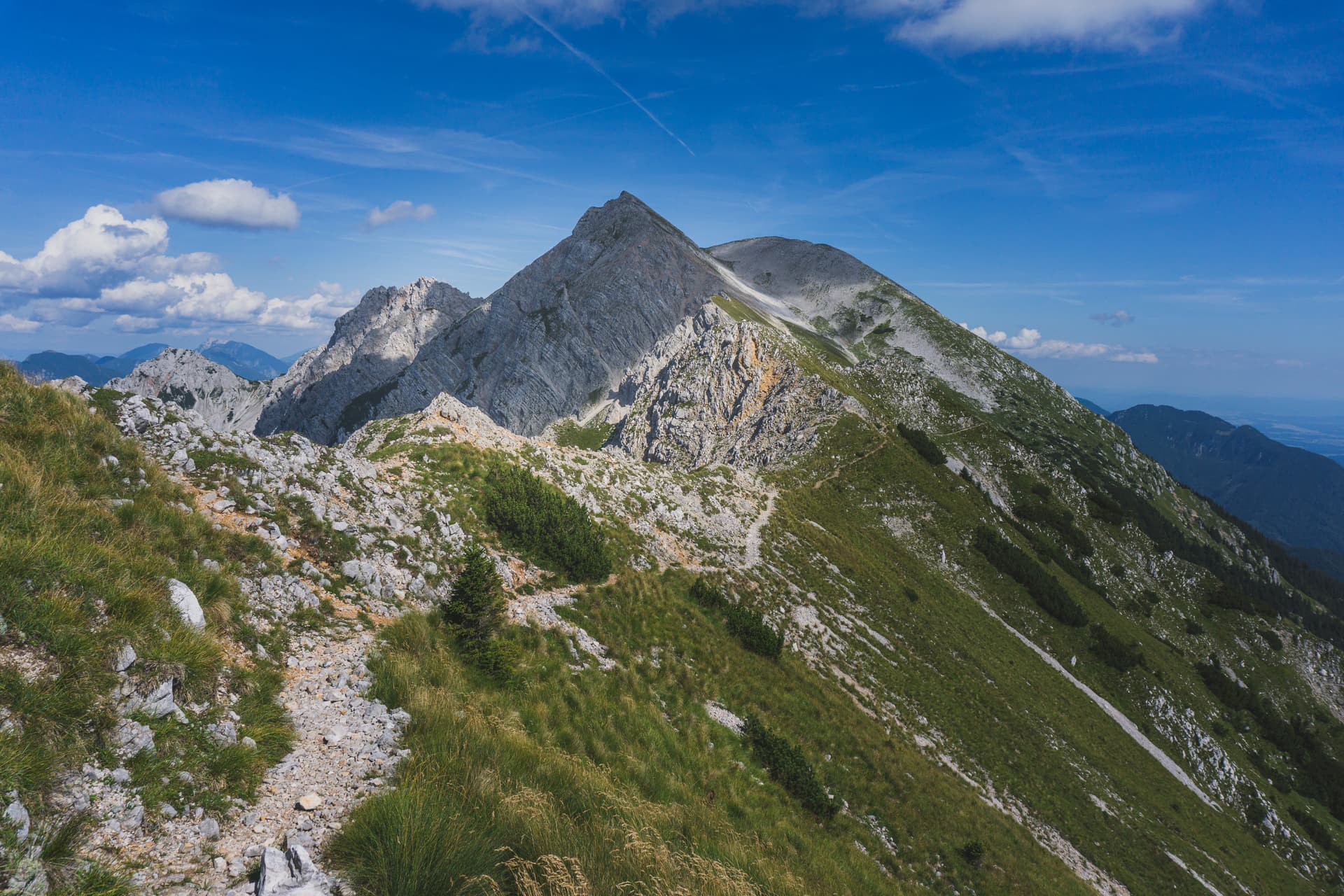
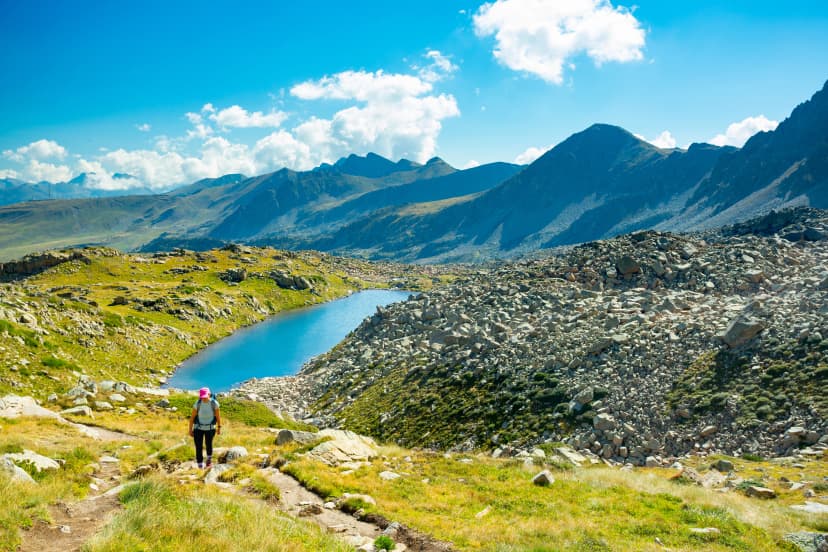
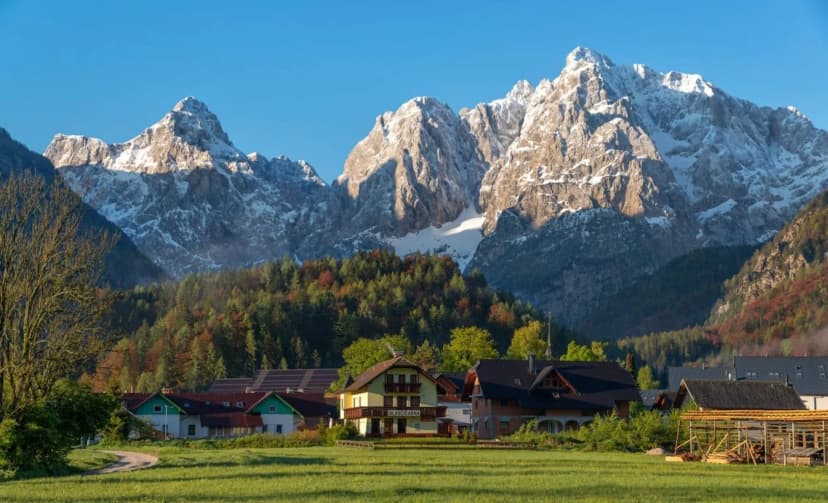
Slovenia has two great alpine ranges, and most first-time visitors only walk one of them. The Julian Alps get the photographs and the queues at Mt. Triglav. The Karawanks — the 120-kilometre limestone ridge that separates Slovenia from Austria — get almost nobody, and that is the point.
The country's quietest high-alpine walking sits here: grassy ridges instead of scree, sun-facing pastures instead of shaded gorges, and in late May the wild white daffodils of Mt. Golica that Slovenians count as an annual pilgrimage. Below is everything a first-timer needs to know about the range — the routes, the huts, the daffodil window, and how the walking compares to the Julian Alps.
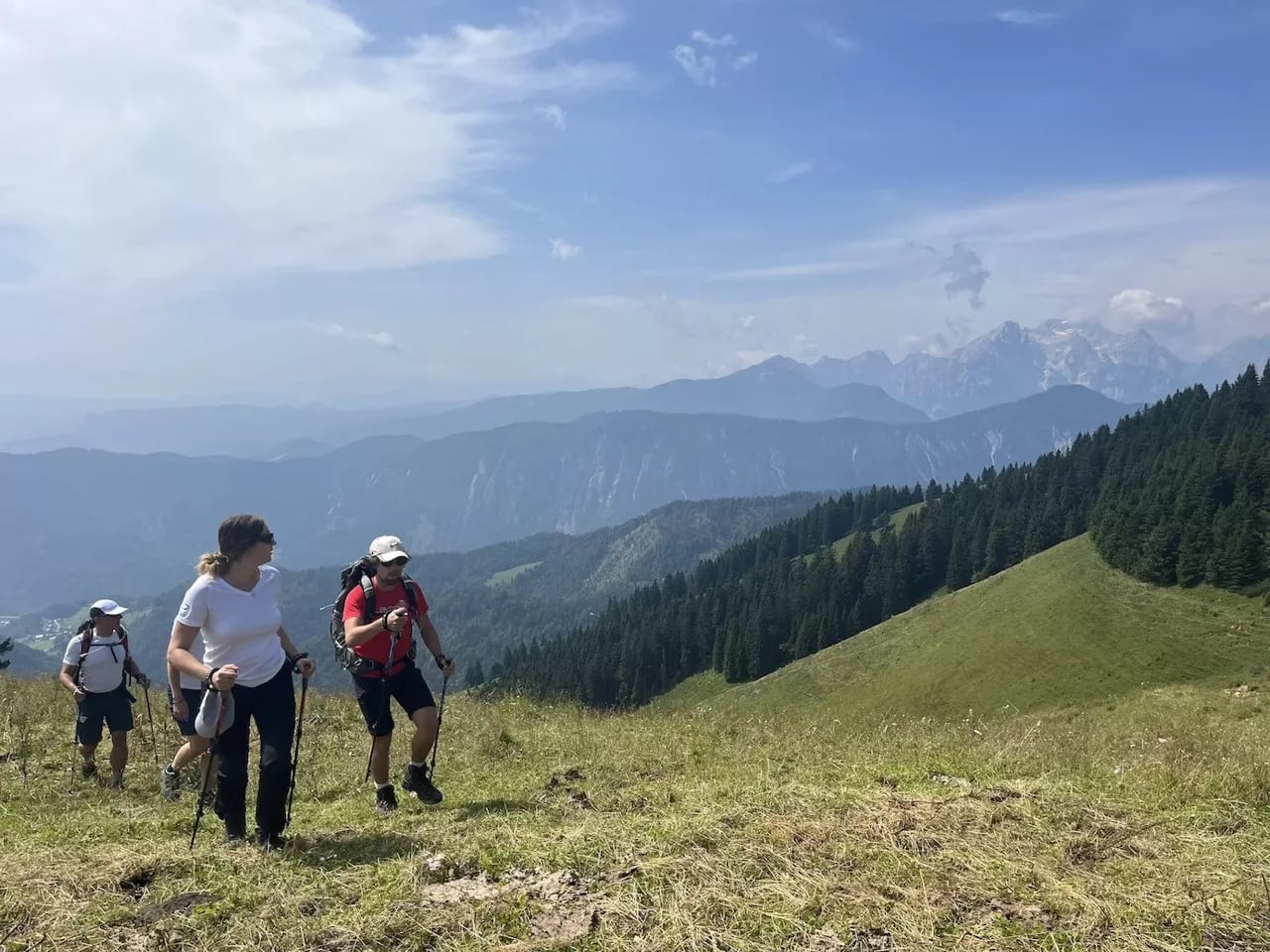
The essentials:
Where: the 120-km limestone ridge on the Slovenia–Austria border, with the popular high walking on the western half between Tržič and Jesenice
Highest peak: Mt. Stol (Veliki Stol / Hochstuhl), 2,236 m, straddling the border
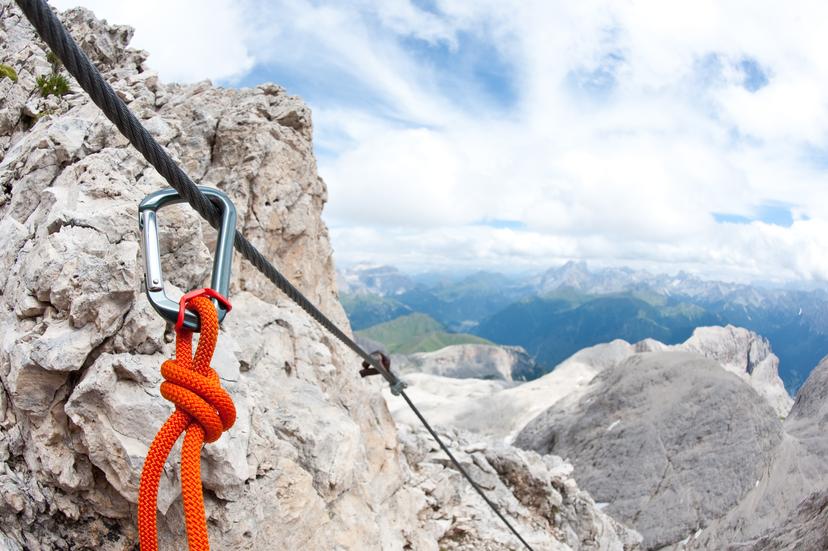
How hard: moderate — grassy ridges with some exposure, no scrambling or via ferrata on the main routes
When to go: late May to early June for the Golica daffodils; late June to late September for the full ridge walk
At a Glance: Karawanks vs. Julian Alps
Karawanks | Julian Alps | |
Character | Grassy ridges, wide pasture | Rocky peaks, glacial valleys |
Highest point | Stol, 2,236 m | Triglav, 2,864 m |
Technical demand | Marked paths, minor exposure | Frequent via ferrata sections |
Crowds | Mostly local hikers | Slovenia's busiest range |
Best window | Late May – late September | Late June – late September |
A Ridge Between Two Countries
The Karawanks run east to west for 120 kilometres, from the Italian border above Rateče, where they take over from the Carnic Alps, to the Slovenj Gradec area in the east, making them one of the longest continuous mountain chains in Europe. Geologically they belong to the Southern Limestone Alps, built from karstified carbonate rock, and the whole cross-border massif was declared a UNESCO Global Geopark in 2015 — a designation shared by Slovenia and Austria.
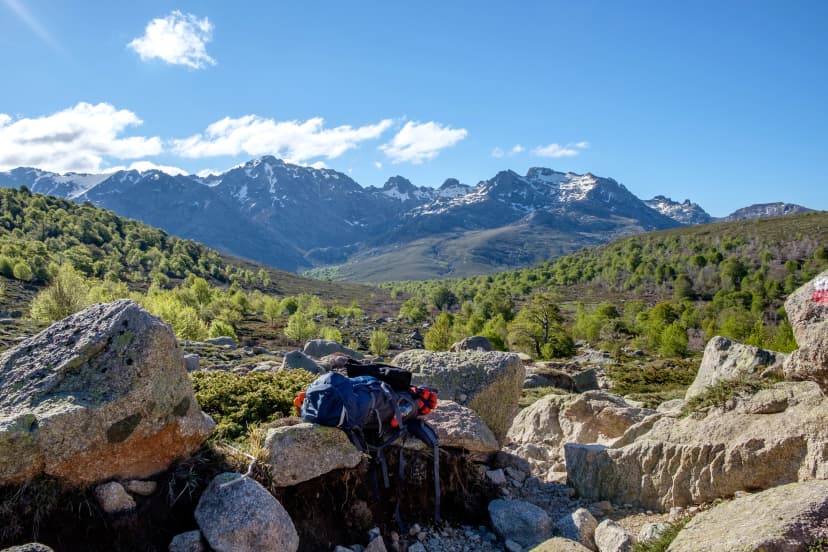
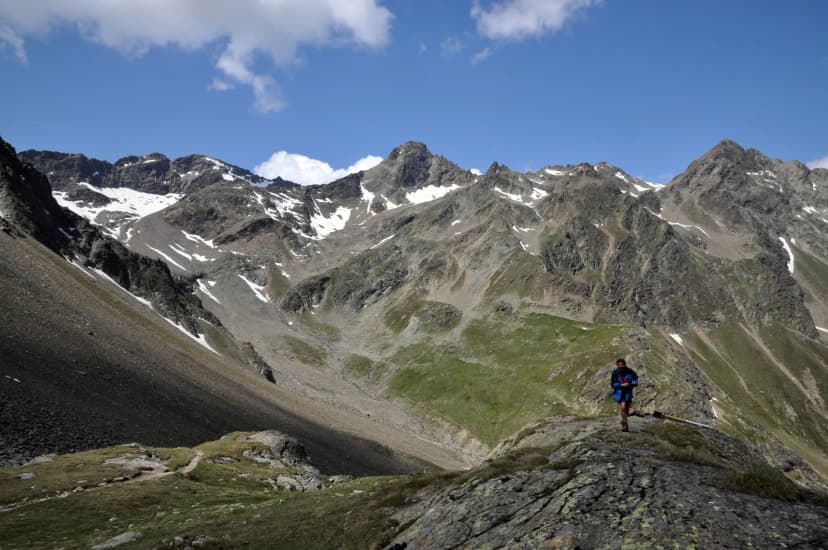
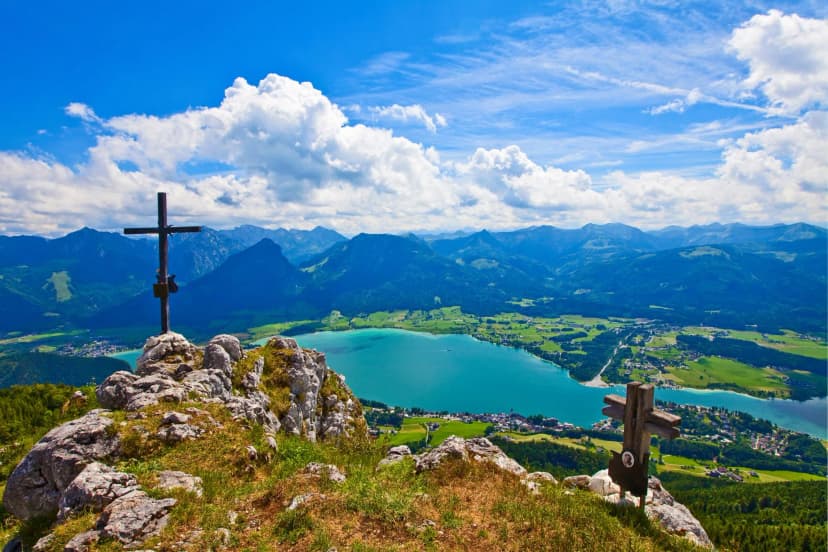
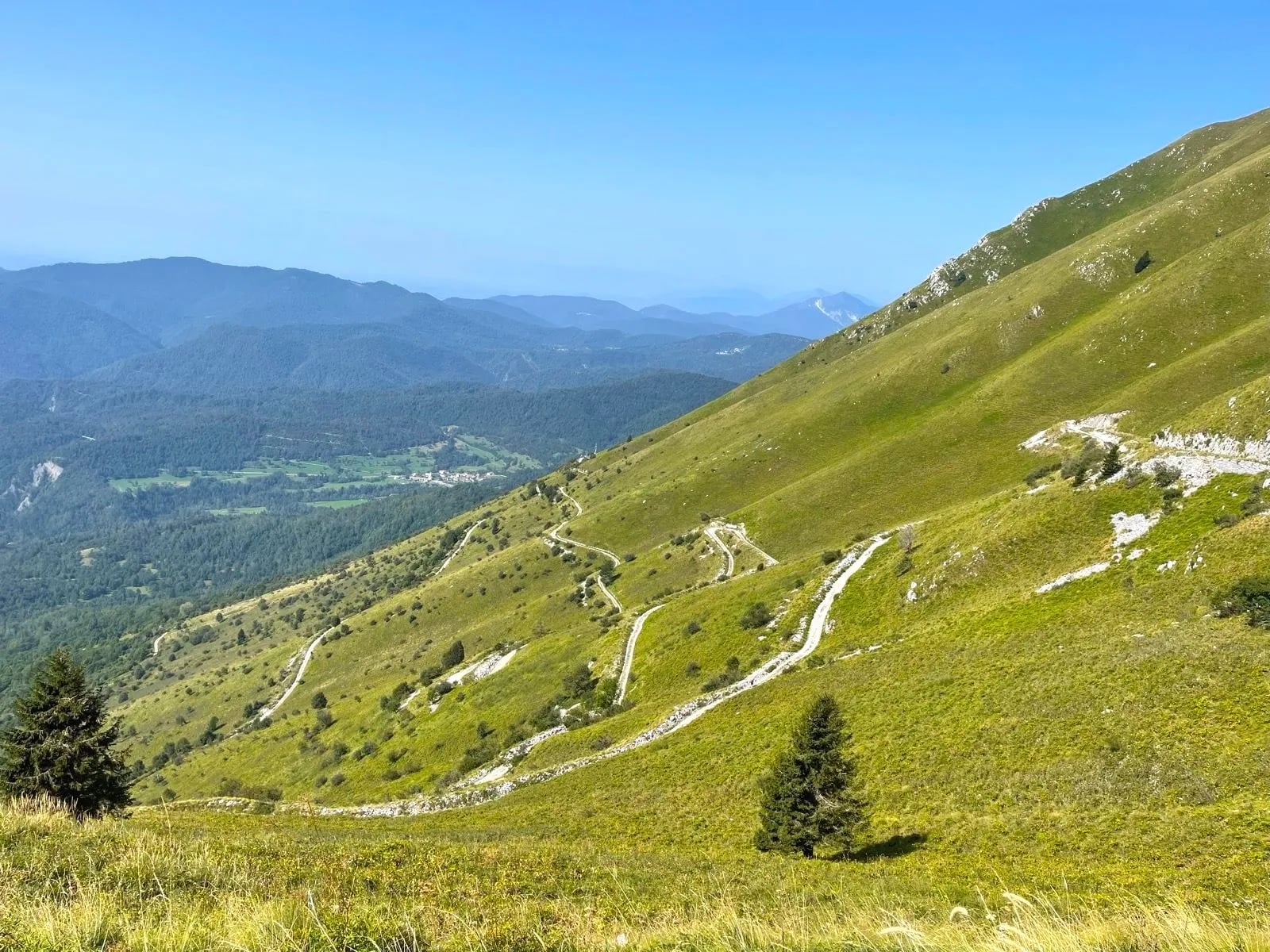
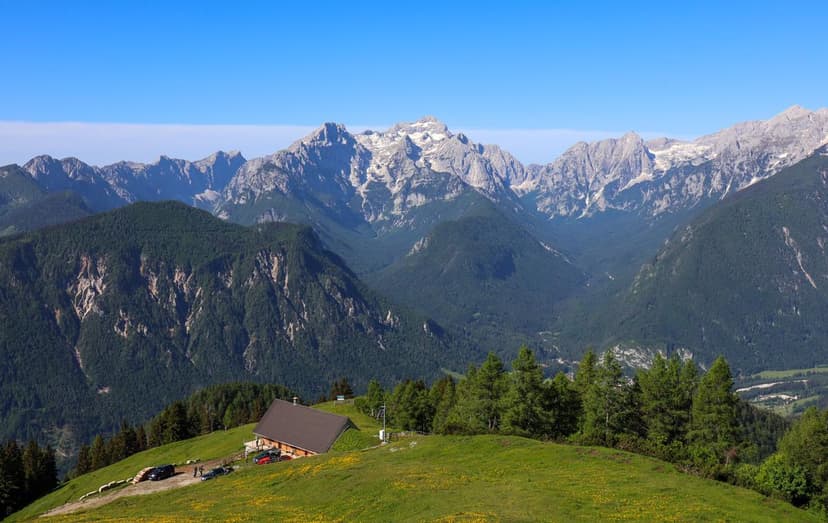
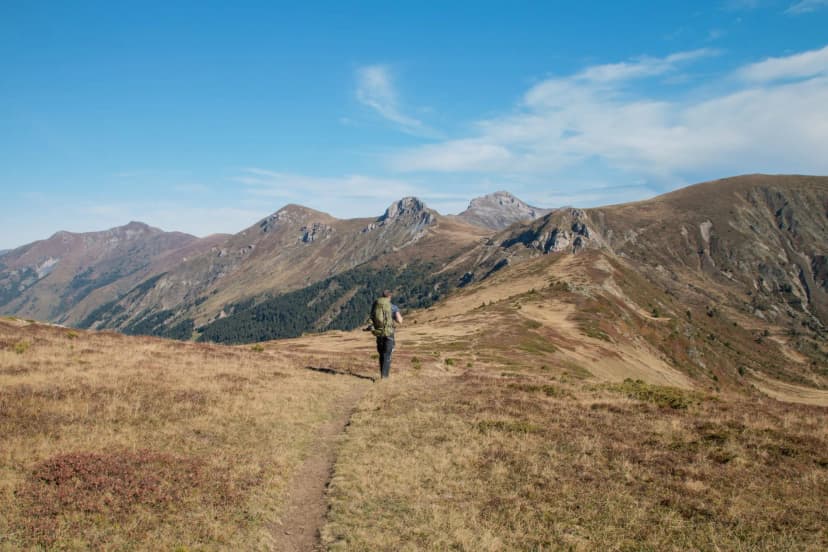
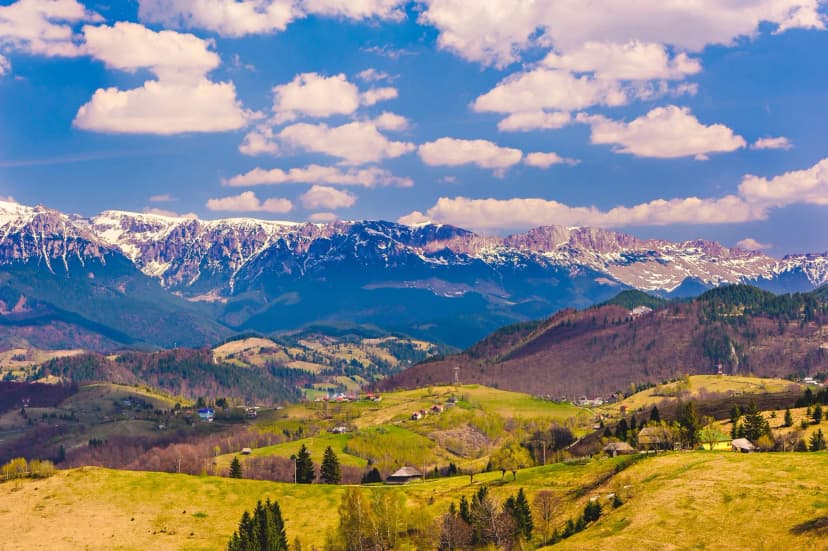
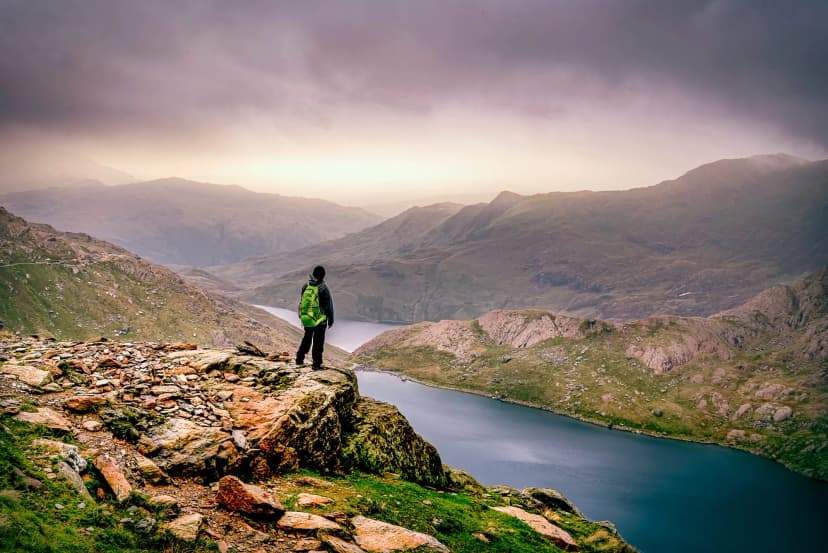
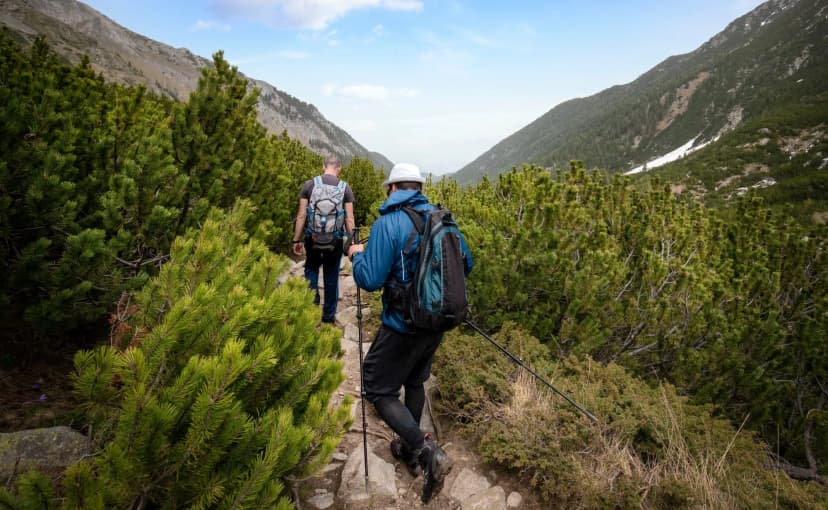
The character of the walking depends on which side of the ridge you are on. The northern flank drops into Austrian Carinthia, steep and forested. The southern, Slovenian flank is gentler: sun-facing pastures and long grassy summit ridges you can follow for hours without dropping below 1,800 m. Almost all the popular hut-to-hut walking sits on this southern side, concentrated on the western half of the range between Mt. Stol at the border and Mt. Dovška Baba above the entrance to Triglav National Park.
Why the Karawanks, Not Triglav
Mt. Triglav is Slovenia's national peak and rightly the country's most walked mountain — but it is also its busiest. The summit route involves cable-assisted sections and exposed via ferrata, the two summit huts book out four to six months in advance, and the last kilometre of trail in high summer moves slower than a rush-hour pavement.
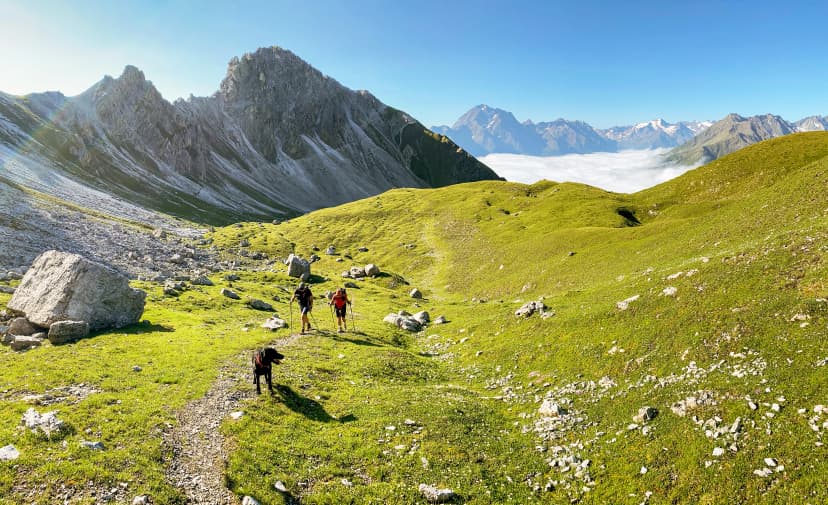
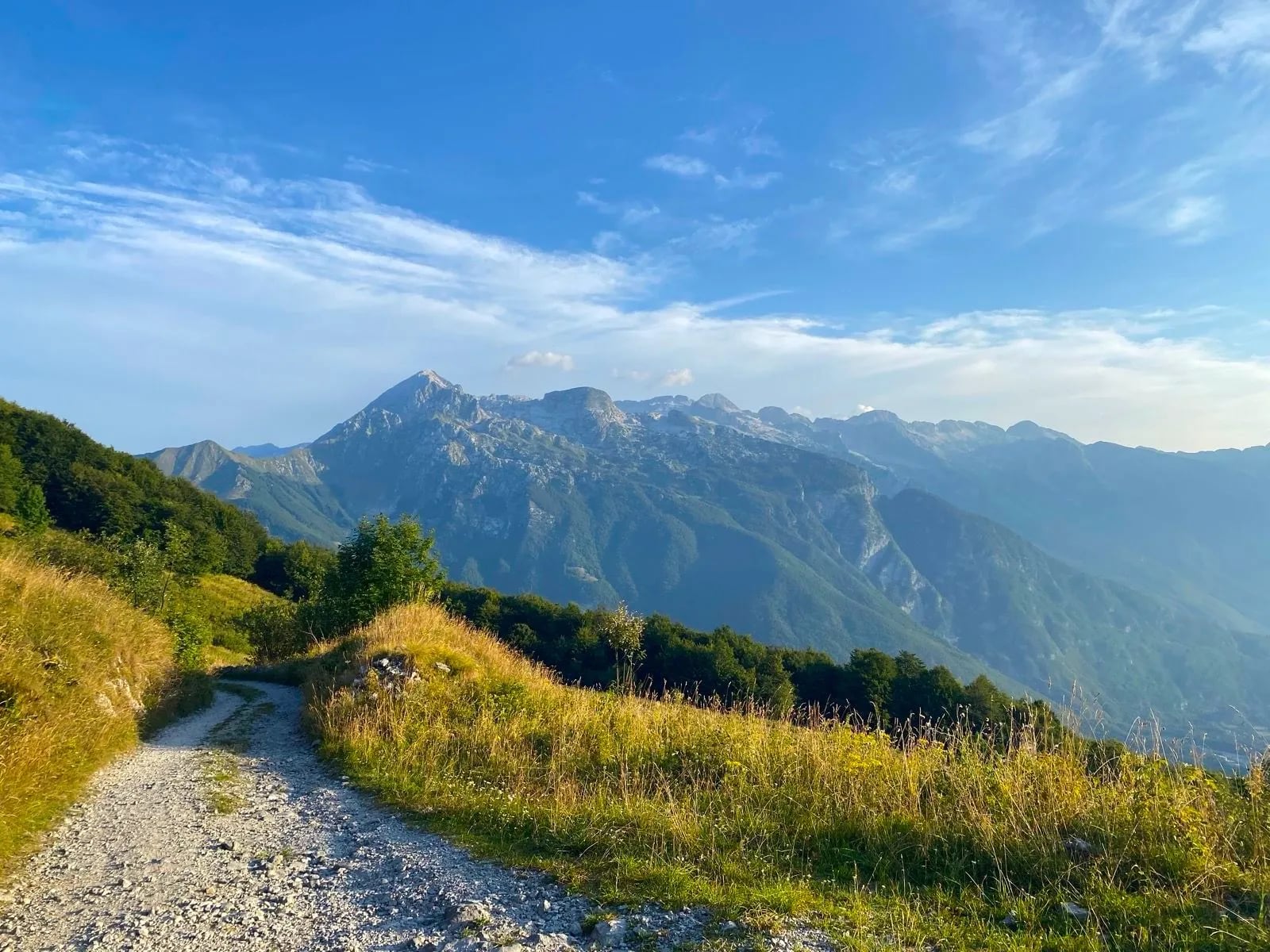
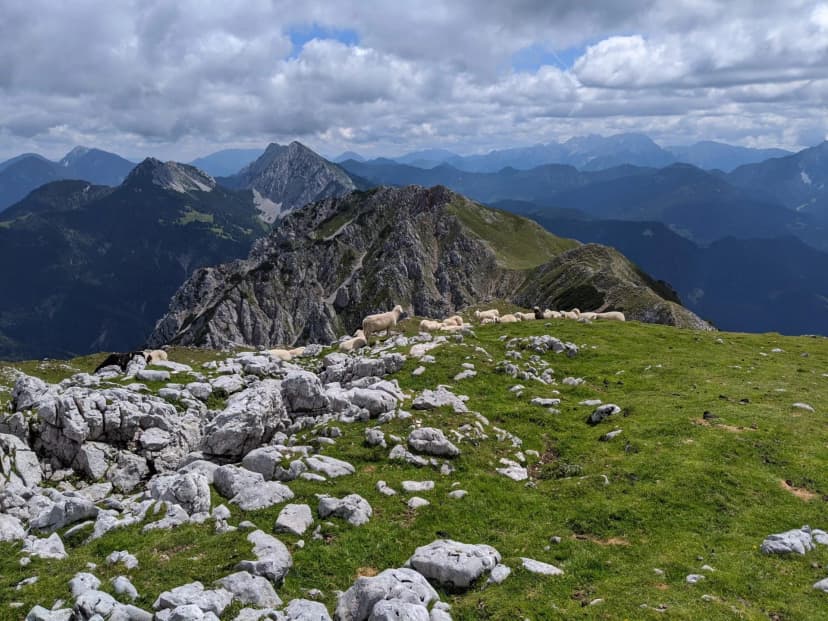
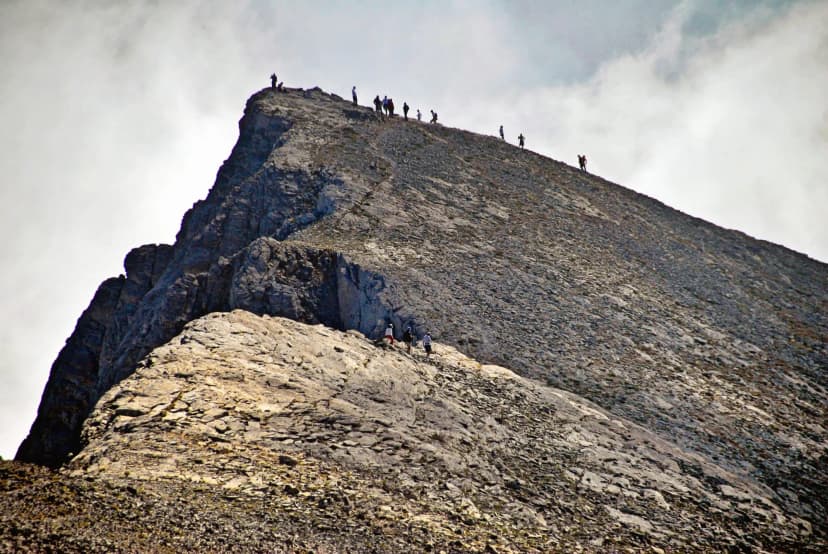
The Karawanks offer the same alpine skyline for a fraction of the effort. From the ridge at Mt. Stol you look south at the entire Julian Alps panorama — Triglav, Škrlatica, Mangart, Kanjavec — from the outside, without a queue. The walking itself is technically undemanding: no via ferrata on the main routes, no scrambling, no aided ground. What you get instead is stamina work on a long grass ridge, with pasture underfoot and staffed huts every four to five hours.
If you want to check it with a reliable source, the Alpine Association of Slovenia's maPZS trail map grades every section of every Slovenian mountain path — easy, demanding, very demanding, or via ferrata — and marks where fixed protection exists. It is also available as an app.
For hikers who want an alpine hut-to-hut without the crowds, cables and booking scramble that a Triglav trip involves, this is the honest trade.
Golica: Slovenia's Spring Favourite
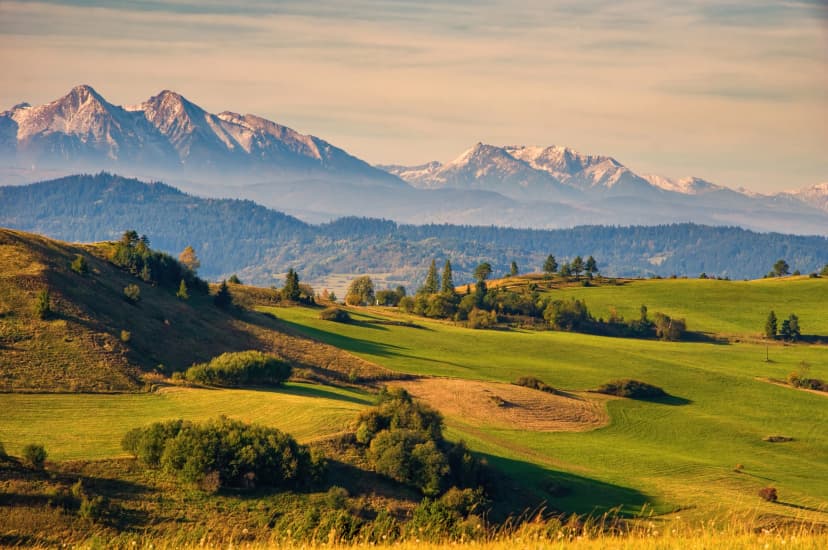
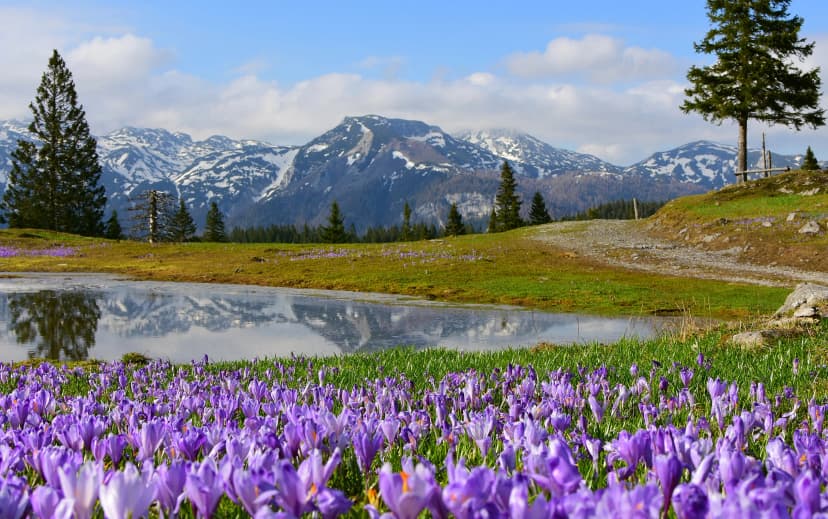
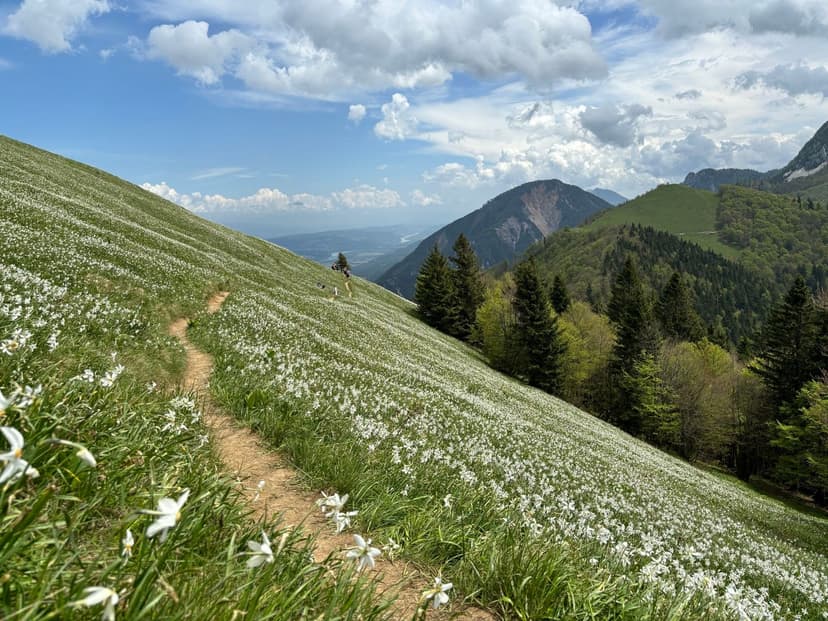
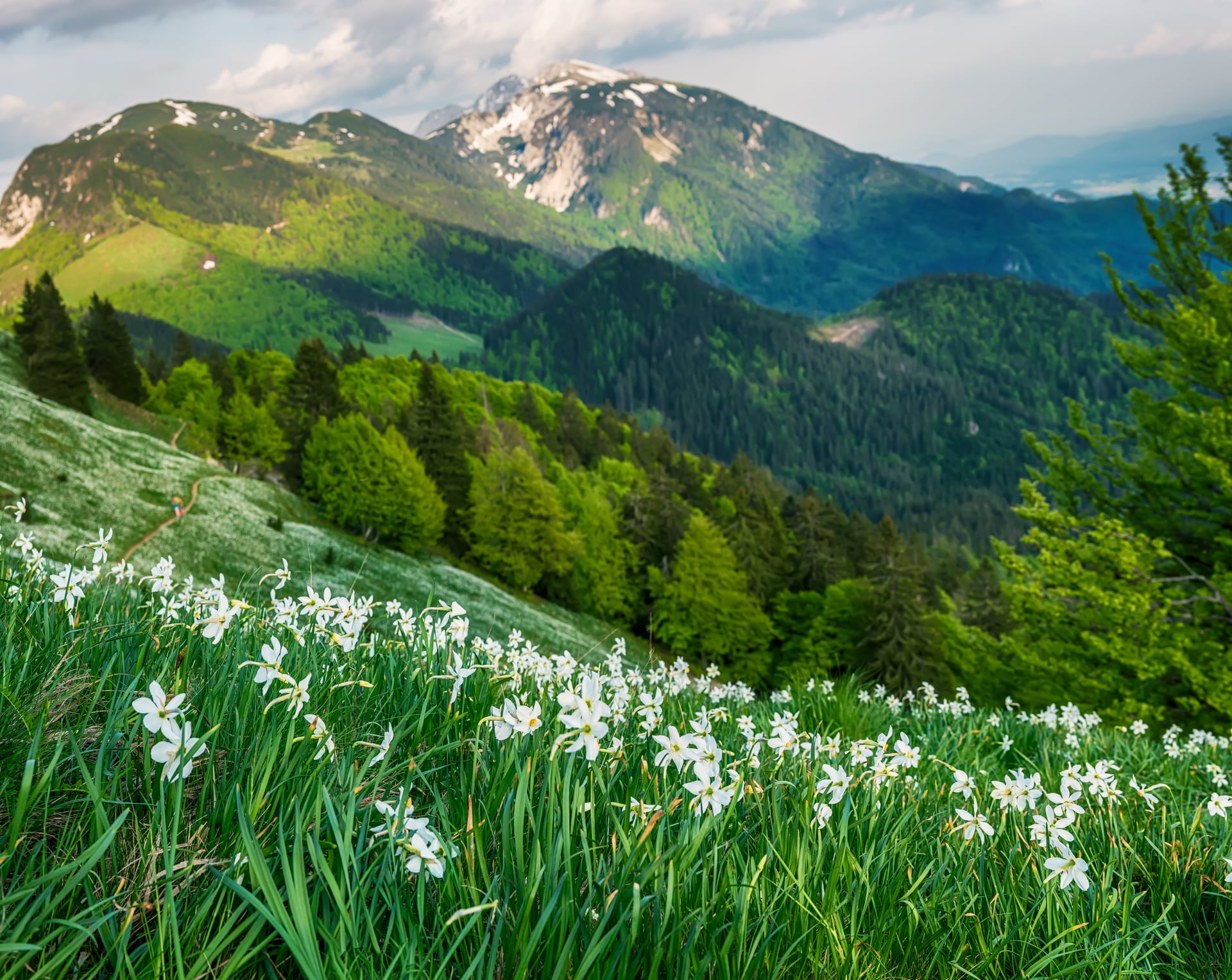
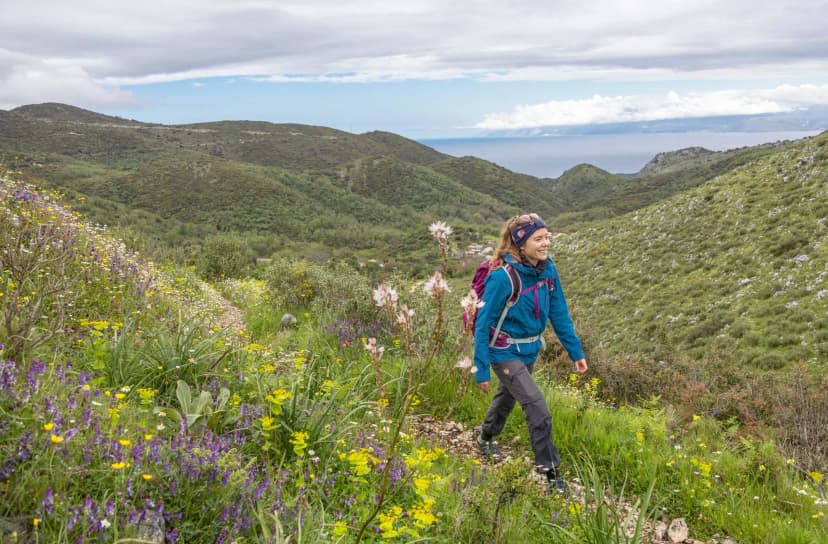
Mt. Golica (1,835 m), near the town of Jesenice, is famous for the wild white daffodils that carpet its southern slopes every spring. Botanically these are Narcissus poeticus, the poet's daffodil; Slovenians call them ključavnice. For two to three weeks at peak bloom, the meadows below the summit turn into an almost unbroken white sheet — one of the most photographed spring landscapes in the Alps.
The mountain has its own soundtrack, too. In 1954 the Slovenian accordionist Slavko Avsenik composed a polka he named Na Golici — "On Golica" — inspired by the daffodil-covered peak. His brother Vilko arranged it, and the recording became the most-covered instrumental piece in the world, played every autumn at Oktoberfest under the German title Trompetenecho. By Slavko's own admission, he had never actually set foot on the mountain that made him famous.
The window is short and depends on the winter. In an average year the bloom starts around the second week of May and holds through the first week of June; snowmelt can shift it forward or back by a week. If you are planning a trip around the daffodils specifically, aim for the beginning of June — that gives you the best chance of hitting full bloom in any year. The bloom also climbs as the season goes. The lower meadows at Javorniške and Jeseniške Rovt flower first, and the high meadows below Mali Golica last, which is why a walking trip in early June often finds better flowers on the ridge than a day trip to the valley meadows a fortnight earlier.
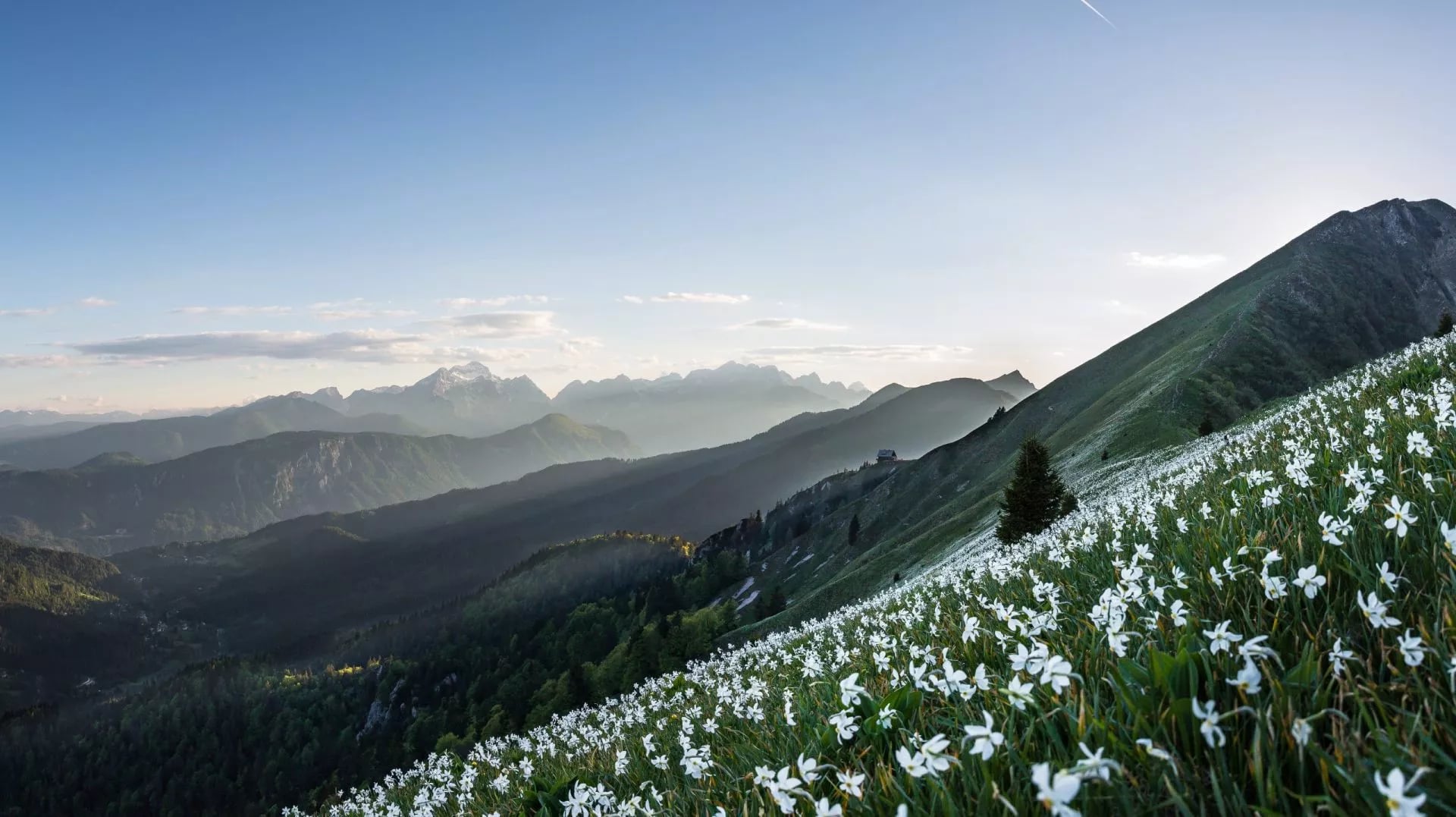
Two practical points other guides skip. First, the meadows are protected — the flowers are ground you walk past, not through, and the marked path exists to keep you off them. Second, the bloom weekends are the one time of year Golica gets genuinely crowded, mostly with Slovenians up for a family day walk. Come midweek, or start at dawn.
The Best Peaks and Sections
The routes worth planning around fall into two clusters. The western Karawanks hold the classic three-day traverse from Stol to Dovška Baba via Golica. The central section — Košuta ridge and Begunjščica — offers longer, quieter alternatives for a return trip. The five peaks below are the ones you will meet on any serious itinerary in the range.
The Signature Karawanks Traverse
If you have three days in the range and want the highlights on foot, this is the trip. Starting from Završnica lake above Žirovnica, the classic western traverse climbs Stol on the first afternoon, walks the border ridge to Koča na Golici on day two, and finishes over Dovška Baba into Vrata Valley on day three. Roughly 37 kilometers and about 2,400 m of ascent across the three days.
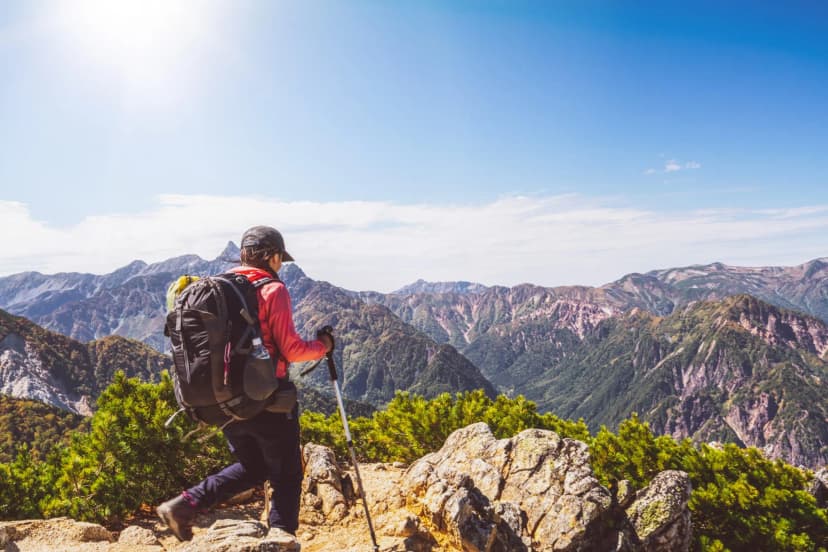
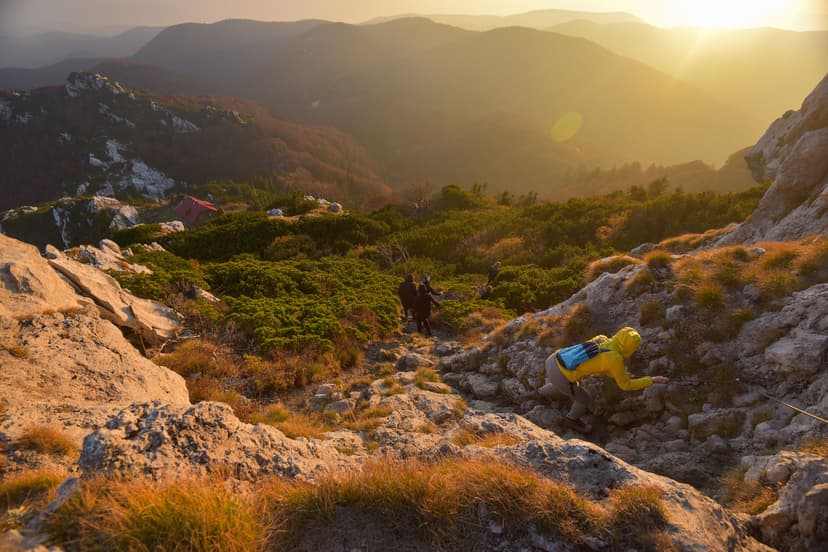
Day one is the biggest push — a steady 1,600 m from the lake to Prešernova koča, mostly on forest track that opens onto grassy shoulders in the final hour. Day two is the reason you come: a long open ridge walk with Austria on the right and the Julian Alps unfolding on the left, and the daffodil meadows underfoot if you are here in early June. Day three descends past Dovška Baba to Mojstrana and into Triglav National Park, with an optional add-on to the Peričnik Waterfall.
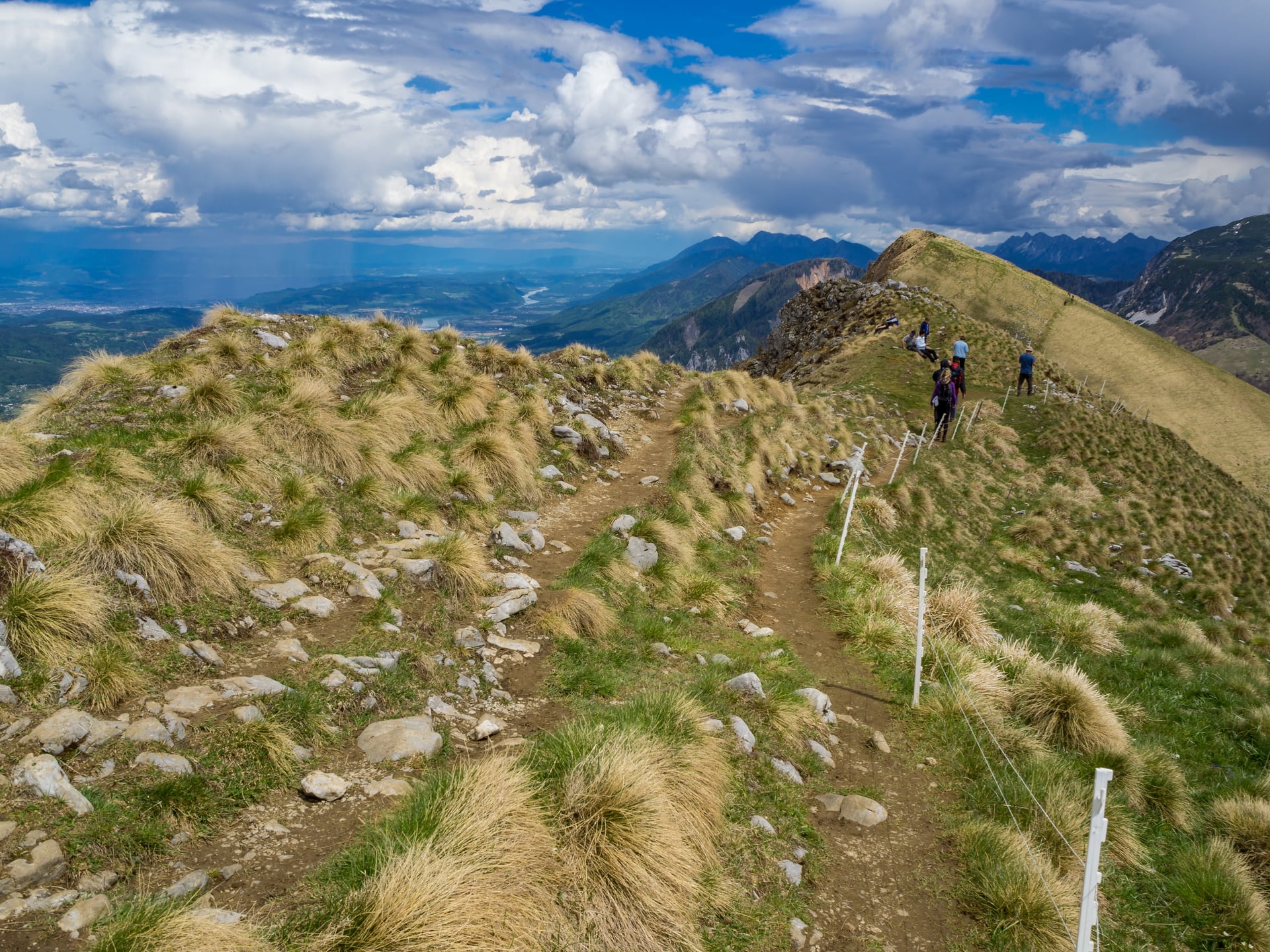
For the daffodil weekend at Koča na Golici in early June, book the moment the reservation calendar opens. Golica on its own is a day walk from Jesenice, and the high ridge to Stol usually needs another few weeks to clear. From June, the full traverse opens up, and if you would rather have it handled, plus transfers, a digital guidebook and the GPS files, this is our short-format trip in the range.
If you would rather have that handled — plus transfers, a digital guidebook and the GPS files — this is our short-format trip in the range.
Extending to the Julian Alps
The three-day traverse is a complete trip in itself, but the same trailhead opens the most scenic section of the Slovenian Mountain Trail — the country's classic long-distance route linking the Karawanks with the Julian Alps. On the six-day version, you walk the Stol–Golica ridge as before, continue past Dovška Baba into Vrata Valley, and climb west below Mt. Triglav to sleep at Dolič hut beneath Mt. Kanjavec at over 2,000 m. The trail then descends to Lake Bohinj through the pastures above the Seven Lakes Valley.
Roughly 78 kilometres and about 4,500 m of ascent across six days, ending at Stara Fužina on the shore of Lake Bohinj. Technical demands stay the same — no via ferrata, no scrambling — but daily distances lengthen, and one long day from Vrata to Dolič climbs 1,400 m from valley floor to the high hut. For a first alpine hut-to-hut in Slovenia, this is the most efficient way to see both ranges on one trip.
When to Walk the Karawanks
There are four distinct windows worth planning around. The seasonal pattern here differs from the Julian Alps: the southern-facing pastures dry out earlier in spring, and the lower altitudes stay walkable a week or two later into autumn.
The narrow window when Mt. Golica's daffodil meadows are in full bloom. Snow still lingers on the higher shaded slopes, so the full ridge walk to Stol may not yet be feasible, but Golica by itself is one of Slovenia's signature spring hikes.
Weekends see local crowds — go midweek or start at dawn. Lower approaches are dry and warm by mid-May, but pack layers because evenings at Koča na Golici still drop close to freezing.
The main ridge walk opens as the last snow clears off Stol's northern shoulder, usually by the third week of June. Long days, more stable weather than in the Julian Alps thanks to the southern exposure, and huts running at full capacity.
Trails stay quieter than they will in August. Booking mid-week huts a fortnight ahead is normally enough.
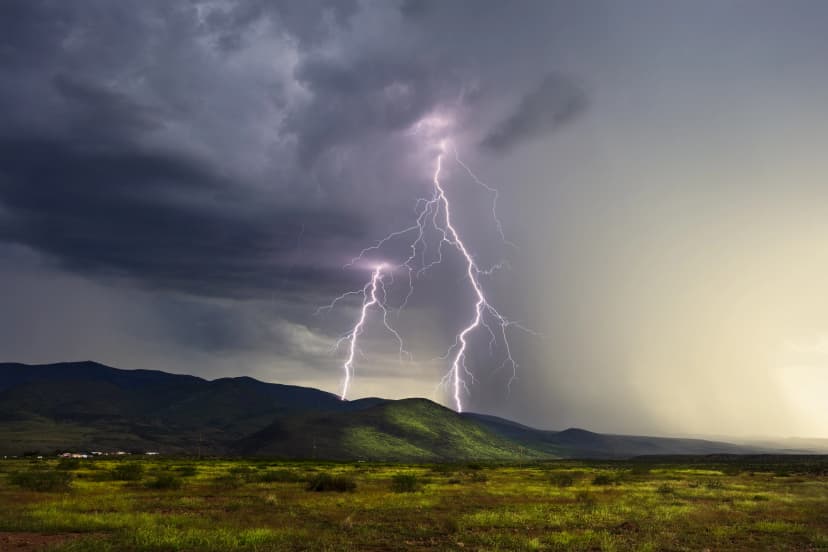
Peak season across the Alps, but the Karawanks still carry a fraction of the traffic that clogs the Triglav trails. Afternoon thunderstorms build off the Austrian side from the northwest — plan to be off summits by 2 pm and check the forecast at every hut. Check the ARSO mountain forecast regularly.
Book huts at least a month ahead in August. Prešernova and Golica fill on weekends and the shoulder days around them.
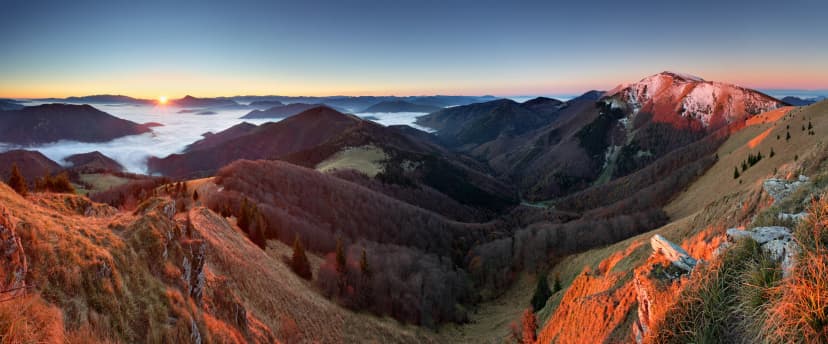
Arguably the finest month in the range. Cooler air makes the ridges more comfortable to walk, the light turns amber, and the pastures shift from green to gold. Huts stay open until roughly the third week of the month.
From mid-September onward, expect cold nights above 1,500 m and check whether your target hut is still staffed before you commit to an itinerary.
Huts on the Ridge
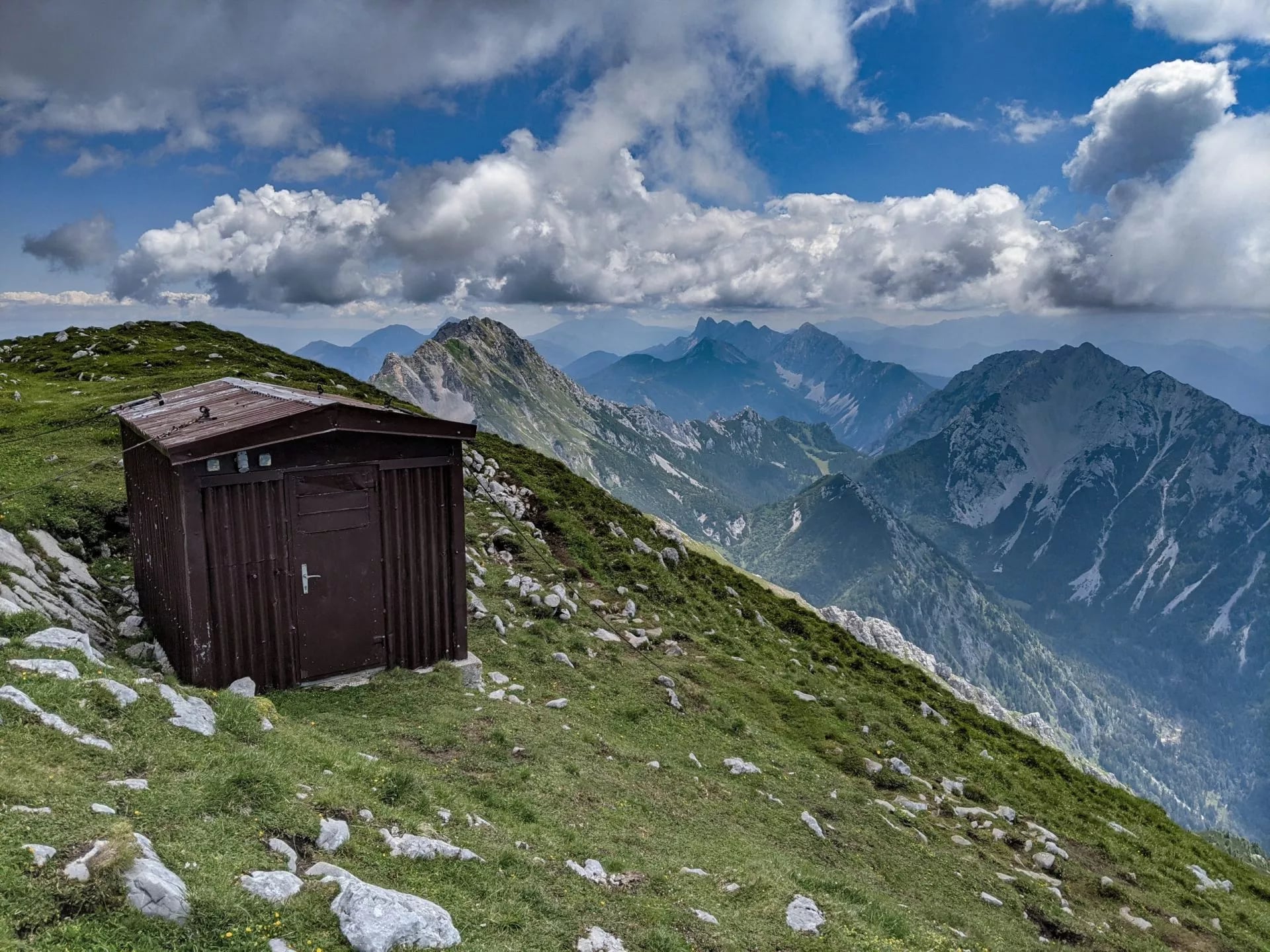
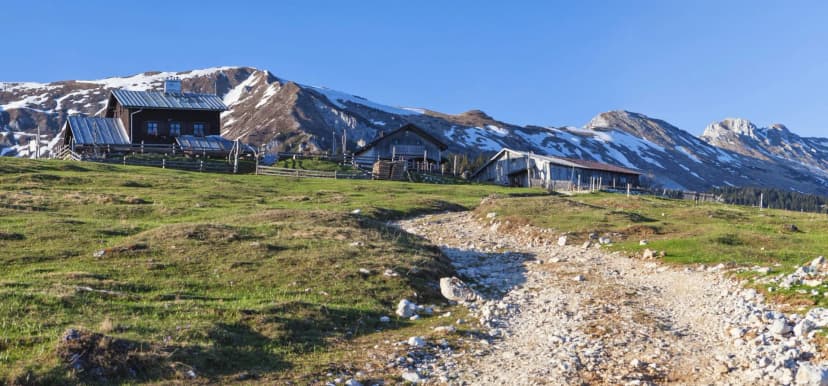
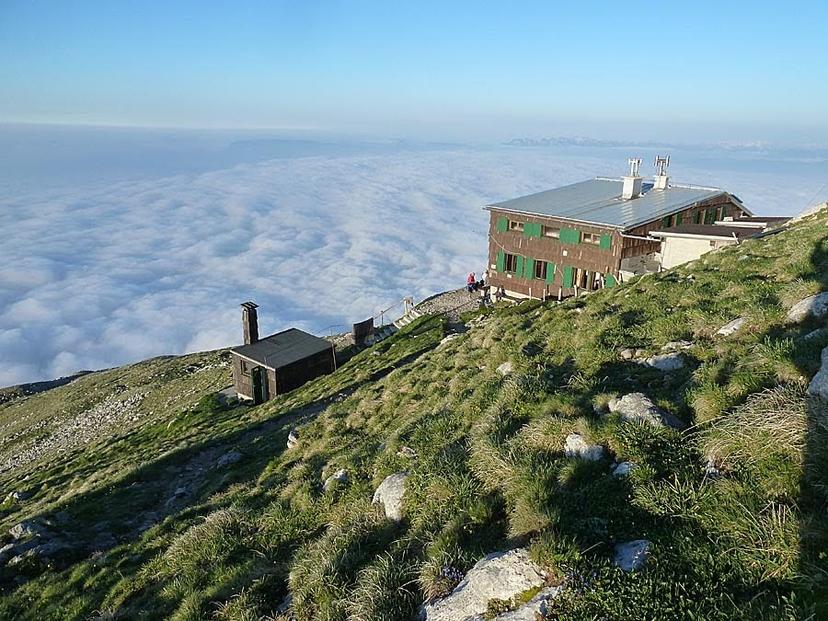
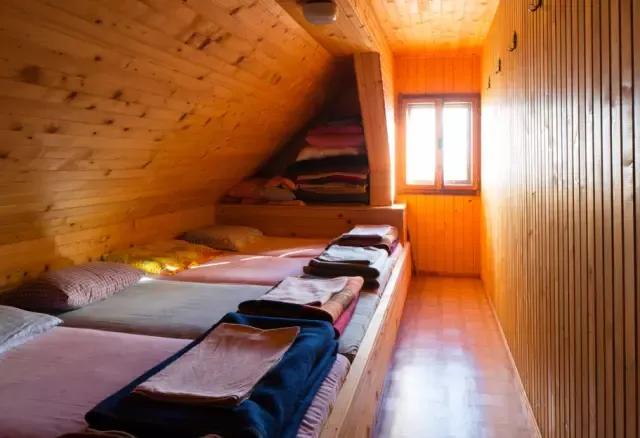
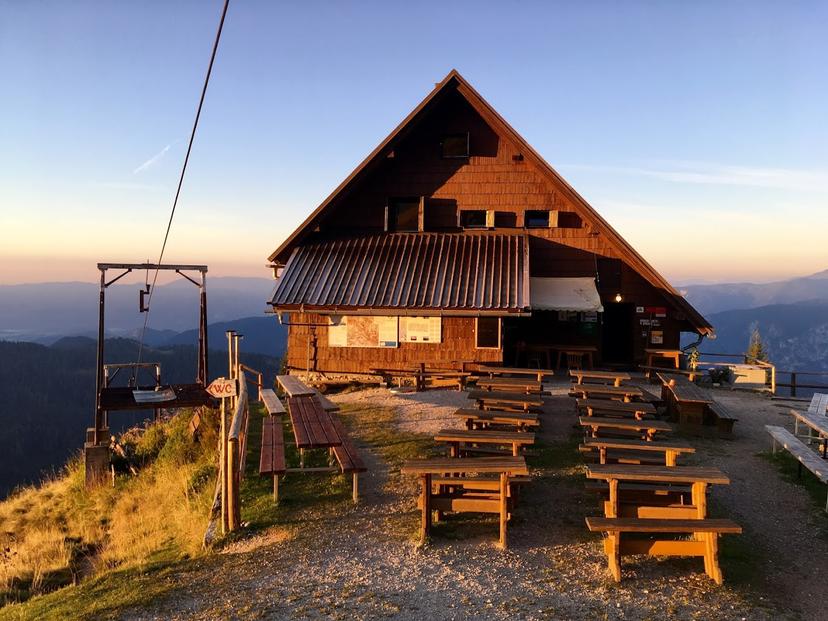
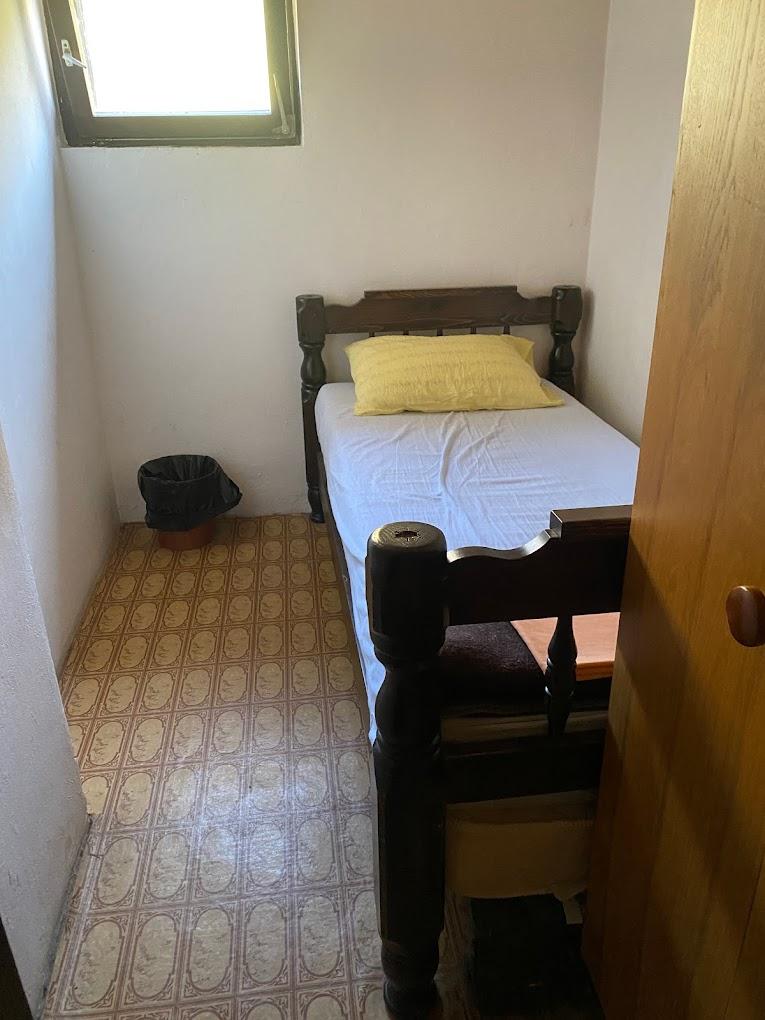
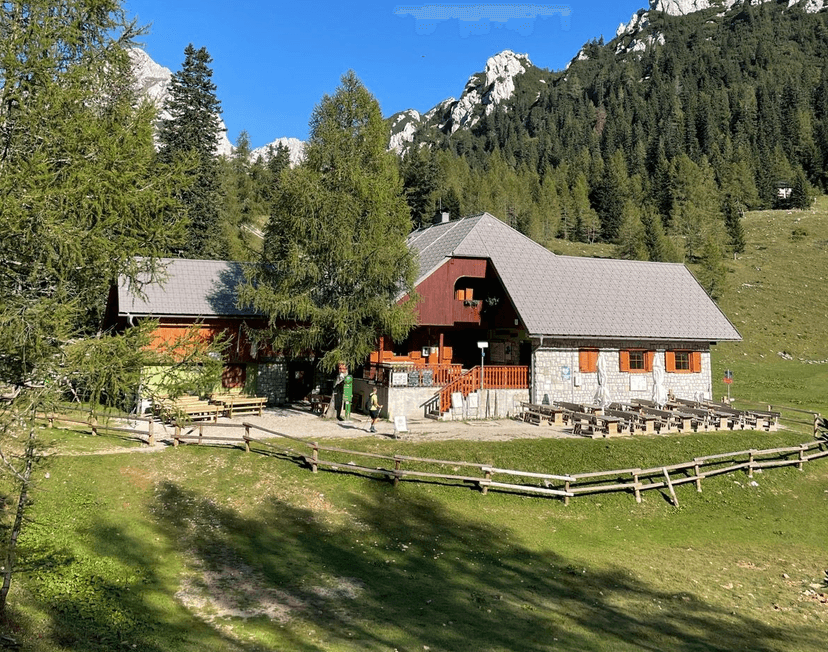
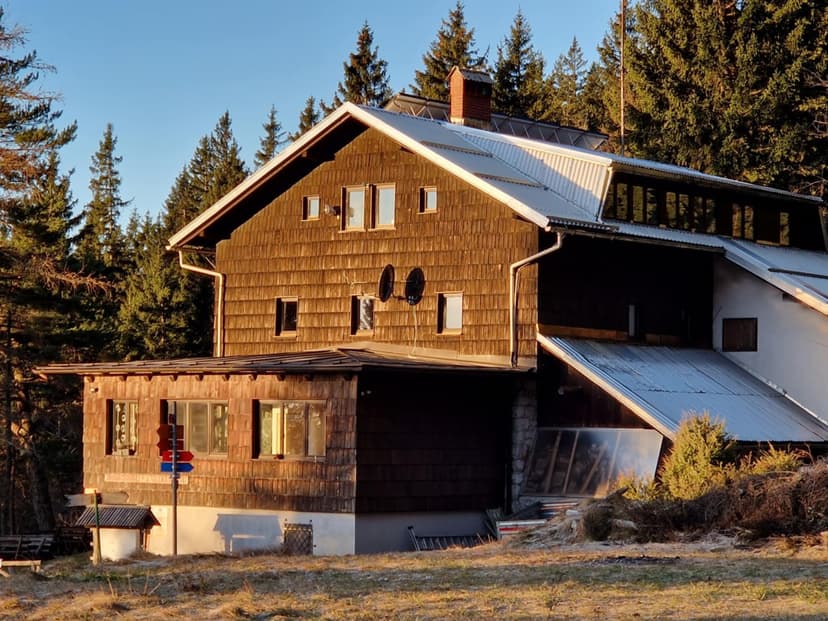
The four huts below are the ones that matter for any serious walking in the western Karawanks. Prešernova koča and Koča na Golici are the two you will sleep in on the classic three-day traverse. Zelenica adds a staging option for hikers linking in from Begunjščica, and Valvasorjev dom is a mid-climb waypoint on the approach to Stol.
Plan Your Trip
The Karawanks reward hikers who plan properly. The daffodil window on Golica is narrow, and the good huts on the ridge fill on the same handful of weekends every year. If the range appeals but the logistics do not, we run self-guided hut-to-hut trips with the whole planning stack handled:
All hut nights booked and confirmed for your dates
A detailed digital guidebook with maps, GPS tracks and elevation profiles
Airport transfers between Ljubljana or Klagenfurt and the trailhead
On-trip support line for weather calls or itinerary changes
The catch on any Karawanks itinerary is exposure. There is no forest cover on the high ridge, and thunderstorms build fast off the Austrian side in summer. Start early and do not push a summit if cloud is stacking on the north. Beyond that, the range is more forgiving than any comparable trip in the Julian Alps.
For the full portfolio, see all our Slovenia hiking tours. For the neighbouring range, our Triglav 3-Day Hut to Hut is the natural next step, and the Julian Alps and Soča Valley Hike covers the mountains next door.
Slovenia has two great alpine ranges. Now you know which one to walk first.

About this author
Jon is our travel advisor and an outdoor adventurer who is happiest on the move. While mountain biking is his personal passion, he thrives on crafting hiking adventures for others — planning routes and adding the little touches that turn a trip into a core memory.


.jpg&w=828&q=75)