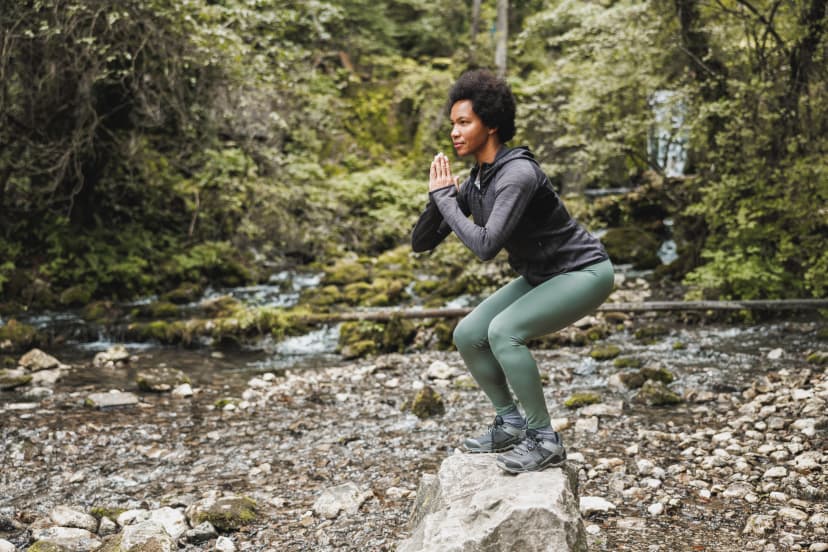
Hiking Northern Italy: The Alps, Dolomites, and Coast
The Dolomites, the Italian Alps, and the Ligurian coast between them hold nearly all of Italy's serious hiking. Here's how to pick your range.

Ajda
Published September 25, 2026
Edited September 25, 2026
10 min read
Don't want to read all this?
We've planned 2,000+ hiking trips. Send your dates, fitness and group size — we'll map the route and book every night.



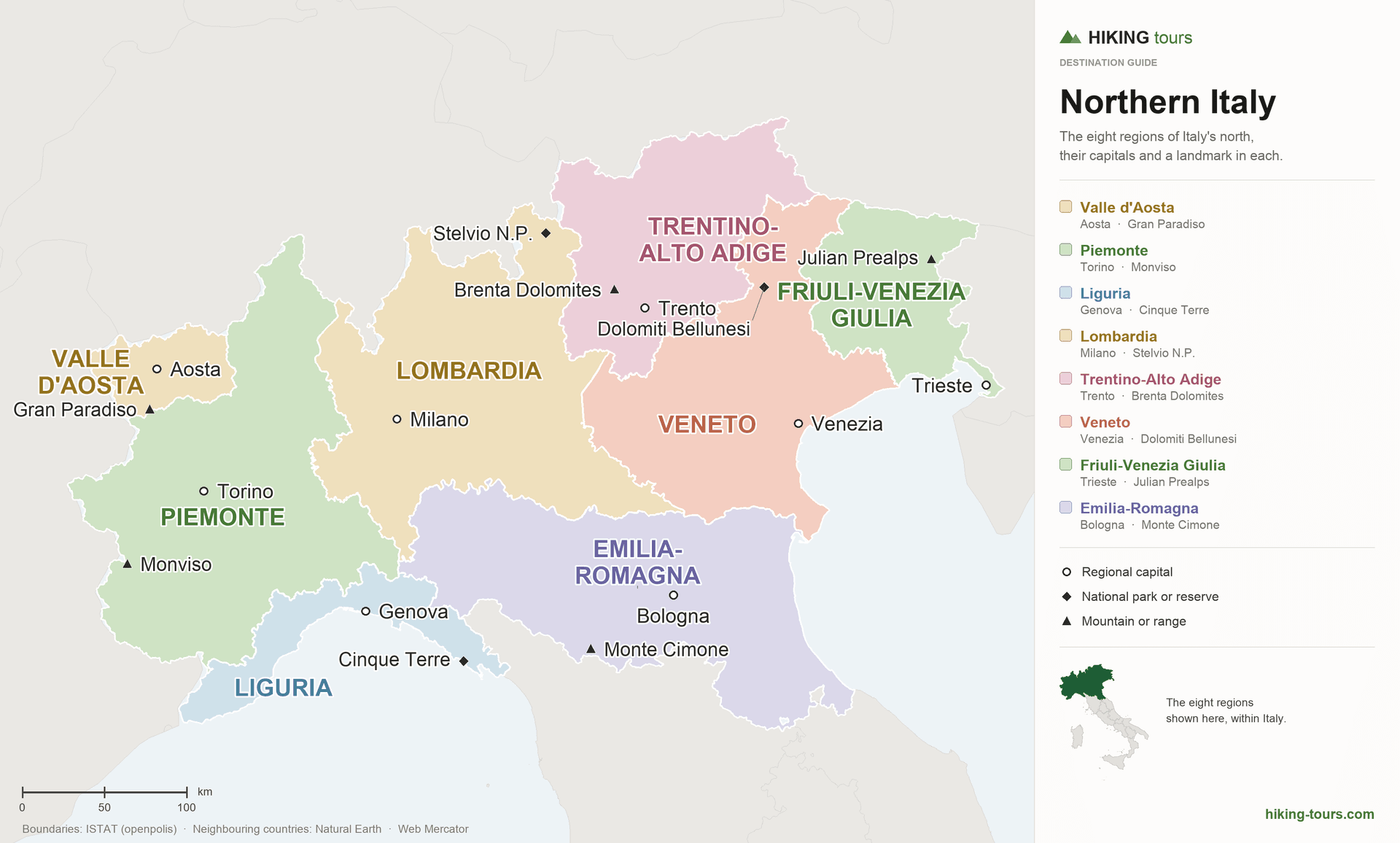
Most of the hiking you'd fly to Italy for lies north of Florence. The Alps and Dolomites form the country's mountain spine here, the Ligurian coast runs west along the Riviera, Mont Blanc anchors the Aosta Valley, and a handful of quieter ranges — Gran Paradiso, Piemonte, Friuli — sit between the big three.
The question this guide answers is which of them to pick. The three main regions differ in season, terrain, and fitness demand more than in distance, so a Dolomite week is a fundamentally different holiday from a Ligurian week or a TMB week. Here's how to choose between them, when to go, and where to sleep.
The essentials
Three main ranges: the Dolomites (northeast), the Italian Alps (northwest, TMB), and Liguria's Cinque Terre (northwest coast) — with Gran Paradiso, Piemonte, and Friuli's Julian Alps as quieter options
Peak season windows: Dolomites and Italian Alps June–September; Liguria April–June and September–October; the quieter ranges May–October
Difficulty range: from village-to-village walking in the Cinque Terre (2/5) to the Tour du Mont Blanc's long alpine days (4/5), with Alta Via 2's cabled sections harder still
Gateway airports: Venice (Dolomites), Milan (Alps and Cinque Terre), Genoa (Cinque Terre alternative)
The map
The Big Three
Three areas do most of the work on a northern Italy hiking trip. Pick the one that matches your fitness, your season, and the landscape you actually want to walk.
Range | Landscape | Best season | Fitness | Signature route |
|---|---|---|---|---|
Dolomites | Limestone spires, hut-to-hut trails | Late June–September | 3/5 | Alta Via 1 |
Italian Alps | High mountains, glaciers, Mont Blanc | Late June–early September | 4/5 | Tour du Mont Blanc |
Liguria & Cinque Terre | Cliff villages, terraced coast | April–June, September | 2/5 | Sentiero Azzurro |
The Dolomites
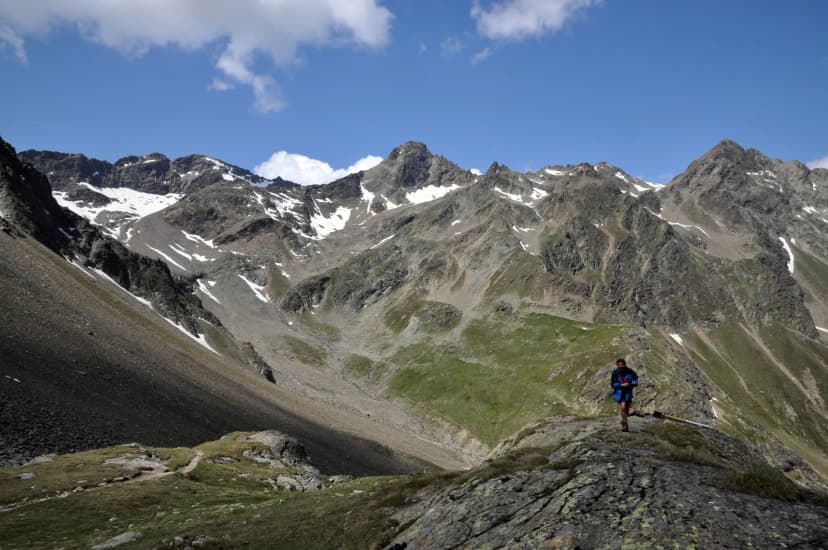
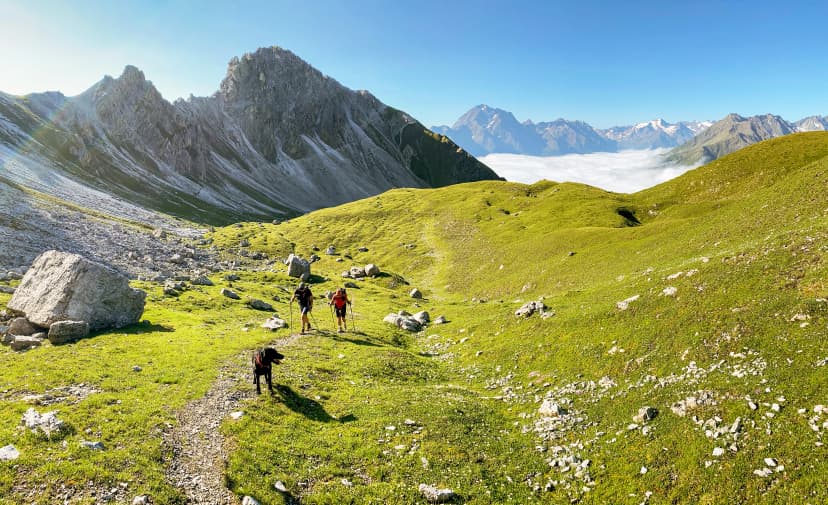
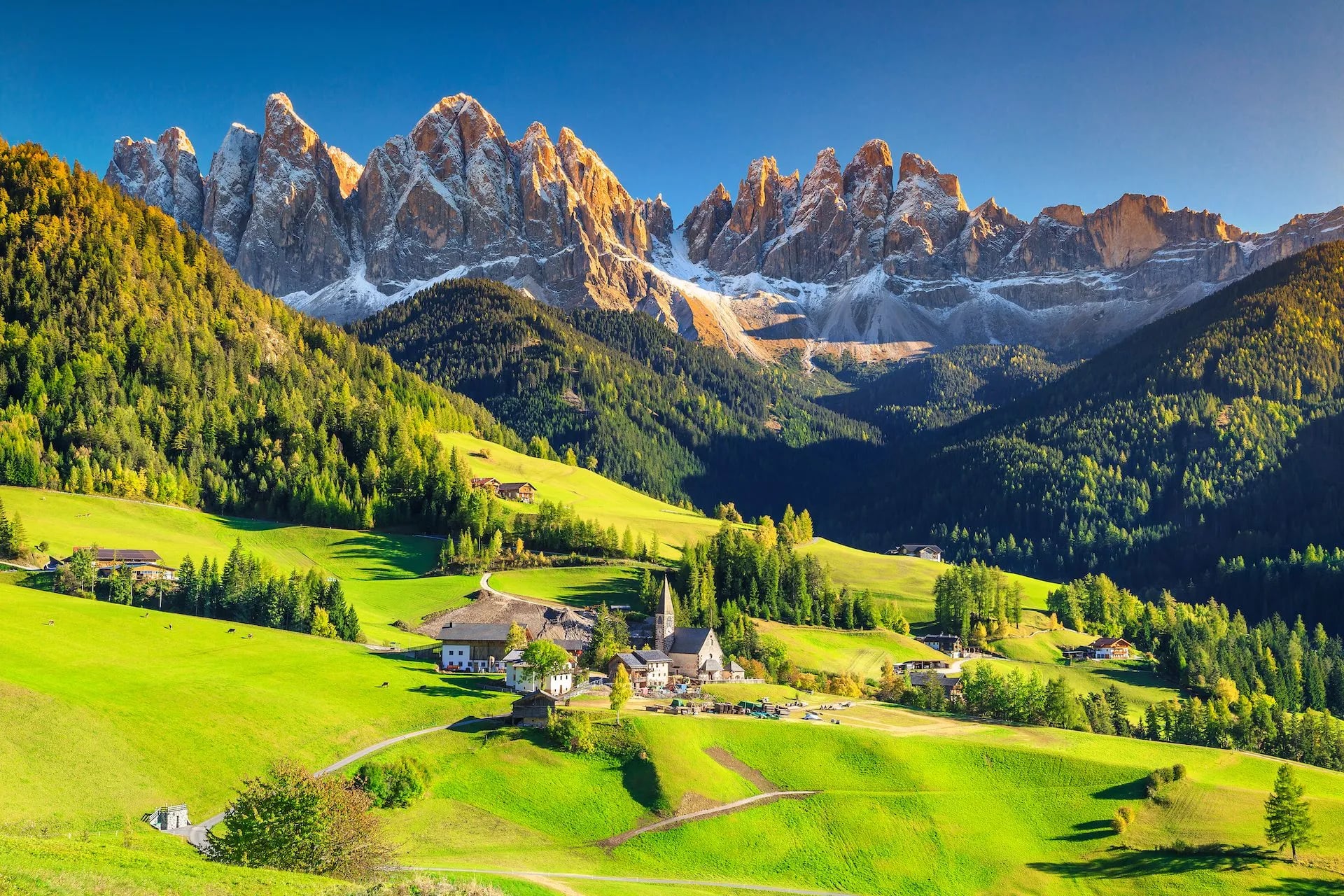
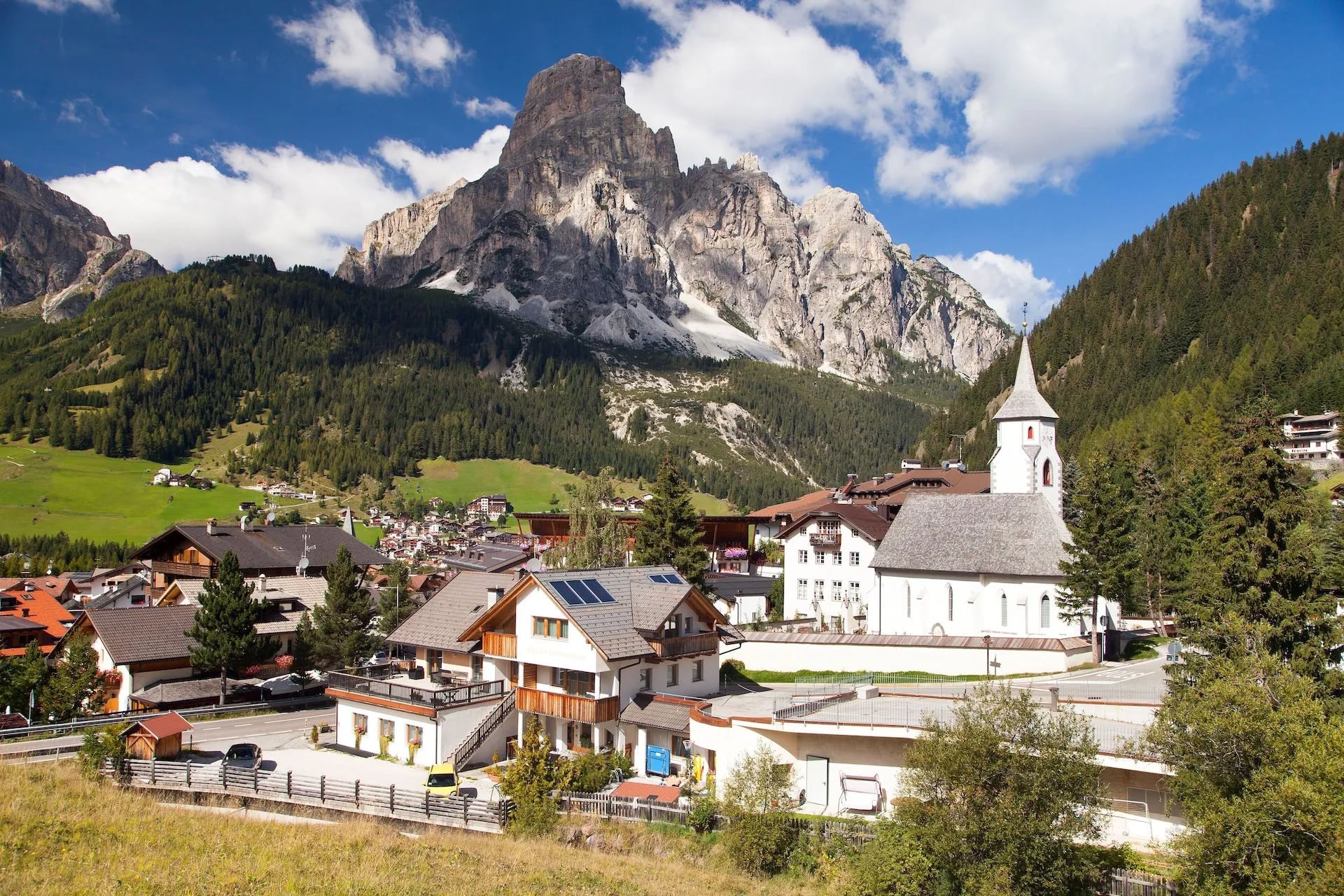
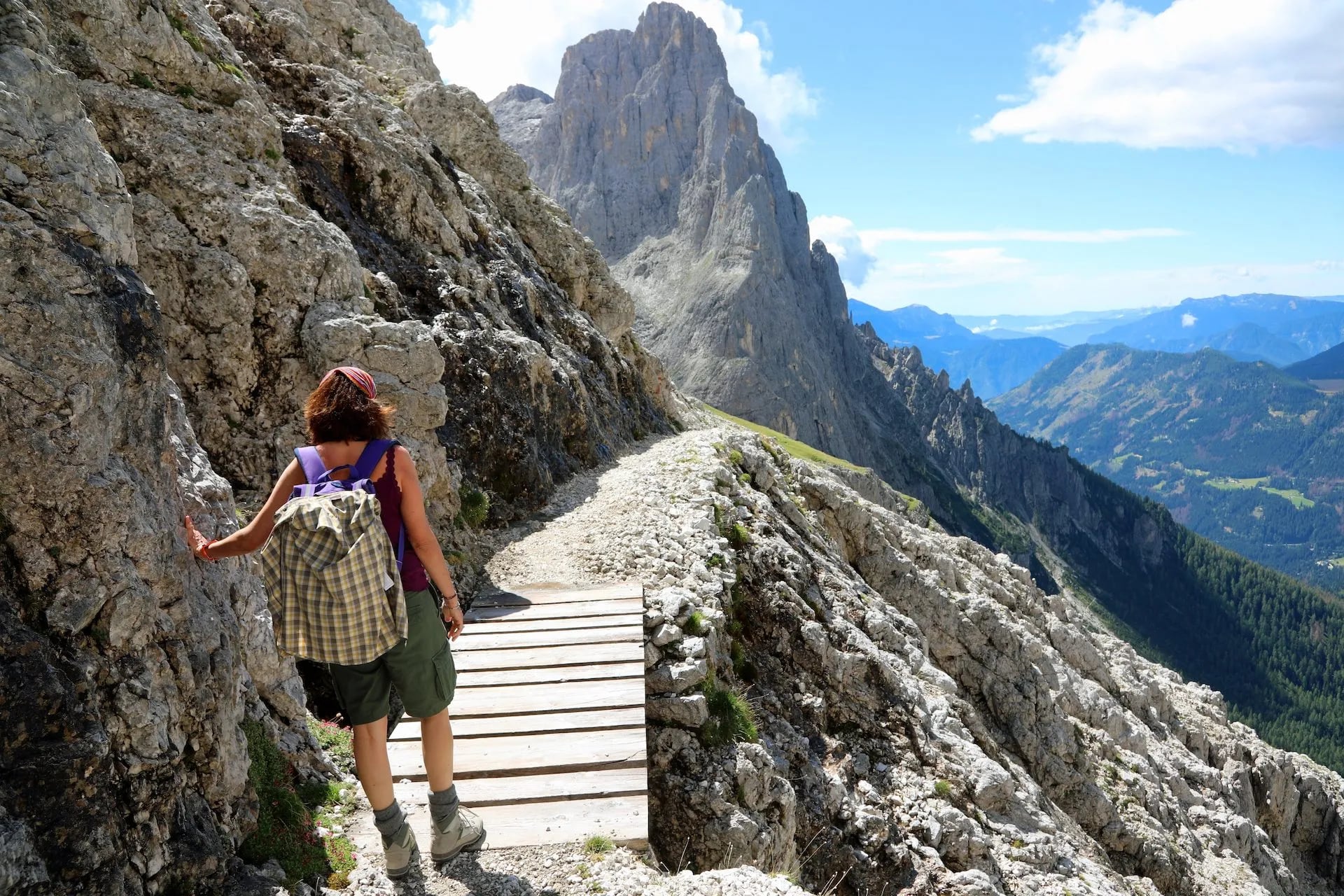
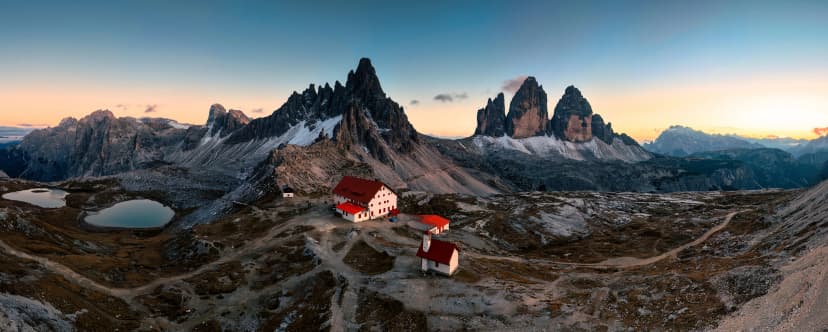
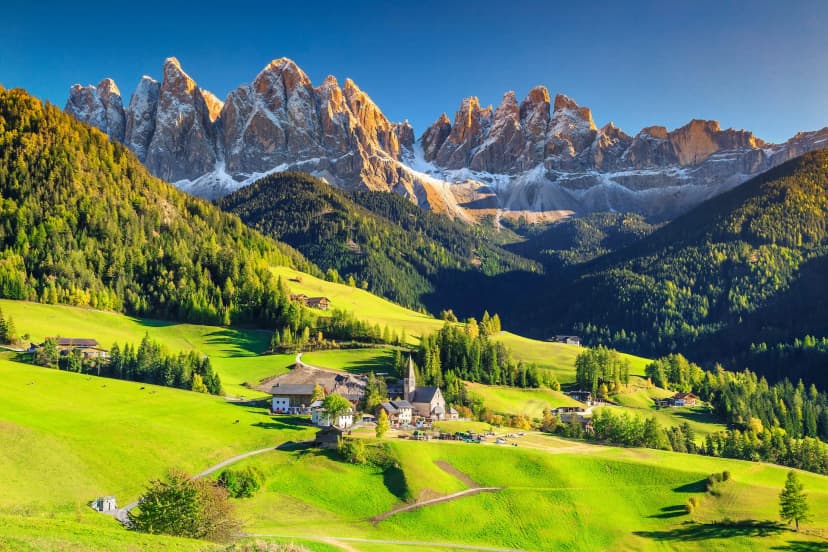
The Dolomites are the reason most people book a northern Italy hiking trip. The UNESCO-listed limestone range spans the provinces of Belluno, Trentino, and South Tyrol, with the sharpest spires (Tre Cime, Sella, Marmolada) clustered in the central area. The two long-distance routes are Alta Via 1 (~120 km, 10 days, moderate) and Alta Via 2 (180 km, 13 days, harder, with cabled sections). Shorter trips based around Cortina d'Ampezzo or Alta Badia give you the same views on a lighter body.
Rifugios book out. For July and August dates on Alta Via 1, start booking in January or February — later than that and you may be stitching together what's left. Our Dolomites walks range from a four-day Alta Via 1 Highlights to the full ten-day route.
For a center-based Dolomite week without carrying luggage each day, Alta Badia works better than the linear Alta Via — you sleep in the same hotel every night and walk out to different peaks.
The Italian Alps
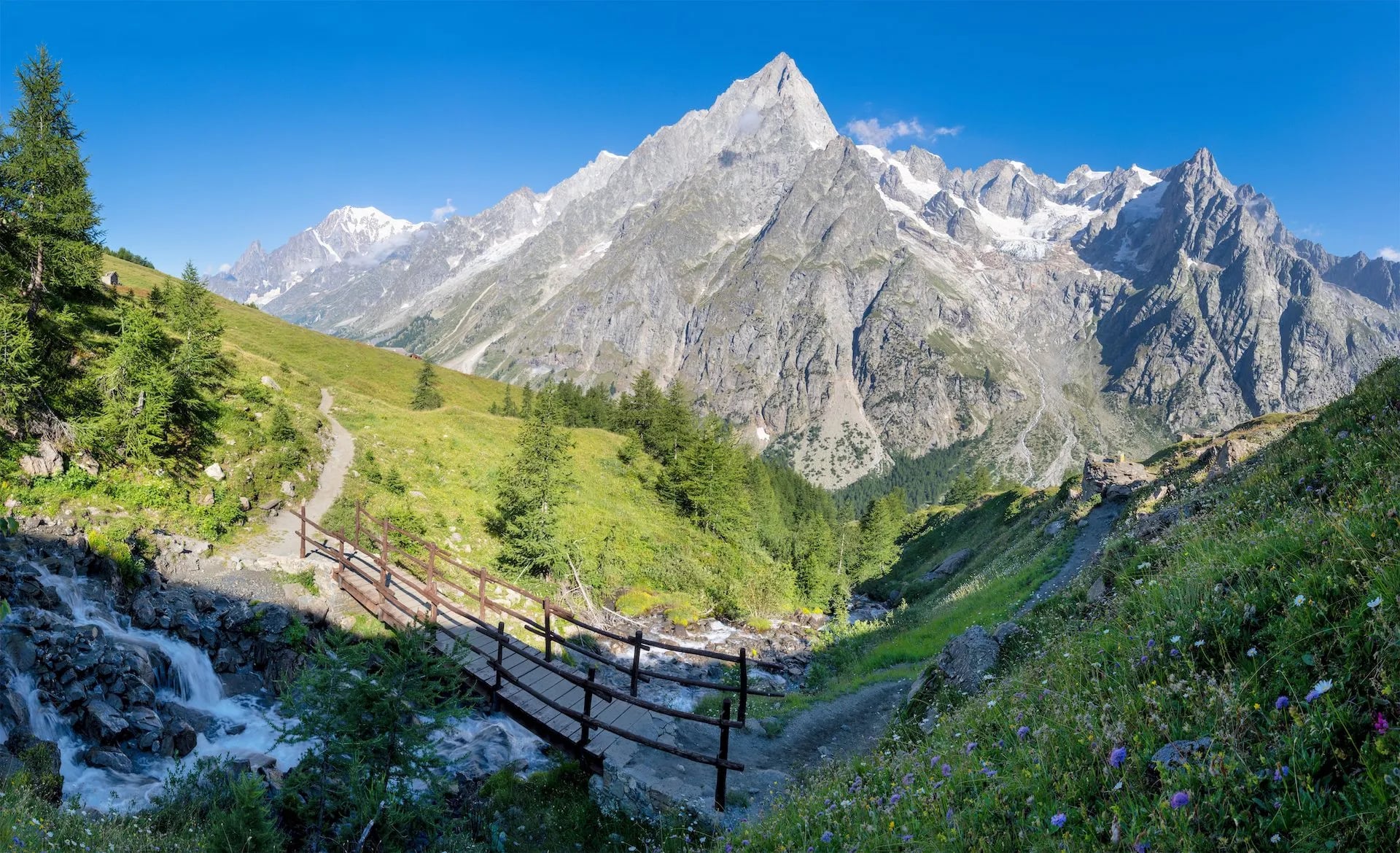
The western Italian Alps — Aosta Valley and Piemonte — hold the country's biggest mountains. The 4,808-meter summit of Mont Blanc straddles the French–Italian–Swiss border, and the classic Tour du Mont Blanc (TMB) — an 11-day, 170-km circumnavigation — crosses into Italy for a spectacular stretch through Val Ferret. Fitness matters more than in the Dolomites: longer days, higher passes, less forgiving weather. Late June through early September is the reliable window.
The Italian sections are the ones repeat TMB walkers rate highest for the quiet Aosta villages and food. Our TMB self-guided trip handles the cross-border logistics and refuge bookings across all seven stages.
Liguria and Cinque Terre
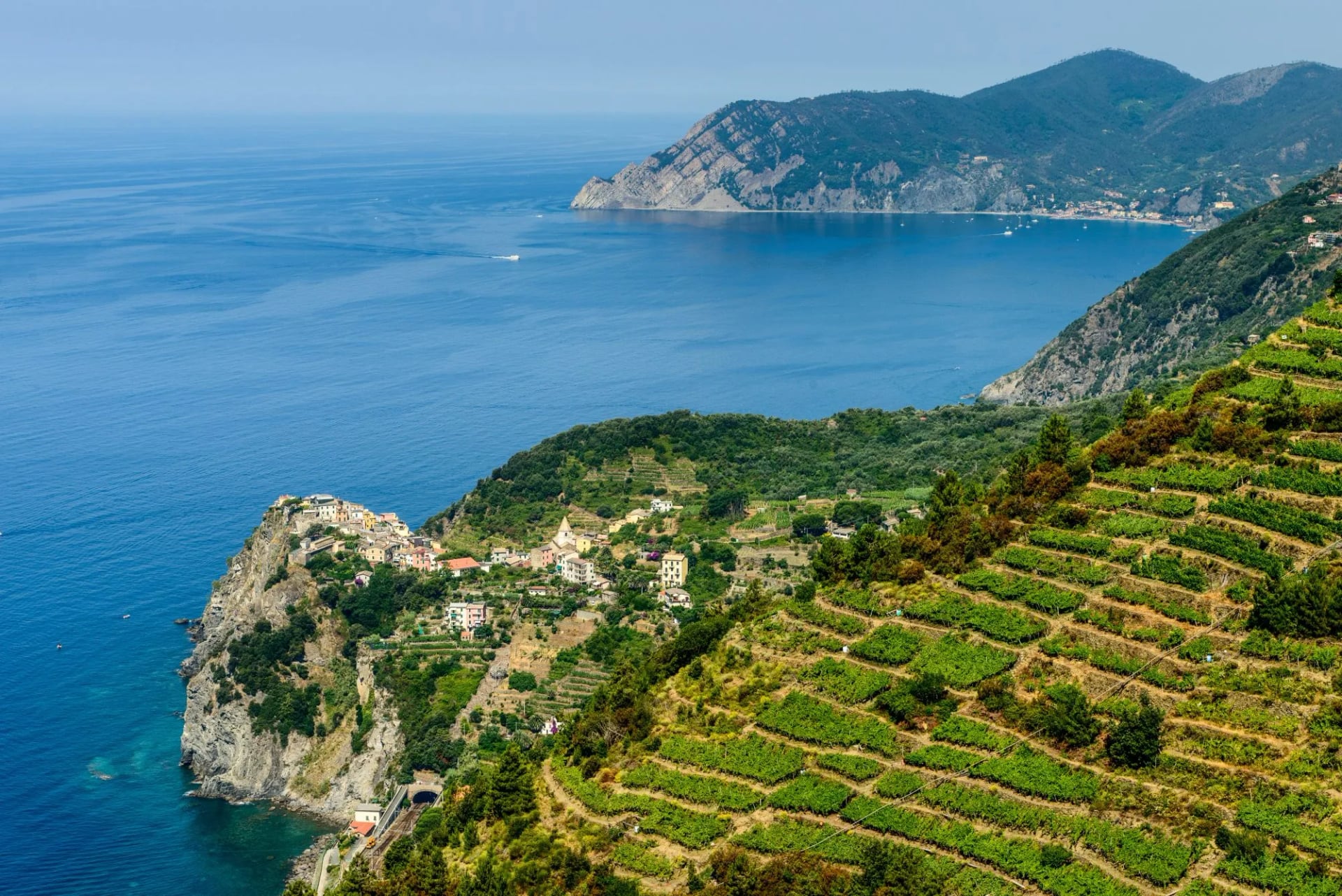
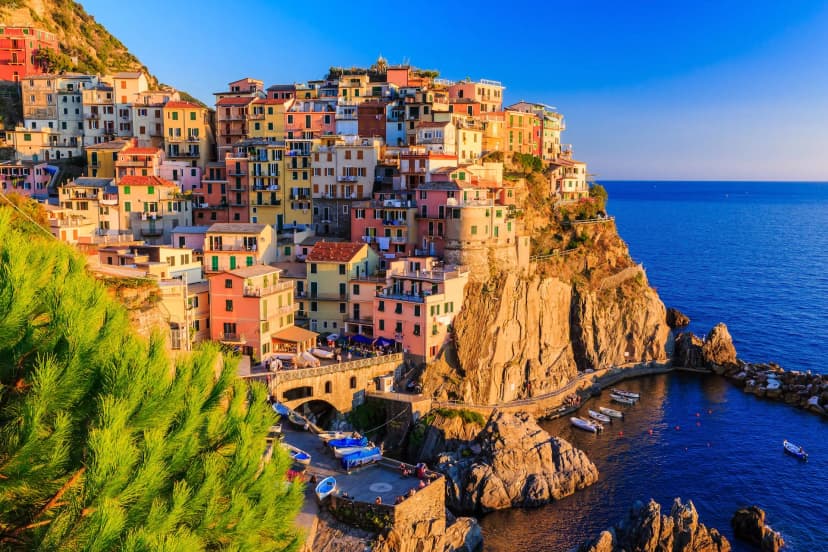
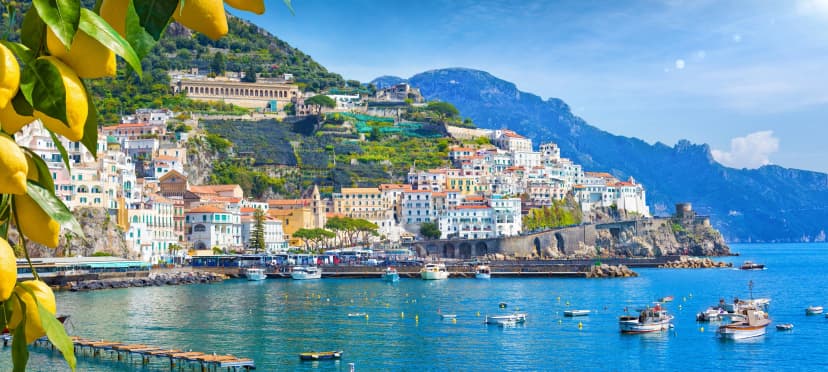
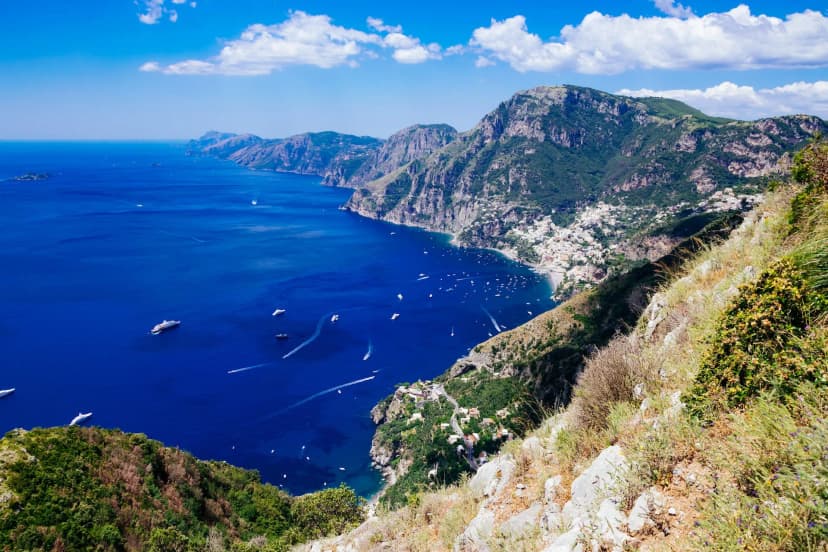
The five cliff villages of the Cinque Terre — Riomaggiore, Manarola, Corniglia, Vernazza, and Monterosso al Mare — sit on the Ligurian coast north of La Spezia, protected as a UNESCO site and national park. The signature walk is the Sentiero Azzurro (SVA), linking all five in about 12 km. Watch three things: the SVA requires a Cinque Terre Trekking Card, priced per day and higher on peak dates; coastal sections close after storms and stay closed for years — the Via dell'Amore only reopened in July 2024 after a 2012 landslide — and the whole route is a moving conveyor belt of day-trippers June through September.
Sleep in the villages so you're on the trails at dawn, before the day-trip trains arrive, and head inland on the upper “sanctuary” routes where the crowds thin fast. Our Cinque Terre Highlights tour books you into Riomaggiore, Corniglia and Monterosso for the walking nights, with La Spezia at either end.
Quieter Northern Ranges
Three smaller ranges sit between the big three and reward a second northern Italy trip.
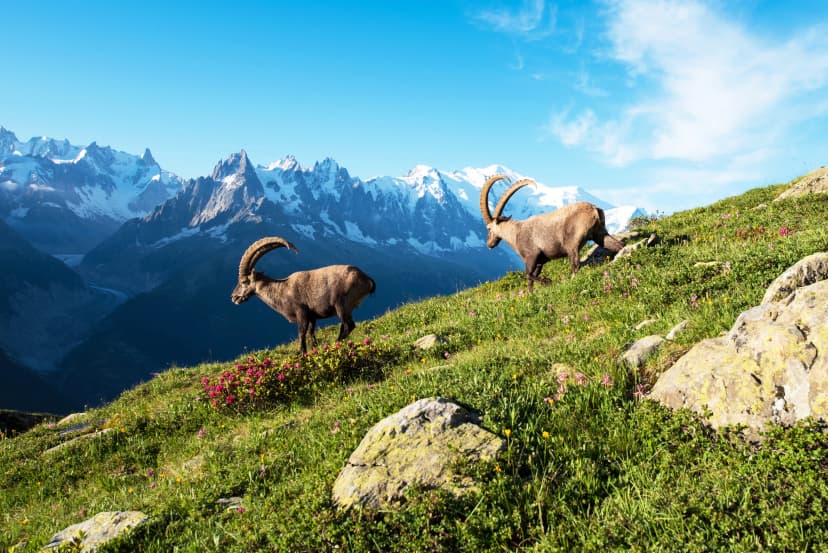
Gran Paradiso in the Aosta Valley is Italy's oldest national park, founded in 1922 to protect the ibex, and the herds are still the reason most walkers come. Point-to-point traverses take about a week, and daily-walk options run from Cogne and Rhêmes-Notre-Dame. The reliable window runs mid-June to mid-September. Trail infrastructure is good, English is spotty, prices sit well below TMB.
Piemonte — the region south of the Aosta Valley — is more low-key. The Valle Maira in the southern Cottian Alps offers wild Italian-alpine walking with almost no international hikers on the trails, and the Sacri Monti (a UNESCO-listed network of hillside pilgrim chapels) blend hiking with Renaissance history. The best months are May through October.
Friuli-Venezia Giulia in the northeast holds the Italian side of the Julian Alps — sharp limestone shared with Slovenia, with the Prealpi Giulie Nature Park at its core. Days are shorter, technical grade higher; it makes a good second Italian mountain trip once you've done the Dolomites.
How to Choose
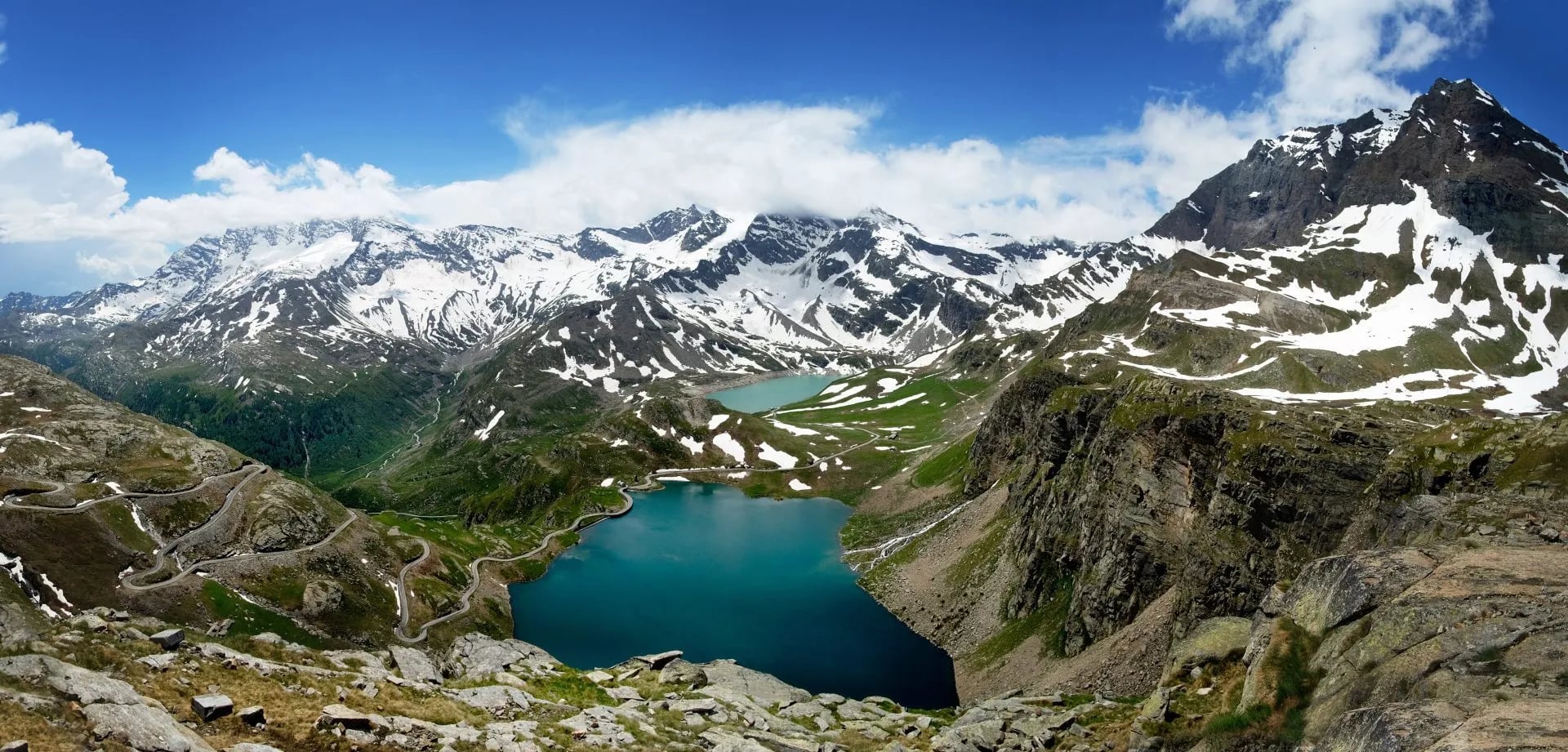
The three main ranges suit different hikers.
Choose the Dolomites if you want the classic hut-to-hut experience, moderate fitness demands, and the most photogenic mountain landscape in Europe. Book six months out for peak summer dates.
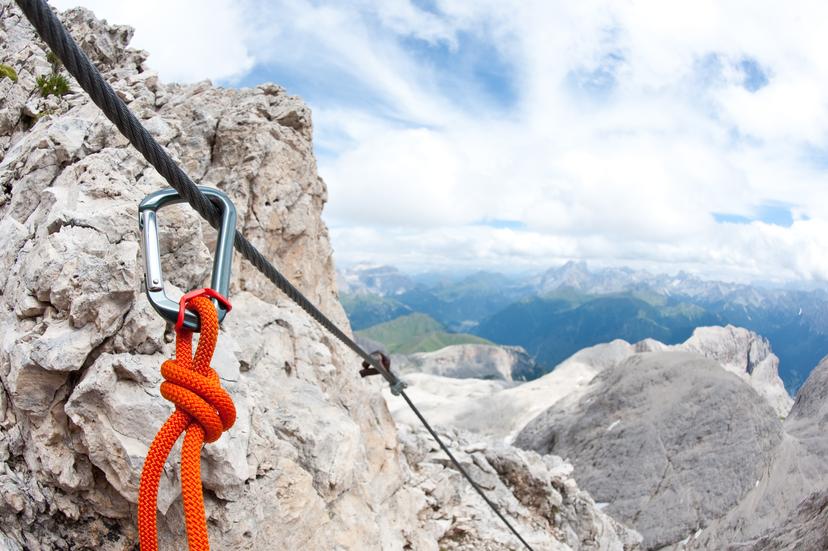
Choose the Italian Alps if you're fit enough for eight-to-ten-hour days and want the biggest mountain scale in the country. Prior long-distance or via ferrata experience helps.
Choose Liguria and the Cinque Terre if you're new to European hiking, want short days followed by village nights, or are traveling in shoulder season. Two-night stays in each village work best.
Choose a quiet range — Gran Paradiso, Piemonte, or Friuli — if you've done one of the big three already and want fewer crowds, wilder terrain, and lower prices.
Season Windows
The mountains here have shorter and less overlapping windows than most Italian regions.
The Dolomites and Italian Alps open around mid-June — earlier and the higher passes are still snowed. They close in stages from mid-September, with the last high rifugios shutting by early October.
Liguria and the Cinque Terre run a longer season: April through mid-June and September through October, with July and August too hot for enjoyable coastal walking at midday.
The mountains and the coast barely overlap. The high ranges only open in mid-June, by which point Liguria has already turned hot, and the coast becomes pleasant again just as the last high rifugios start closing. If you are linking a mountain range with the coast, early September is the one reliable window: Dolomite refuges still open, Liguria cooled, crowds thinning.
The quieter ranges roughly match: Gran Paradiso and Friuli follow the high alps; Piemonte follows a spring-and-autumn pattern.
Where to Sleep
Northern Italian hiking has three accommodation styles, each tied to a landscape.
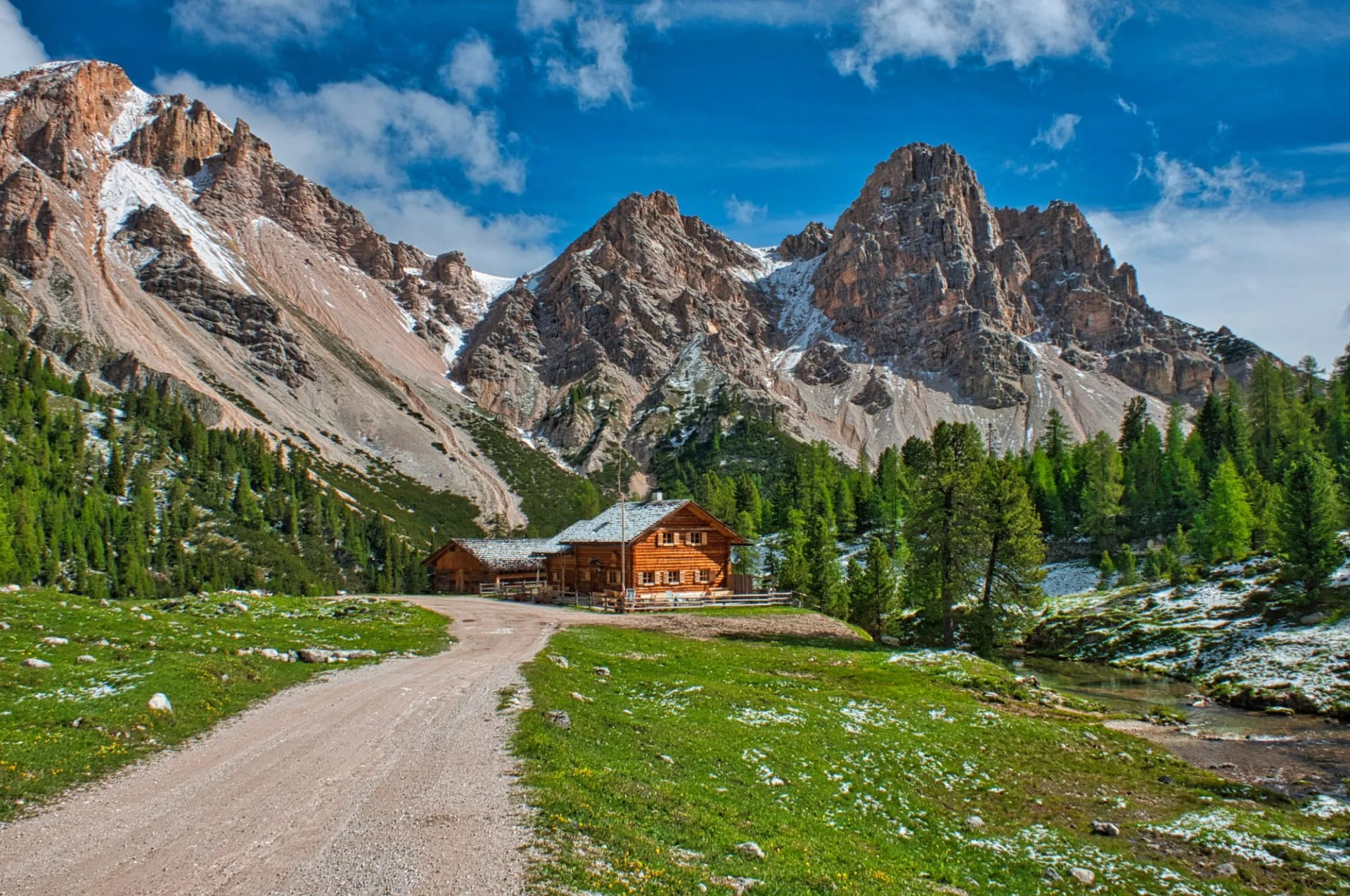
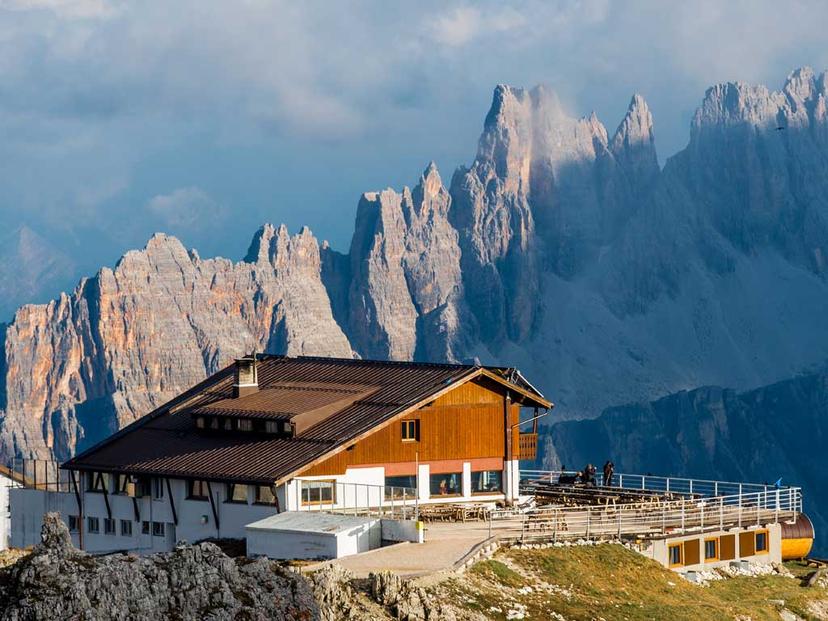
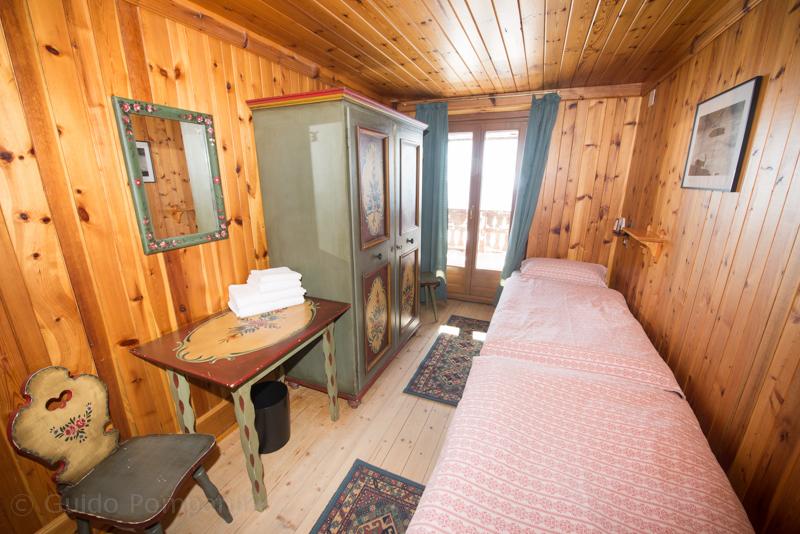
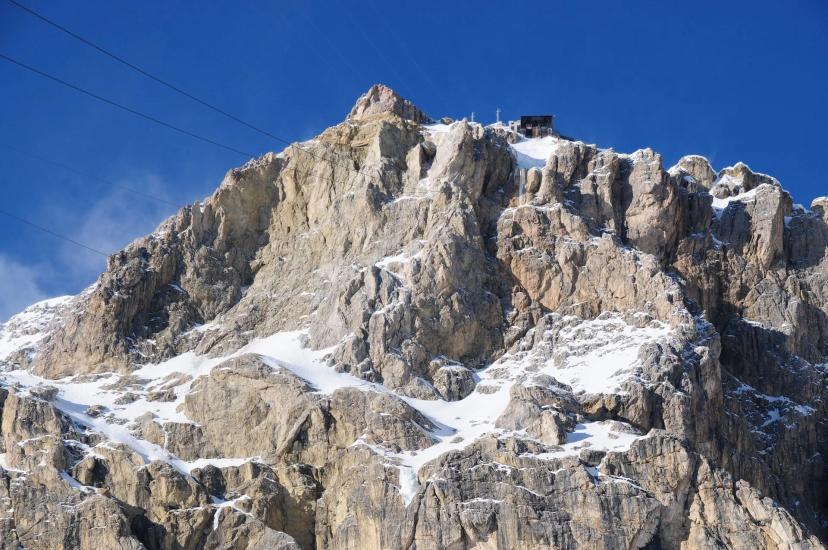
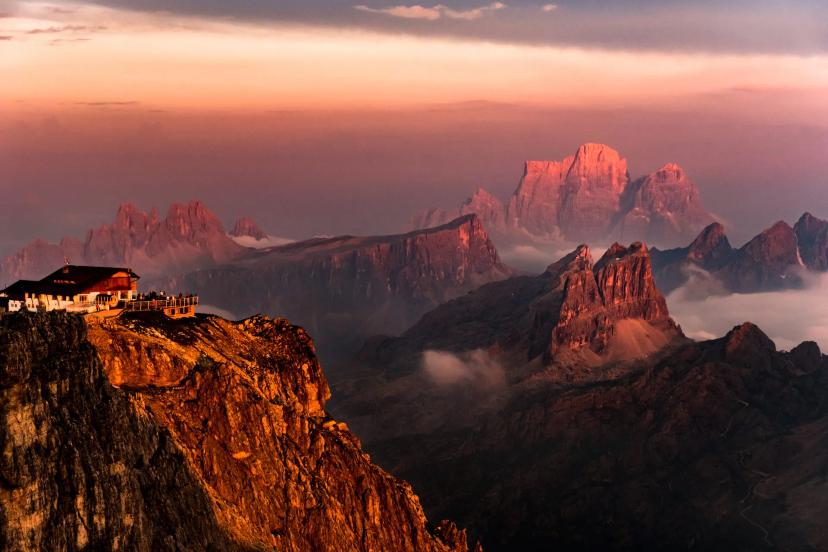
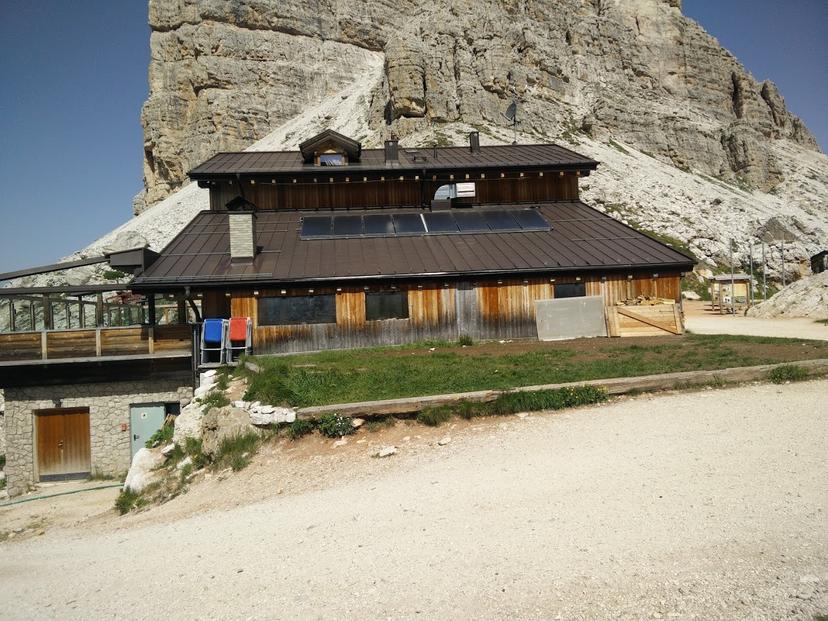
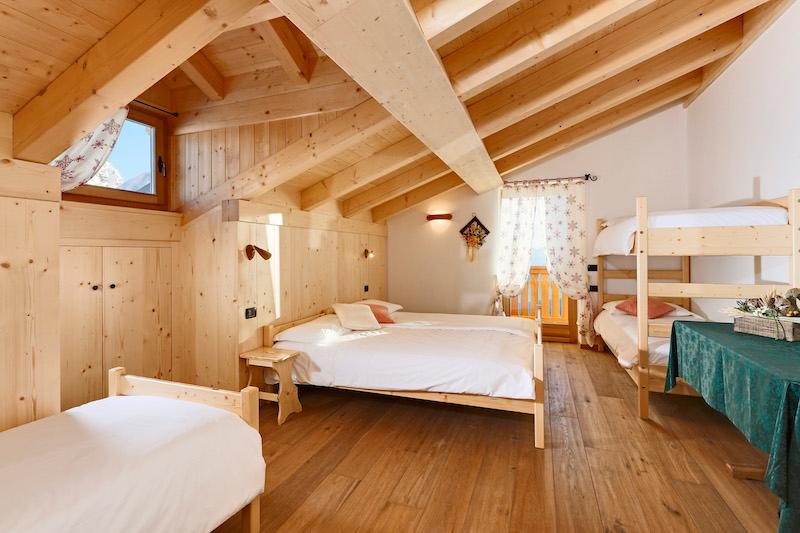
Rifugios — dormitory huts run by the Italian Alpine Club (CAI) or private families — anchor Dolomite and TMB trips. Expect bunks with duvets, communal three-course dinners, cash-only pricing, and slow Wi-Fi. Book by January for July and August. Three signature Dolomite rifugios worth planning a night around:
Guesthouses and small inns are the pattern in the Cinque Terre villages and along the pilgrim routes. Private rooms, breakfasts, often family-run, warmer at night than the mountain huts.
Agriturismi — working farms with rooms and dinners — sit inland from the coast, in Piemonte's Langhe wine country, Liguria's back valleys, and the foothills of the Aosta Valley. Best if you have a car and want two-night stays with dinners built in.
Getting There
Three efficient gateway airports serve northern Italy hikers:
Venice (VCE) is the eastern Dolomites gateway. Cortina d'Ampezzo is two hours by direct airport shuttle, Bolzano about three by train. Fly here for Alta Via 1, Alta Badia, and Cortina-based trips.
Milan (MXP or LIN) covers the western Italian Alps, Piemonte, and Liguria's Cinque Terre (via a fast train to La Spezia, roughly three hours). Fly here for TMB, Gran Paradiso, and Cinque Terre trips.
Genoa (GOA) is the smaller Ligurian gateway — an hour by train from the Cinque Terre, useful if the fare is right.
The rail network handles the rest. Both Trenitalia and the private Italo line run fast trains linking Milan with Venice and with Genoa; the Trenitalia timetable is in English and takes foreign cards. Rental cars help in Piemonte and the deeper Aosta Valley but are unnecessary in the Dolomites or on the coast — trains and shuttles cover everything.
Local Rules to Keep Up With
Two rules catch first-timers everywhere in the north.
Footwear and general caution
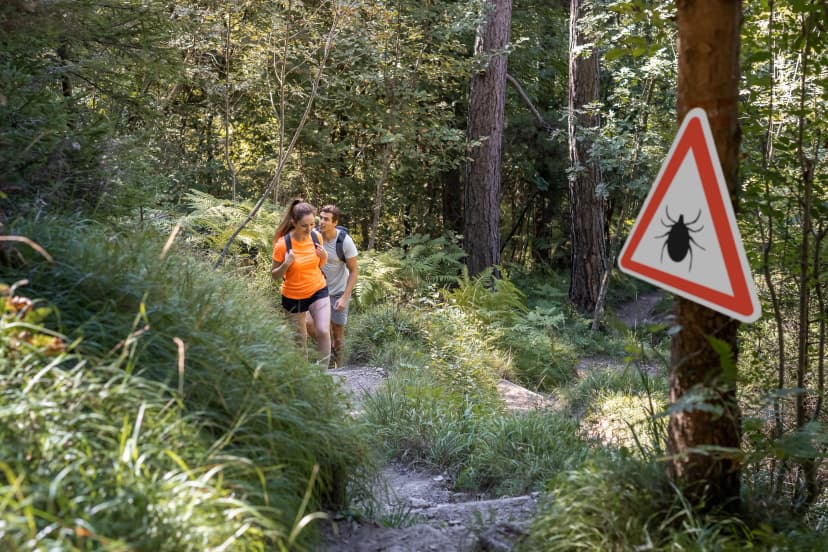
Italian mountain-rescue is typically free in a genuine emergency — but not when the trouble came from your feet. Authorities in the Dolomites and Cinque Terre fine hikers up to €2,500 for unsuitable footwear (sandals, flip-flops, thin sneakers) on marked trails, and helicopter bills run past €10,000 for preventable incidents.
Wear proper boots or trail shoes, and never step past a trail-closure sign — a British hiker was billed roughly €14,000 in 2025 for a rescue off a closed Dolomite path.
Rifugio bookings and cancellations
Book by January for July and August dates on the Alta Via routes. Most rifugios now require credit-card guarantees and charge the full room rate for no-shows during peak season.
For a glimpse into the southern parts of the country, see our full guide to hiking in Southern Italy.
Plan Your Northern Trip
Most first-time northern Italy hikers try to see too much in too little time. A single week suits one region done well; two weeks give you room for two regions with real breathing space, either linking neighbors (Dolomites and Alta Badia, or Liguria and Piemonte) or pairing a range with the coast in shoulder season.
We plan and self-guide walking trips across every northern Italian region above:
The Dolomites, the Italian Alps, and Liguria as flagship trips
Center-based options in Cortina, Alta Badia, or the Cinque Terre villages when you want the same base each night
Multi-region trips — Liguria and Tuscany, TMB with an Aosta extension — when your dates allow it
When you book with us, we handle the rifugios and hotels, transfers between trailheads and stations, a digital guidebook with maps and GPS files, and on-trip support by phone and WhatsApp.
Browse the full range of Italy walking tours, or book a free call with a planner who has walked these ranges.

About this author
Ajda is our travel advisor, raised in a village surrounded by mountain peaks. Hiking entered her life early on and remains her favorite way to reconnect with nature.


.jpg&w=828&q=75)


.jpg&w=828&q=75)