Hiking in Cyprus: Trails from the Coast to Mount Olympus
Six trails, two mountain ranges, and a 555-km cross-island path; this is our complete guide to walking Cyprus year-round without the summer heat.

Jon
Published August 19, 2026
Edited August 19, 2026
12 min read
Don't want to read all this?
We've planned 2,000+ hiking trips. Send your dates, fitness and group size — we'll map the route and book every night.



Cyprus has around 3,300 hours of sunshine a year, two mountain regions, and a 555-km cross-island trail. Almost nobody flies here to walk. They should — this is one of the few European countries where you can hike the coast in a t-shirt in February and ski on Mount Olympus in the same week.
So, where should you walk first? The short answer: the Akamas Peninsula in early Spring or late Autumn, the Troodos Mountains from May to October, linked by the trans-island E4 and five named day trails (Aphrodite, Adonis, Artemis, Avakas, Caledonia). Cold months on the coast, summer in the mountains — the same island in opposite phases.
Best time to hike: October–April on the coast (Akamas); May–October in the mountains (Troodos).
Highest peak: Mount Olympus, 1,952 m.
Longest trail: The E4 Cyprus section — 555 km, Paphos to Larnaca, 3–4 weeks.
Best base: Paphos — 30 min to the Akamas, 1 hr to the Troodos.
Akamas or Troodos?
Everything about hiking Cyprus starts with a geographic split that most first-time visitors don't see coming. The island has two hiking environments — a coastal peninsula and a mountain range — and they run in opposite seasons.
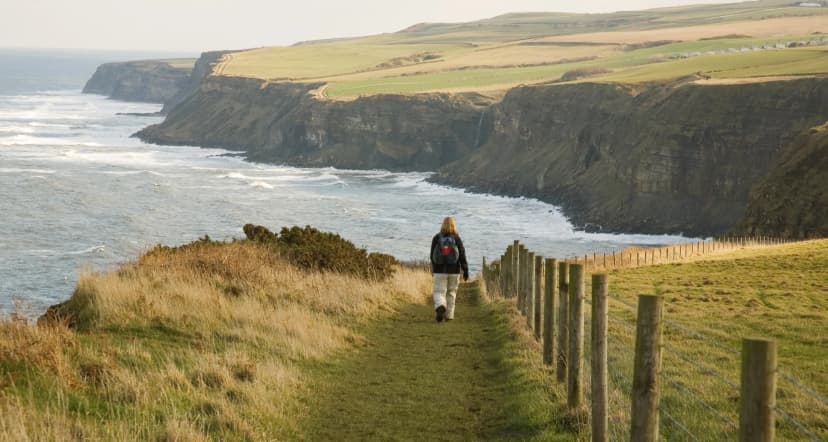
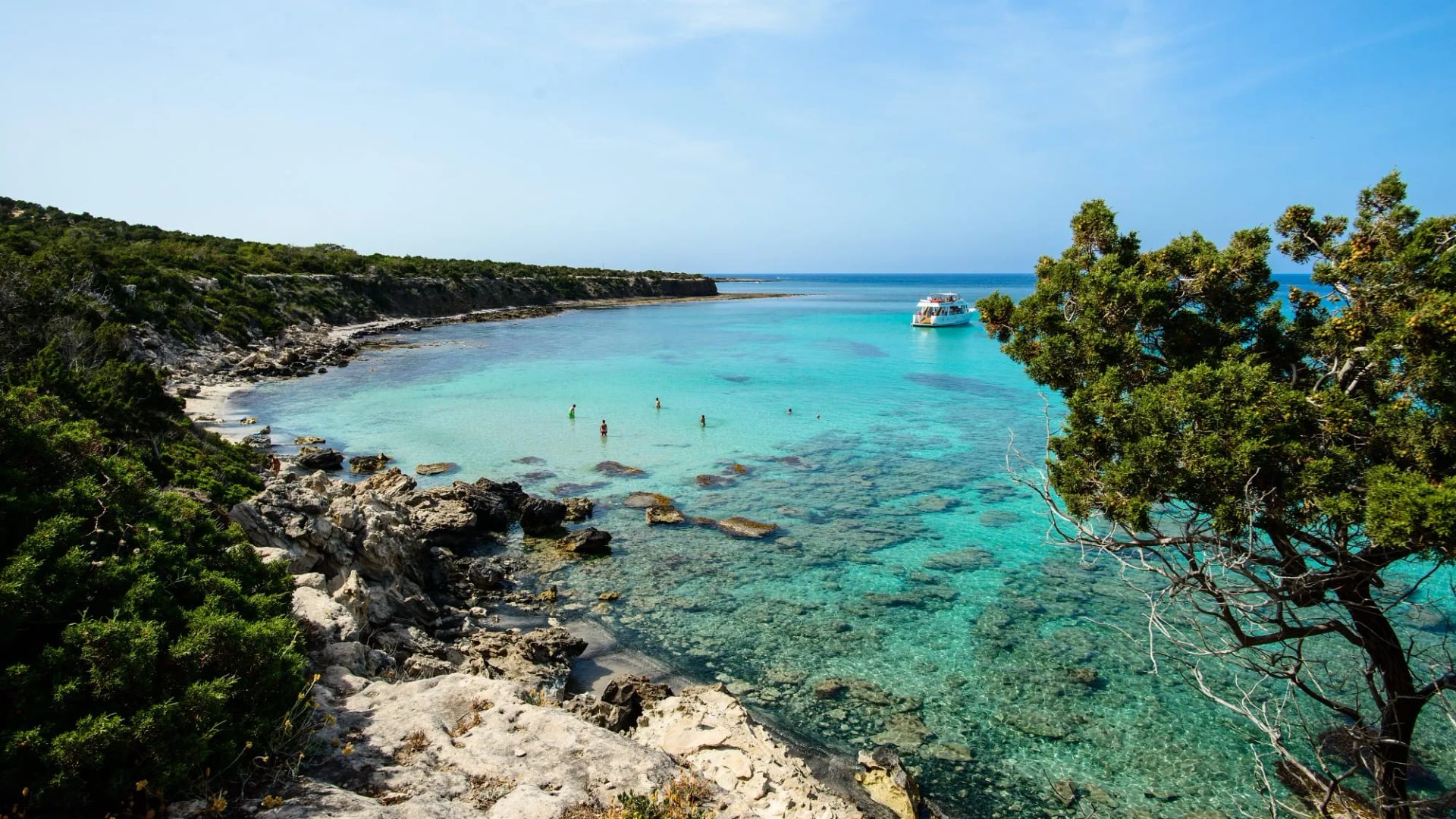
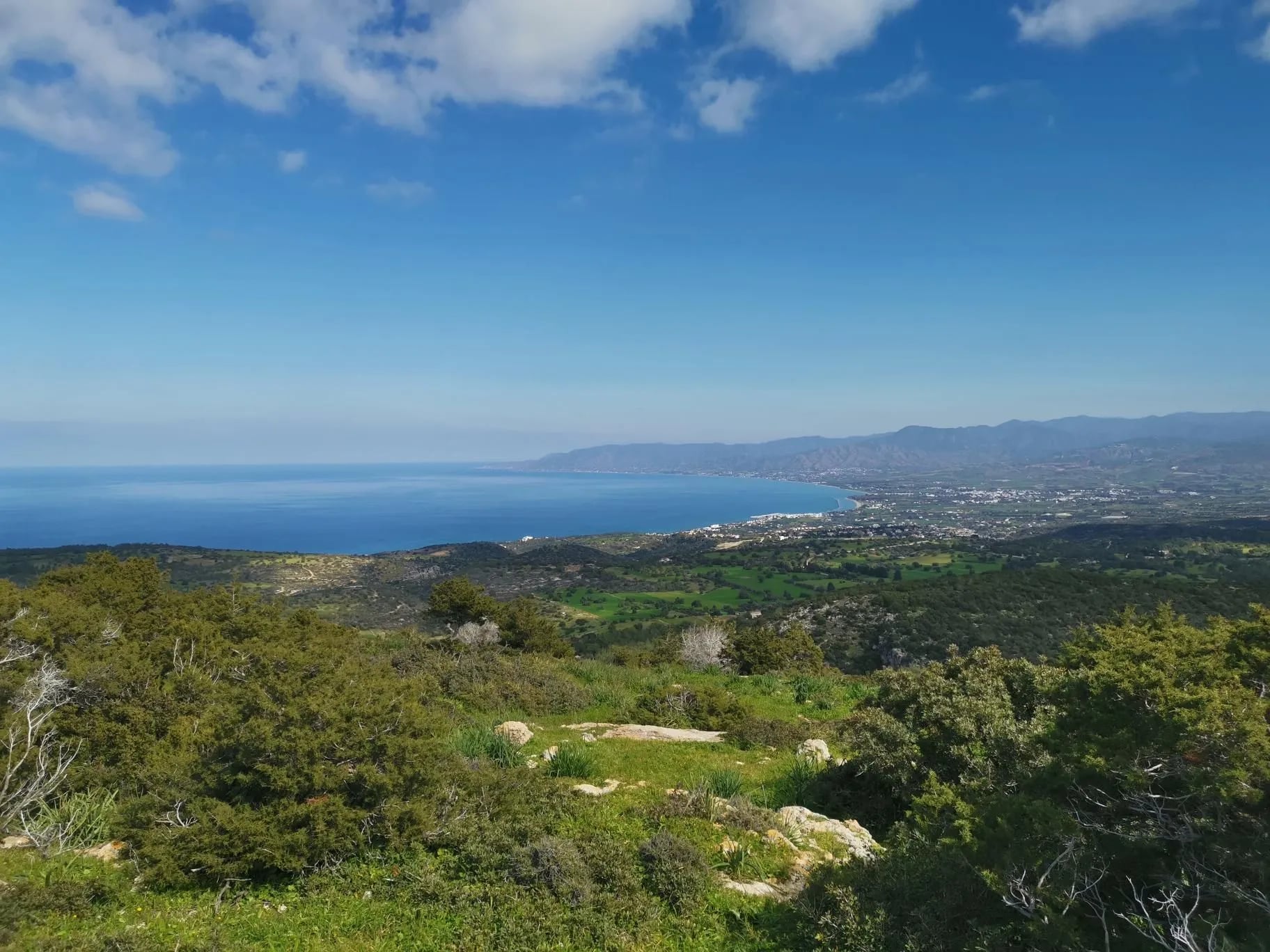
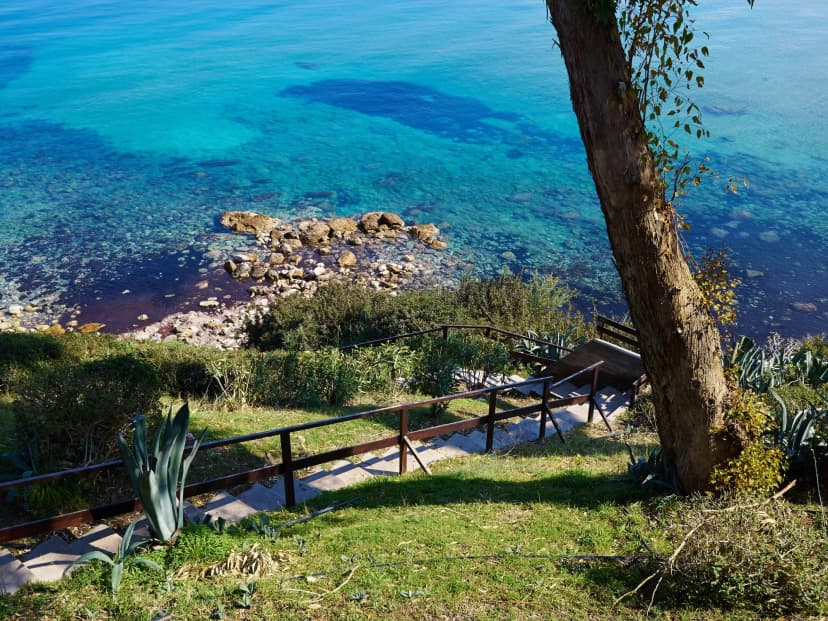
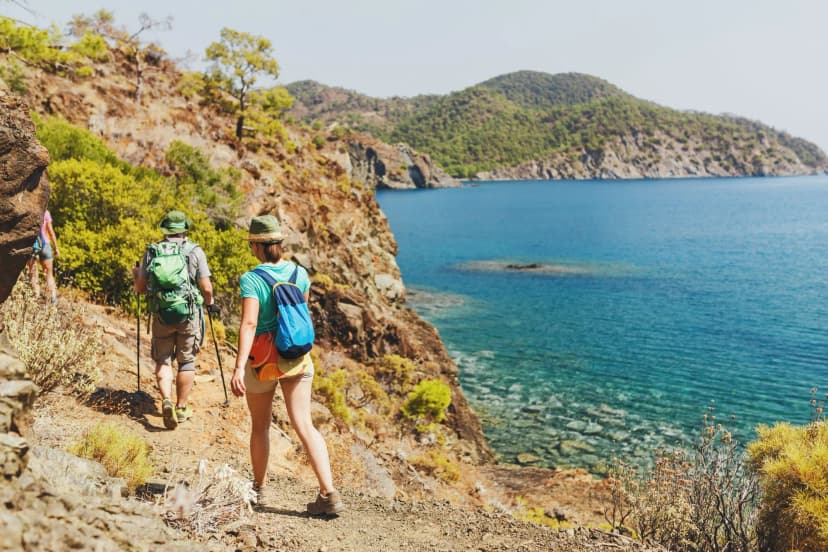
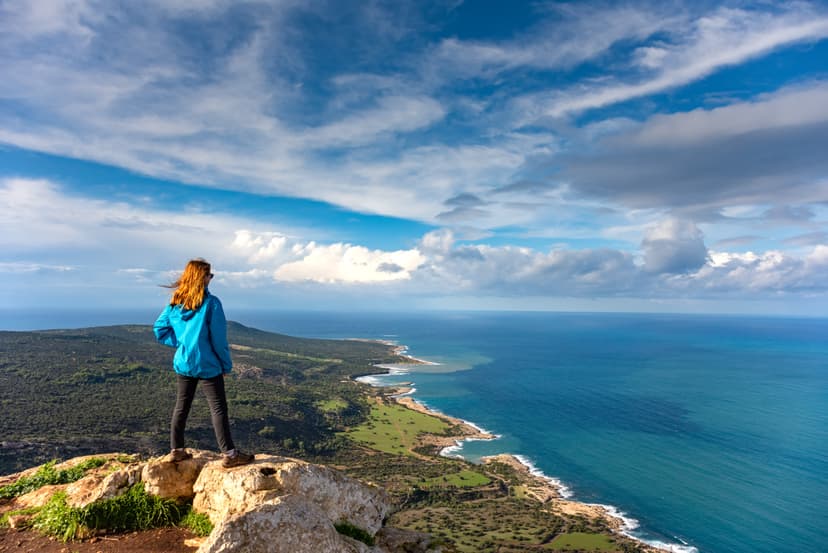
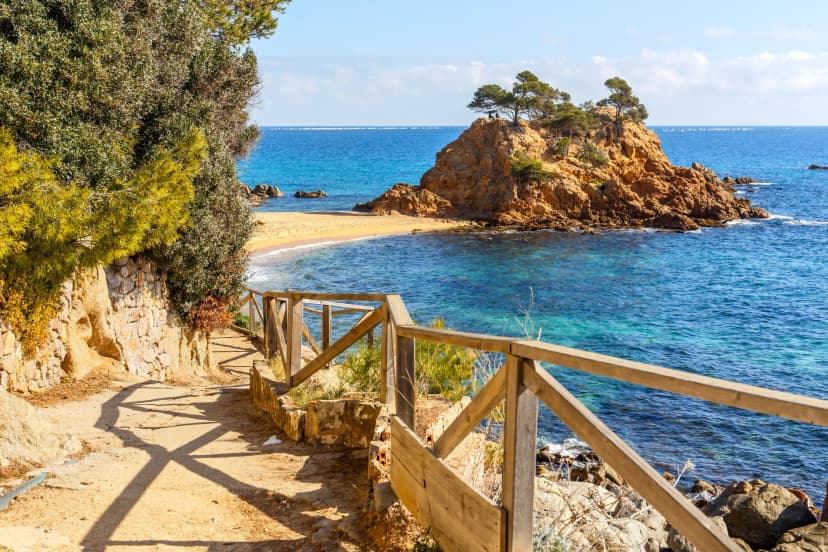
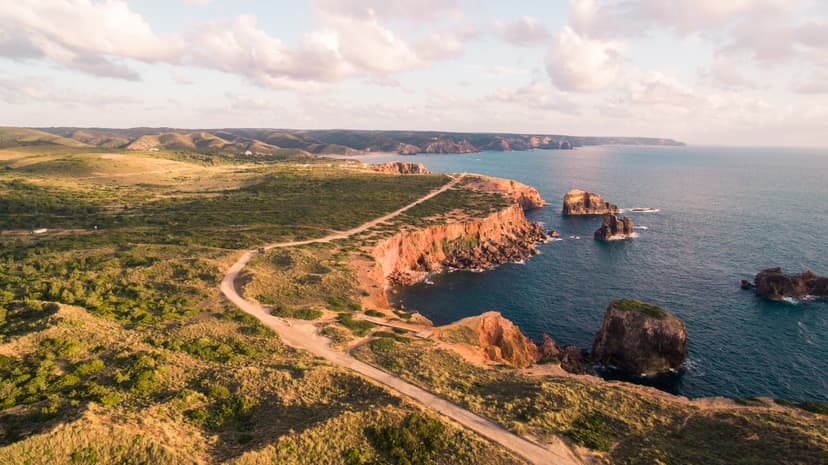
The Akamas Peninsula, in the far west, is 230 km² of protected national forest along Cyprus's northwesternmost coast. Terrain here is low chalk-and-limestone hills, juniper and Aleppo pine, sea cliffs that drop straight into the Mediterranean. Highest ground reaches up to 370 m. Aphrodite and Adonis trails loop out from the Baths of Aphrodite trailhead. This is your winter hiking country: October through April is comfortable, May onward gets hot, and by July midday walks stop being sensible.
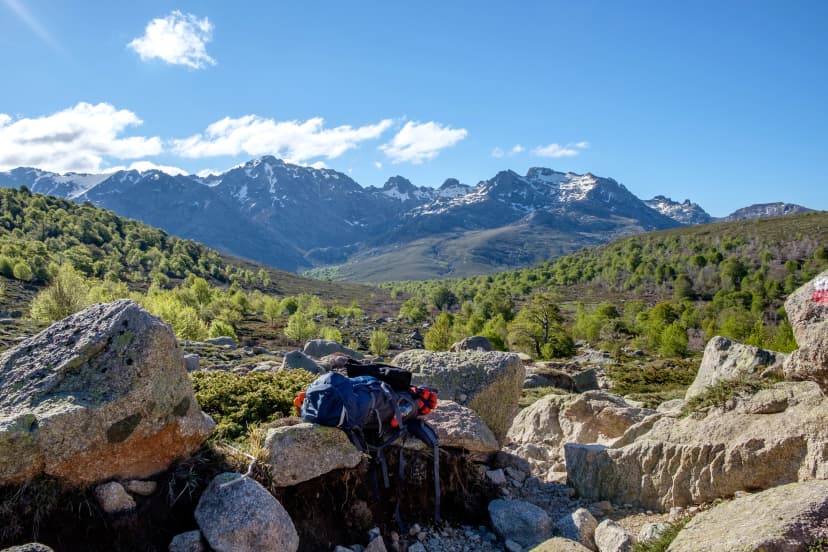
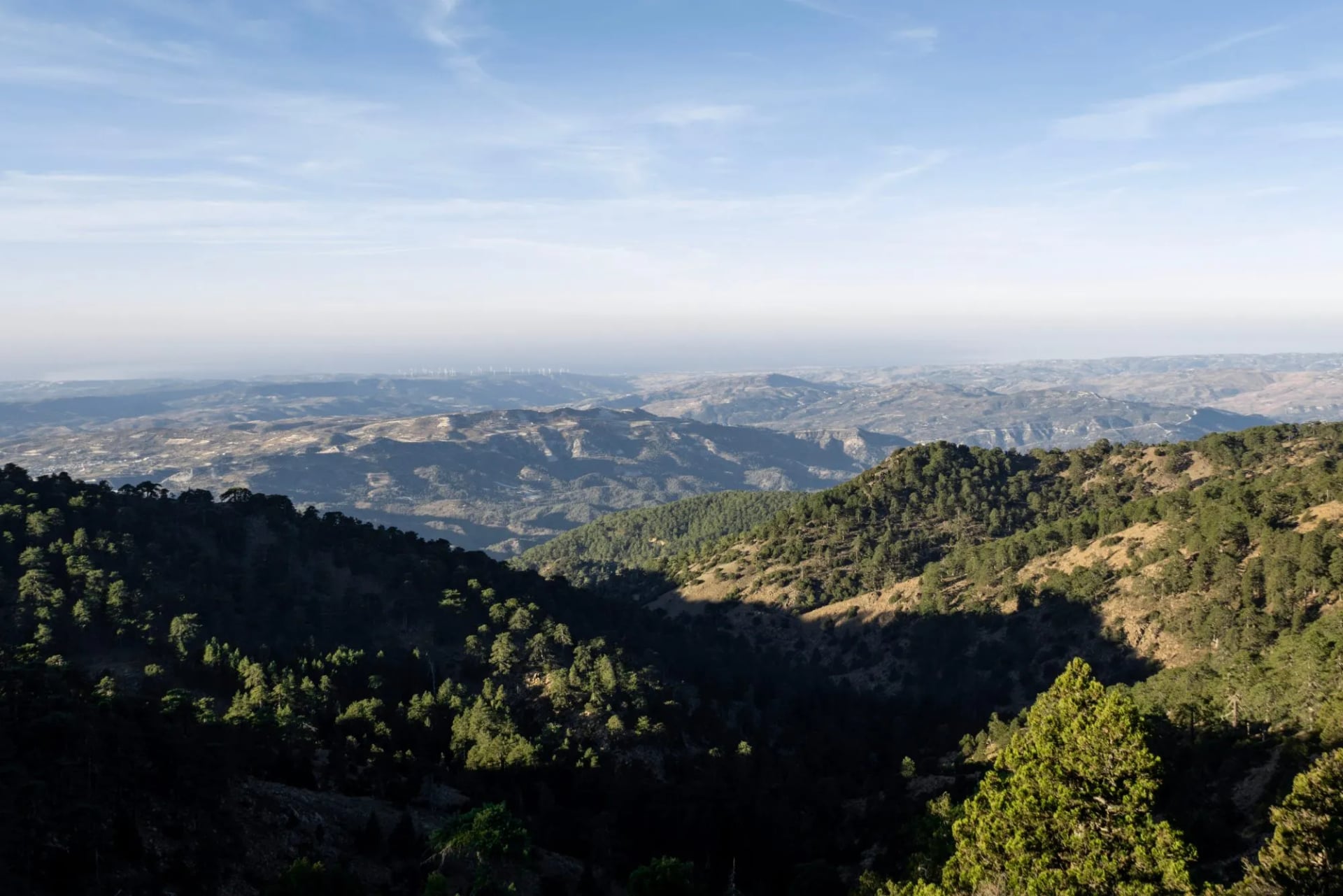
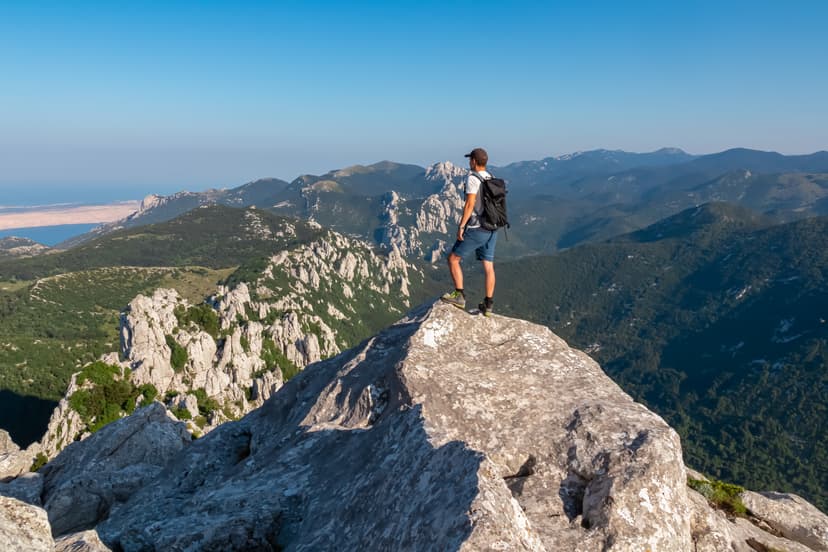
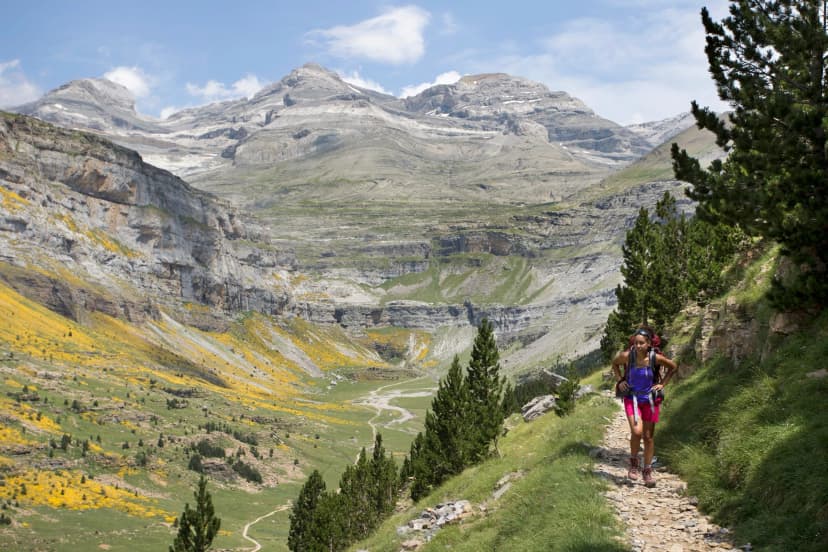
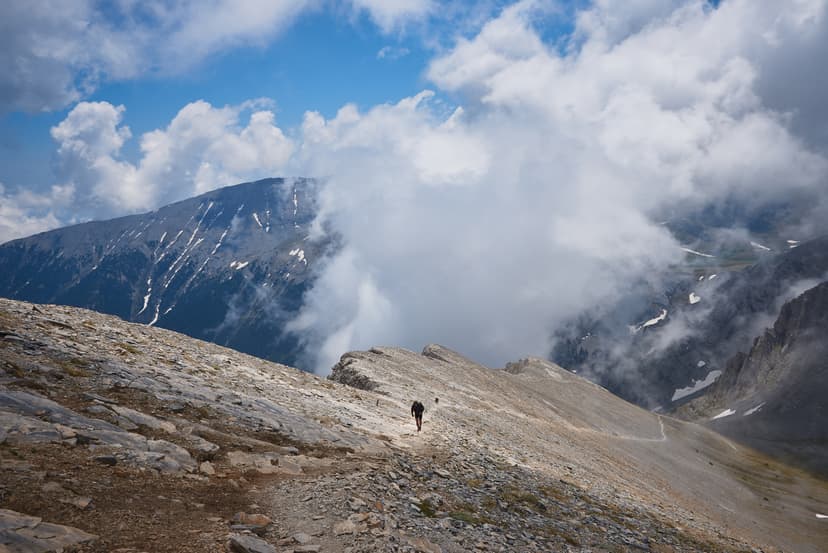
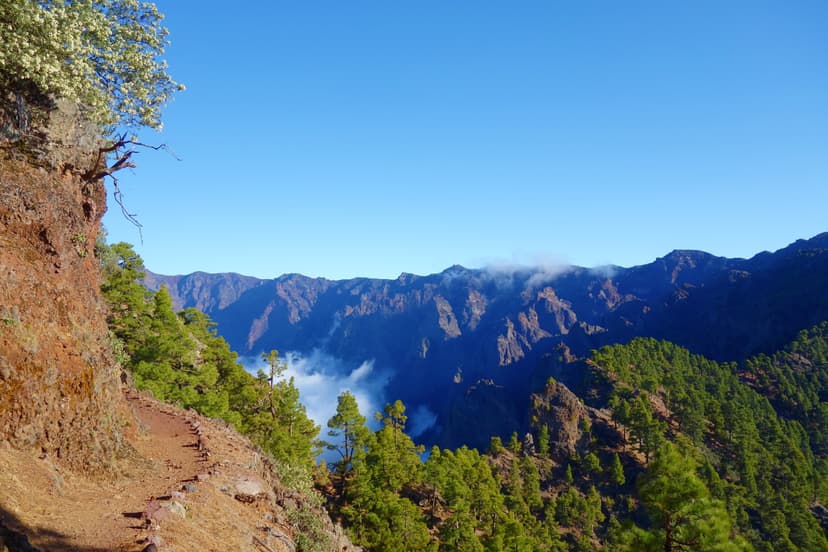
The Troodos Mountains are the country's main range, sitting inland from Limassol and topped by Mount Olympus at 1,952 m. Terrain here is thickly forested Cypriot pine, black pine, and golden oak, with springs and waterfalls the coast doesn't have. Winter brings snow — Mount Olympus operates a small ski area, most likely open between January and March, though a ski season is never a given — and the mountain trails aren't reliably walkable until May. From May to October the Troodos is your hiking country while the coast is too hot to enjoy.
The rotation is Cyprus's biggest planning insight. In February, you'd stay near Paphos and walk the Akamas. In July, you'd base in Platres and walk the Troodos. In March or October, you can do both in the same week — the point where a Cyprus hiking trip peaks in value.
Best Hikes in Cyprus
Cyprus has more than fifty official nature trails on record, but a smaller set carries the itineraries most walkers actually plan. Five carry the weight, and one — the E4 — supplies the long-distance backbone that links them all.
A 7.5-km circular loop from the Baths of Aphrodite car park on the Akamas Peninsula, climbing through juniper and Aleppo pine to a 500-year-old oak tree at Pyrgos tis Rigainas ("Queen's Tower") before dropping to a coastal viewpoint over the Blue Lagoon. Highest point around 333 m. Best walked October to April; most guides start clockwise for a shaded climb in the first half.
A 7-km near-summit circular route around Chionistra (Mount Olympus, 1,952 m) in the Troodos Mountains. Undulating rather than climbing, with steady views across the range and Cypriot cedar and black pine along most of it. This is a summer trail — best walked May to October, when the higher elevation stays cool while the coast bakes.
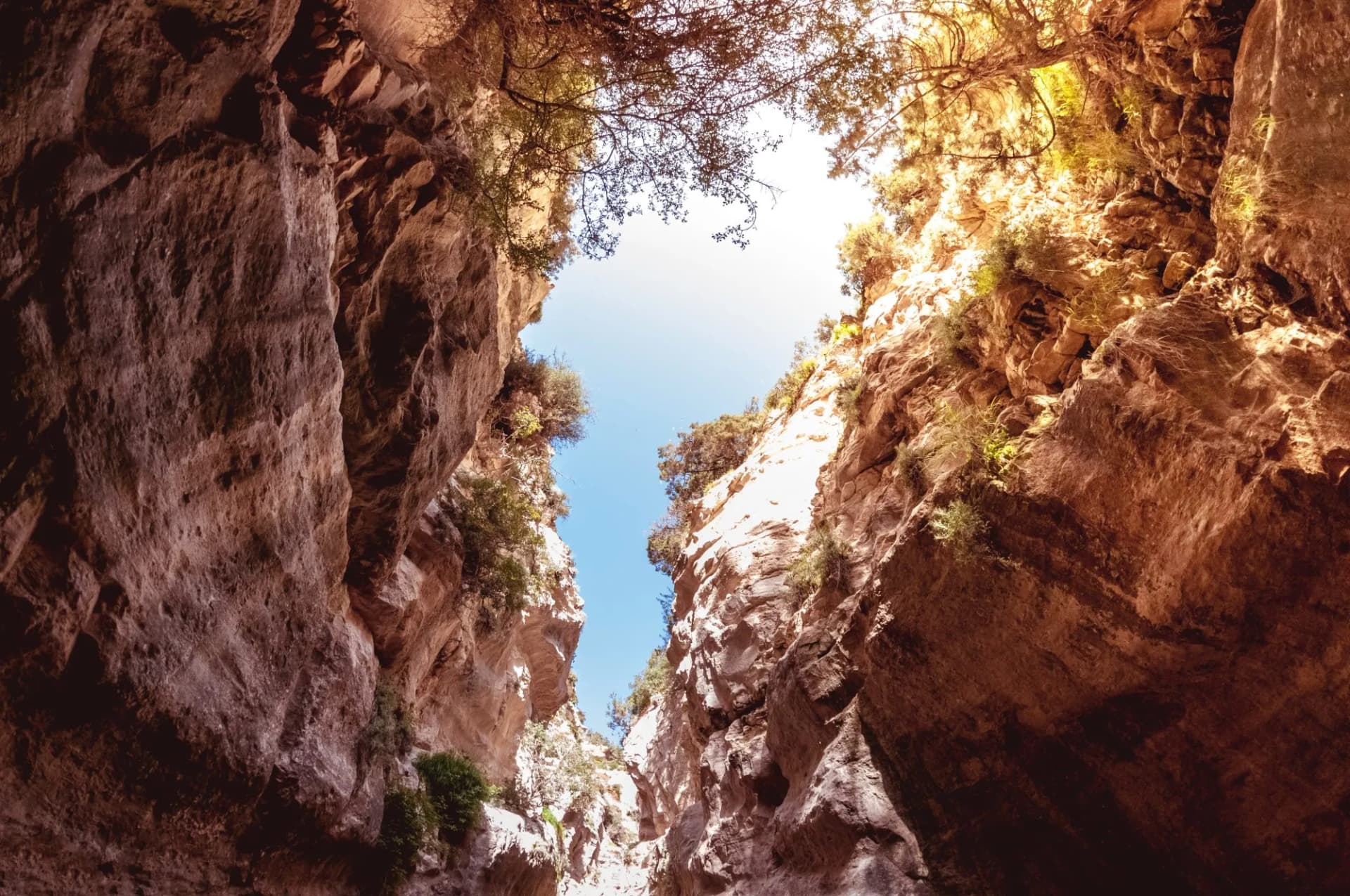
The most dramatic day walk in Cyprus: a limestone slot canyon cut into the Akamas edge, walkable roughly 3 km each way into the narrowing gorge, for a 6-km round trip. Walls close overhead to a few meters apart in sections. Best avoided after heavy rain — the gorge floor floods, and the rock turns slippery. October to May is the safe window.
A 3-km linear descent from the Psilo Dentro area near Platres, in the Troodos, following the Krios Potamos stream past the 13-metre Caledonia Waterfall. Walked one-way with a vehicle pickup at the bottom, or a 6-km round trip if you climb back. Runs March to October.
The Adonis Nature Trail is Aphrodite's sibling — a 7.5-km loop from the same Baths of Aphrodite trailhead that shares the middle section with Aphrodite but adds a longer inland stretch through the Akamas foothills. Walkers with the legs for it string the two into a full-day figure-eight.
Roughly 555 km across the island from Paphos to Larnaca, forming the Cypriot end of the trans-European E4. Opened in 2005, it links the Akamas Peninsula, the Troodos ridge (including Mount Olympus), and the Larnaca salt lake. Walkable year-round given the seasonal climate rotation. Serious walkers usually take three to four weeks end-to-end.
Must-See Spots on Trail
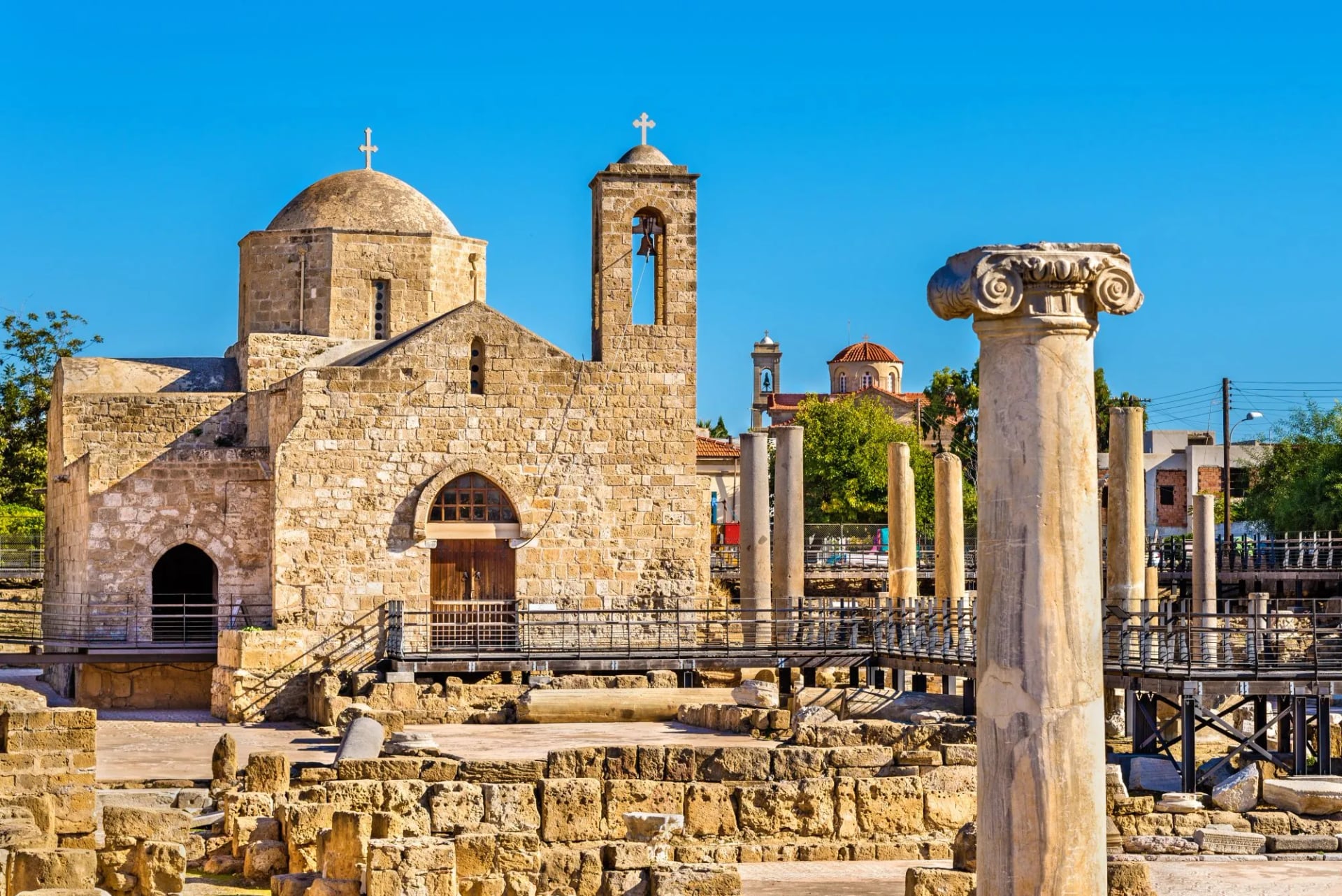
One thing that separates Cyprus from every other hiking country in Europe is what you walk past. On a typical European hiking week you might pass a wayside chapel, an old shepherd's hut, or a Roman marker. On a Cyprus hiking week you pass ancient ruins that reward a longer stop.
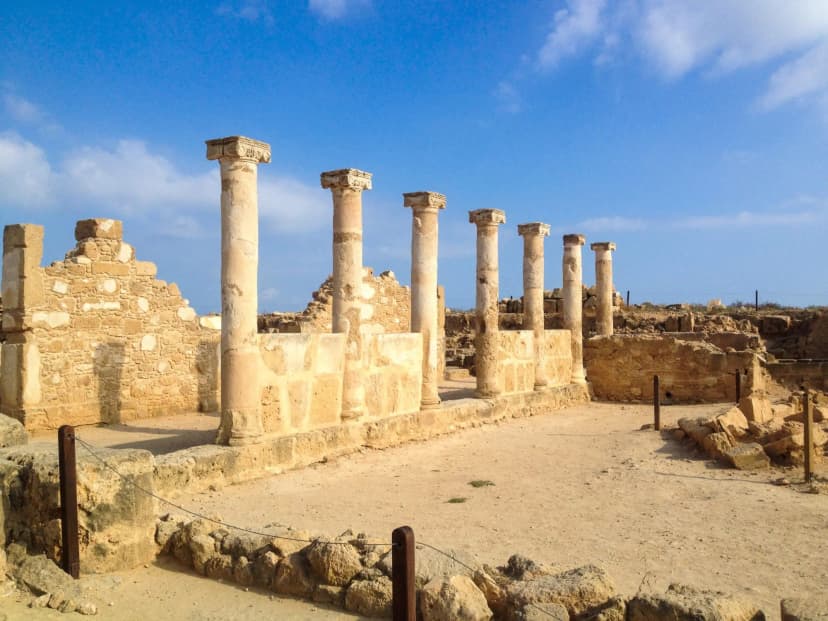
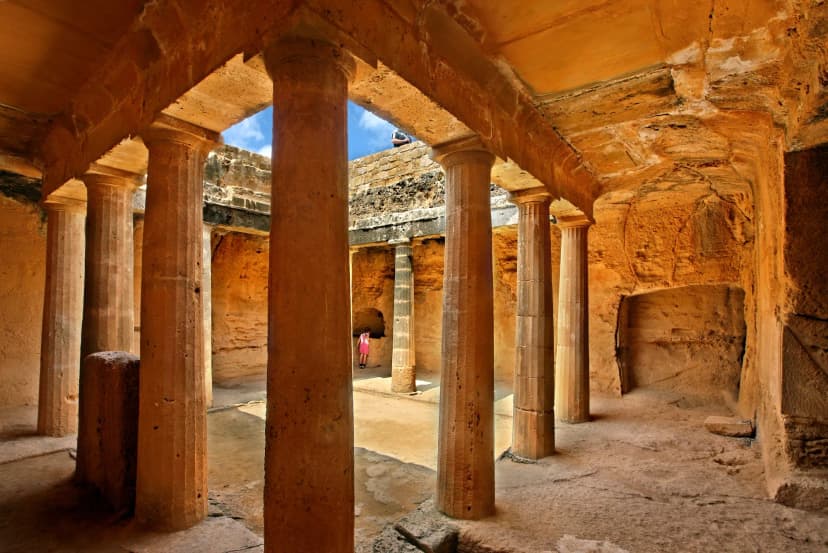
The Cyprus hiking week is shaped by four cultural sites you'll walk past, walk to, or drive past on transfer.
Between the mosaics of Paphos and the frescoes of the mountain chapels, Cyprus lets you walk with a cultural overlay most European hiking countries can't match. The next planning question is timing.
Best Timing: The Early Spring Advantage
Cyprus is one of the few European hiking destinations that peaks in winter. On the coast and in the Akamas Peninsula, December through February is still low season, but March is the sweet stretch — temperatures in the mid-teens Celsius, wildflowers on the peninsula through the month, and none of summer's midday heat lockout. In the mountains, the season inverts: May through October is when the Troodos is walkable, with June to September the peak.
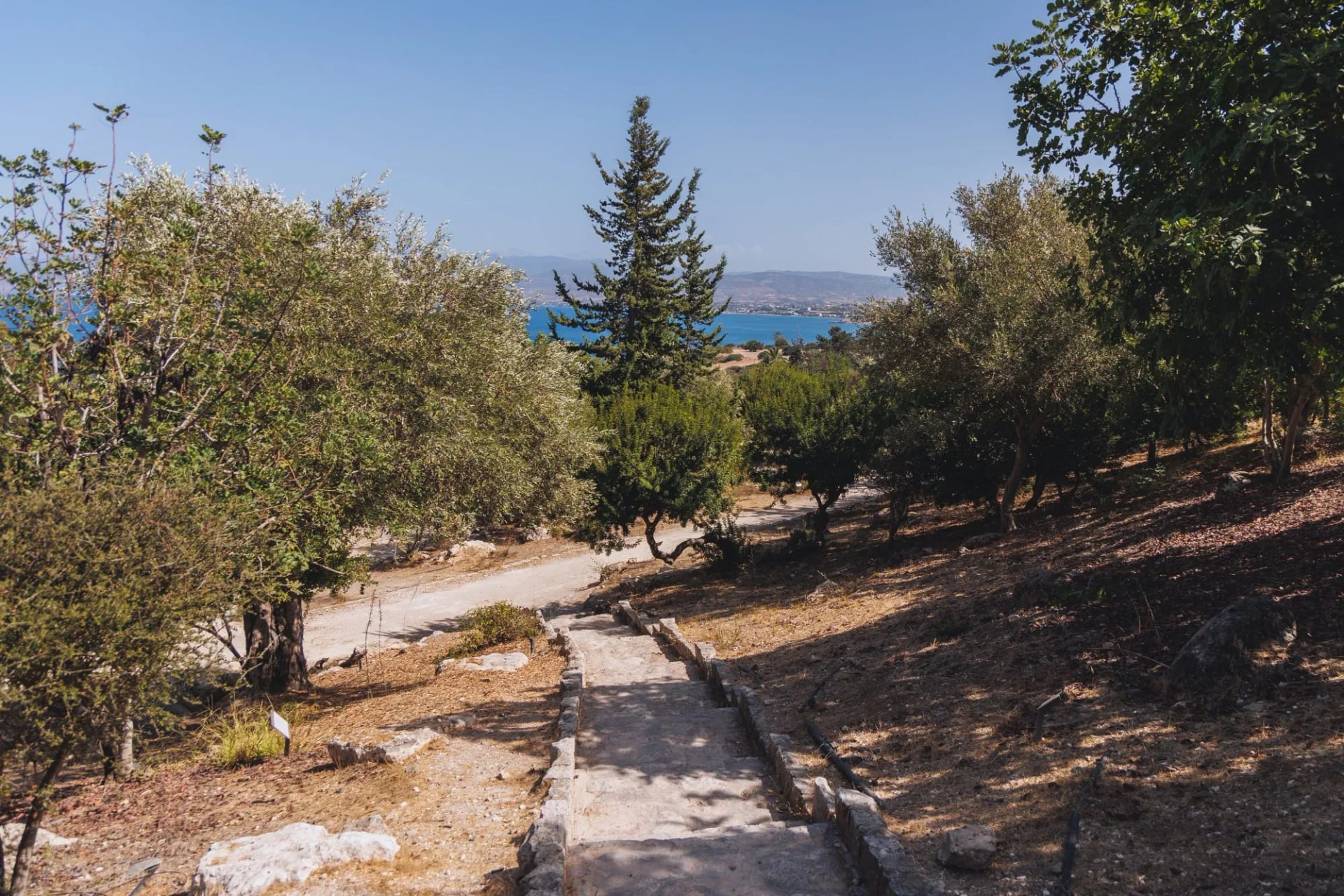
The month-by-month in the format that actually helps you plan:
January. 12–17°C, clear skies, empty Akamas trails. Troodos above 1,500 m is under snow and can get to negative temperatures; Mount Olympus runs its short ski season. Avakas Gorge risks flooding after storms.
February. Peak wildflower month on the Akamas — orchids, cyclamens, anemones, but the weather can still get windy and rainy. Troodos still snow-locked at altitude.
March. The Akamas remains the priority, and temperatures slowly start climbing. Lower Troodos trails (below 1,000 m) begin to open. Green everywhere, thanks to winter rain.
April. Coast trails still walkable and warming. The first month you can string coast and lower mountains together in a single week.
May. The rotation begins. Coast becomes hot by midday; Troodos above 1,200 m opens fully. First month you'd start basing in the mountains.
June. Full Troodos month — cool nights, shaded pine trails, comfortable days. Coast avoided by midday.
July and August. Troodos only. Coast walking at midday hits 30–40°C and isn't sensible; dawn or dusk are the only workable coast windows.
September. Troodos is still ideal. Coast starts to come back into range in the last week of the month.
October. The best month of the year for a mixed itinerary — Troodos still workable, coast comfortable again, first proper rain not yet arrived.
November and December. Back to coast-and-Akamas mode. Some Troodos trails close as snow returns.
If a single week has to be picked: early April or the second half of October — the two hand-off windows where both climates are walkable.
Local Rules
Every hiking country has its quiet local rules. In Cyprus, three are worth knowing before you set off.
The hunting-day rule
Cyprus has a very active hunting culture, and the game-bird season runs roughly early November to mid-February. Sundays and Wednesdays are the traditional hunting days, with most activity in the western forests around Paphos, Polis, and the northern edge of the Akamas. Trails don't close, but walkers are strongly advised to wear bright, visible colours and stick to marked paths during hunting hours (dawn to about 3 p.m.). If you're walking the E4 or an Akamas loop on a Sunday between November and February, this matters.
The snake
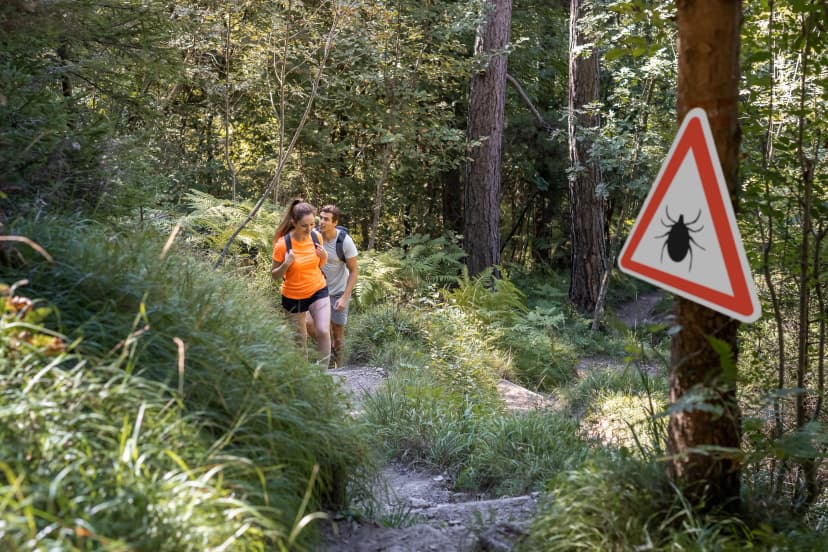
Cyprus has eight snake species. Seven are harmless to people. The one that isn't is the Levantine viper (Macrovipera lebetina), also called the blunt-nosed viper — a stocky, grey-and-brown snake up to 1.5 m long, most active April to October, mostly in the Troodos foothills and around water sources. Be cautious where you step if you're walking in warm months, walk around them if you notice them, and don't put your hands into rock crevices you can't see into. Bites are rare but serious; if bitten, call 112 immediately. The same precautions apply regarding otherwise incredibly rarely seen black widows.
Water
Cyprus is drier than most northern hikers expect. Even in October many stream beds are dry, and Troodos springs are seasonal. Carry two litres for a half-day walk and three for a full day; refill at trailhead taps rather than counting on trail-side sources.
None of this turns Cyprus into a difficult hiking country. But two items on the list — hunting days and the viper — are lightly reported in most guides and worth carrying into your calendar and your first-aid kit.
How Difficult Are Hikes on Cyprus?
None of the named trails covered above sit above 3/5 technical or 4/5 fitness on our difficulty scale, and most sit lower. What that gives you, concretely:
7–20 km walking days on well-marked paths
200–800 m of elevation gain per day, with the higher end on Troodos routes
No exposure, no via ferrata, no scrambling on any of the named trails
Straightforward footing — dirt track, gravel, limestone slabs; not karst-slick, and nothing like alpine scree
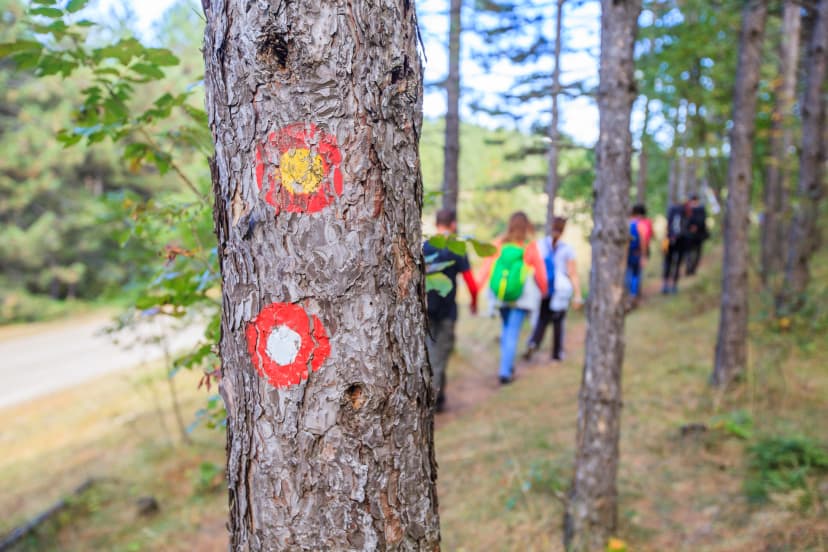
Full trail-marking with painted blazes and directional signs
The one variable that raises difficulty is heat, not terrain. A 12-km trail in October is a moderate walk; the same trail in July at midday is a genuine health risk. Season selection matters more here than in almost any other European hiking country.
Footwear-wise, trail runners are fine for the coast and lower Troodos; the higher Troodos trails with more rock and root warrant proper hiking shoes.
Airports and Transfers
Cyprus has two international airports: Paphos (PFO) in the west and Larnaca (LCA) in the southeast. For a hiking trip organised around the Akamas Peninsula and western Troodos — which is most itineraries — Paphos is the closer entry (thirty minutes to the Akamas trailheads, about an hour to the western Troodos). Larnaca is a longer transfer (roughly 2.5 hours to Paphos) but works if it's already on your flight route.
On the ground:
Rental cars are the default for self-guided walking. Cyprus drives on the left — a British colonial holdover from 1878–1960 — roads are good, and the west-of-island trail networks are impossible to string together on public transport.
Public transport exists between cities but is negligible to trailheads.
Currency is the euro; ATMs and cards work everywhere apart from a few village taverns.
English is widely spoken — sixty-plus years after independence, most Cypriots handle English well in tourism contexts.
The Green Line between the Republic of Cyprus and the Turkish-controlled north doesn't cross any hiking trail covered here; passport-required crossings for tourism exist in Nicosia and elsewhere.
A 6-Day Itinerary
Everything above adds up to a two-region walking week that starts and finishes in Paphos, threads the strongest Akamas trails, and touches the Troodos through the Artemis Trail. That is the trip our Cyprus itinerary is built around.
The six-day loop covers:
Day 1 arrival in Paphos with time for Kato Paphos Archaeological Park
Day 2 in the Troodos on the Artemis Trail (or exploring Paphos), then transfer to Drousha in the western Akamas foothills
Day 3 through Avakas Gorge
Day 4 on the Aphrodite Trail and out to the Blue Lagoon
Day 5 in the Akamas Forest above Neo Chorio
Day 6 departure from Paphos
The base accommodation is 3- and 4-star guesthouses and small hotels — no hut-to-hut walking, no cistern water, no early lights-out. Cyprus is a country you hike out of a real bed, with breakfast in the morning.
The five pieces the itinerary handles that would otherwise fill a planning week:
Guesthouse bookings
Ttransfers between trailheads across the two regions
Digital guidebook with GPS files, route notes, and the cultural stops
Airport pickup from Paphos or Larnaca per request
On-trip support if a trail closure or weather swap is needed
Cyprus is the sort of trip that rewards booking around a season rather than a date. If you want the coast at its best, aim for February to April or October.
If you want the Troodos, aim for June to September. The one week where both climates work happens twice a year — pick one of them. See the full Cyprus trip lineup for other options that pair with the mythic-trails loop.
Frequently Asked Questions

About this author
Jon is our travel advisor and an outdoor adventurer who is happiest on the move. While mountain biking is his personal passion, he thrives on crafting hiking adventures for others — planning routes and adding the little touches that turn a trip into a core memory.

.jpg&w=828&q=75)




.jpg&w=828&q=75)